Everyone can picture the flags of the United States or Japan. The flags nobody can picture are often the more interesting ones, because a country with less international visibility has less incentive to keep its design safe.
What vexillology actually covers
Vexillology is the study of flags: their history, their symbolism, and how they are used as national symbols. It is less about cataloguing designs than about working out what a flag meant to the people who chose it and what it means to the people who fly it now. Banners have carried identity and unity since long before the modern nation-state existed, and the field traces that line forward.
Colors and shapes as shorthand
Certain readings recur across many flags. Red often means bravery or revolution. Blue can mean peace or freedom. Geometric elements carry their own weight, with stars and crescents both loaded with cultural association.
Shape can do the work on its own. Nepal's flag is built from triangles, and its outline alone identifies the country without a single symbol inside it.
Three flags worth a closer look
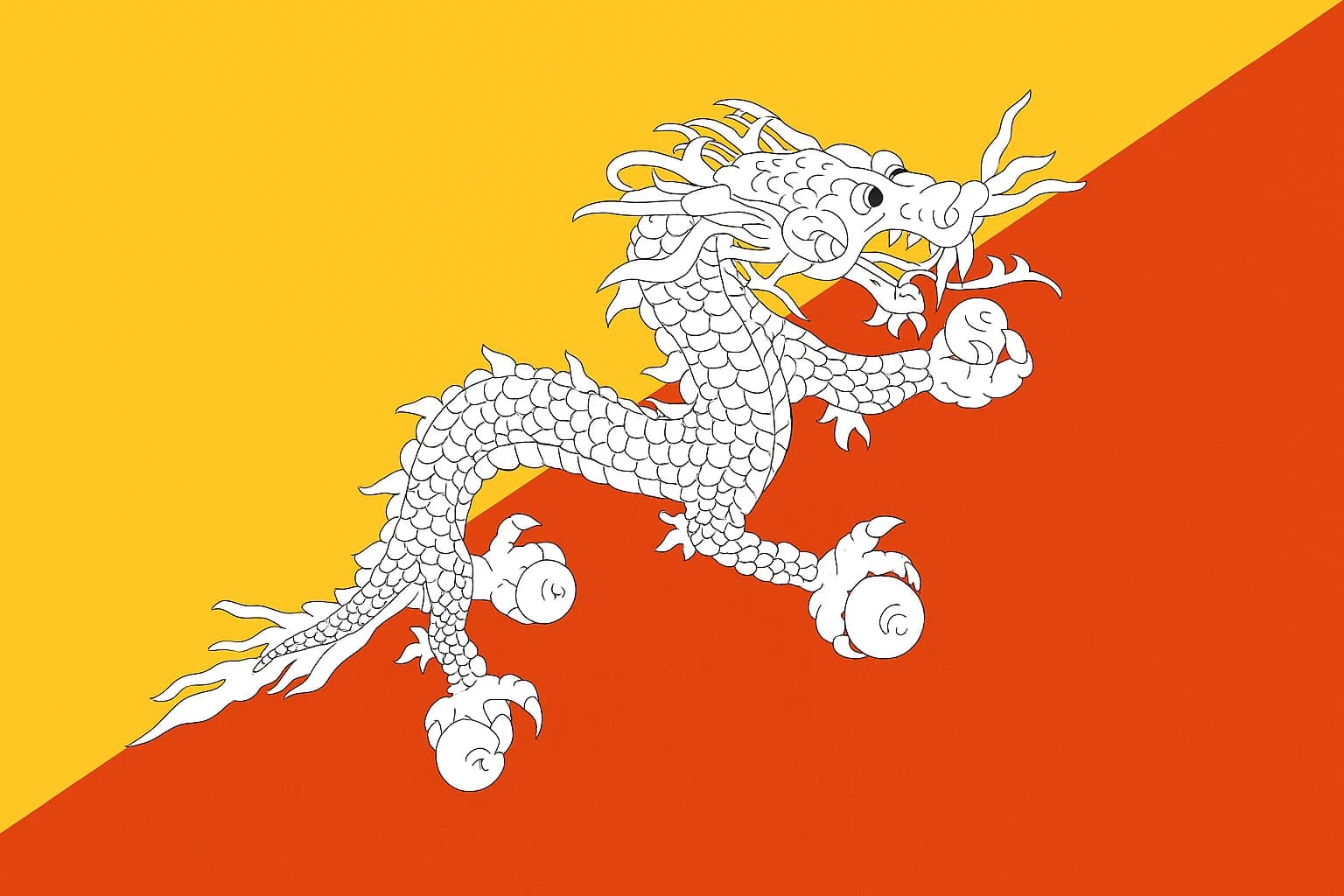
Bhutan's dragon represents guardianship, and the red and orange of the field reflect the country's spiritual and secular roots.
Mozambique puts a gun and a hoe on its flag, holding the struggle for independence and the country's agricultural heritage in the same emblem.
Belize is the most crowded of the three. Its coat of arms brings together indigenous and colonial elements, and the combination is meant to read as unity built out of a complicated history.
Indigenous symbols in flag design
Flags that use indigenous symbols make a claim about whose history counts. The Australian Aboriginal Flag is the clearest example: an emblem of identity and pride that connects ancestral roots to contemporary kinship, and one that functions independently of any state.
Designs that change with their politics
Flags shift with political events and cultural change. South Africa's flag, adopted after apartheid, is the standard example of a design chosen to stand for unity and progress at a moment when the country needed to say something specific about its direction.
That is the ordinary condition of a national flag rather than an exception. It works as a rallying point, in celebration and in difficulty, and the design is expected to keep pace with what the country has become.
Where to go next
There is more material on this than most people expect. Books, websites, and dedicated clubs cover flag history in depth, and online communities and forums are usually the fastest way into the subject.