Line up every national flag in the world and squint. You'll see the same shapes repeating like a visual stutter: eagles, lions, stars, crescents, crosses, and coats of arms dense enough to need a magnifying glass. Hundreds of nations, thousands of years of distinct culture, and yet the flags end up looking like variations on a medieval European mood board. It's strange when you think about it. Most of the world's people, for most of history, have been farmers. They've grown rice, harvested wheat, tapped rubber, picked cloves. But their flags? Swords and raptors.
Then there are the exceptions. A handful of nations looked at the standard toolkit of heraldic imagery and asked a different question: "What do we grow here?" They planted a tree, a crop, or a sheaf of grain at the center of their national identity. These choices are radical and humble at the same time. Radical because they break from centuries of heraldic tradition. Humble because they elevate a plant over a dynasty. When a country puts a cedar or a mahogany tree on its flag, what is it telling the world? And why didn't more countries do the same?
The tyranny of the crest: how heraldry colonized flag design
European heraldry started as a battlefield identification system. Knights needed to know who was who behind all that armor, so they painted lions, eagles, and chevrons on their shields. By the 16th century, this visual language had hardened into a formal system with strict rules about colors ("tinctures"), divisions, and charges. And then Europe exported it, along with its armies, missionaries, and bureaucracies, to the rest of the planet.
The result is a kind of visual colonialism that persists to this day. When Latin American republics gained independence in the 19th century, many adopted flags stuffed with condors, laurel wreaths, and fasces borrowed from Napoleonic-era iconography. These symbols had zero cultural roots in the Andes or Central America, but they signaled something crucial: "We are a real state. Take us seriously."
This pattern repeated across Africa and Asia in the 20th century. Newly independent nations needed flags fast, and the heraldic vocabulary was the one the international community recognized. There's also what you might call the "weapon problem." A disproportionate number of flags feature swords, spears, or firearms. Mozambique's flag, adopted in 1983, includes an AK-47, communicating armed struggle and revolution.
Against this backdrop, agricultural symbols represent a conscious departure. A nation that chooses a tree over a sword is making a statement: "We are defined by what we cultivate, not what we conquered." That's a design decision and a political one. Vexillologists, the scholars who study flags, have tended to treat botanical symbols as oddities, footnotes in the larger story of heraldic dominance. But they're not oddities. They're an alternative philosophy, and they deserve to be treated as one.
The cedar of Lebanon: a tree older than the nation it represents
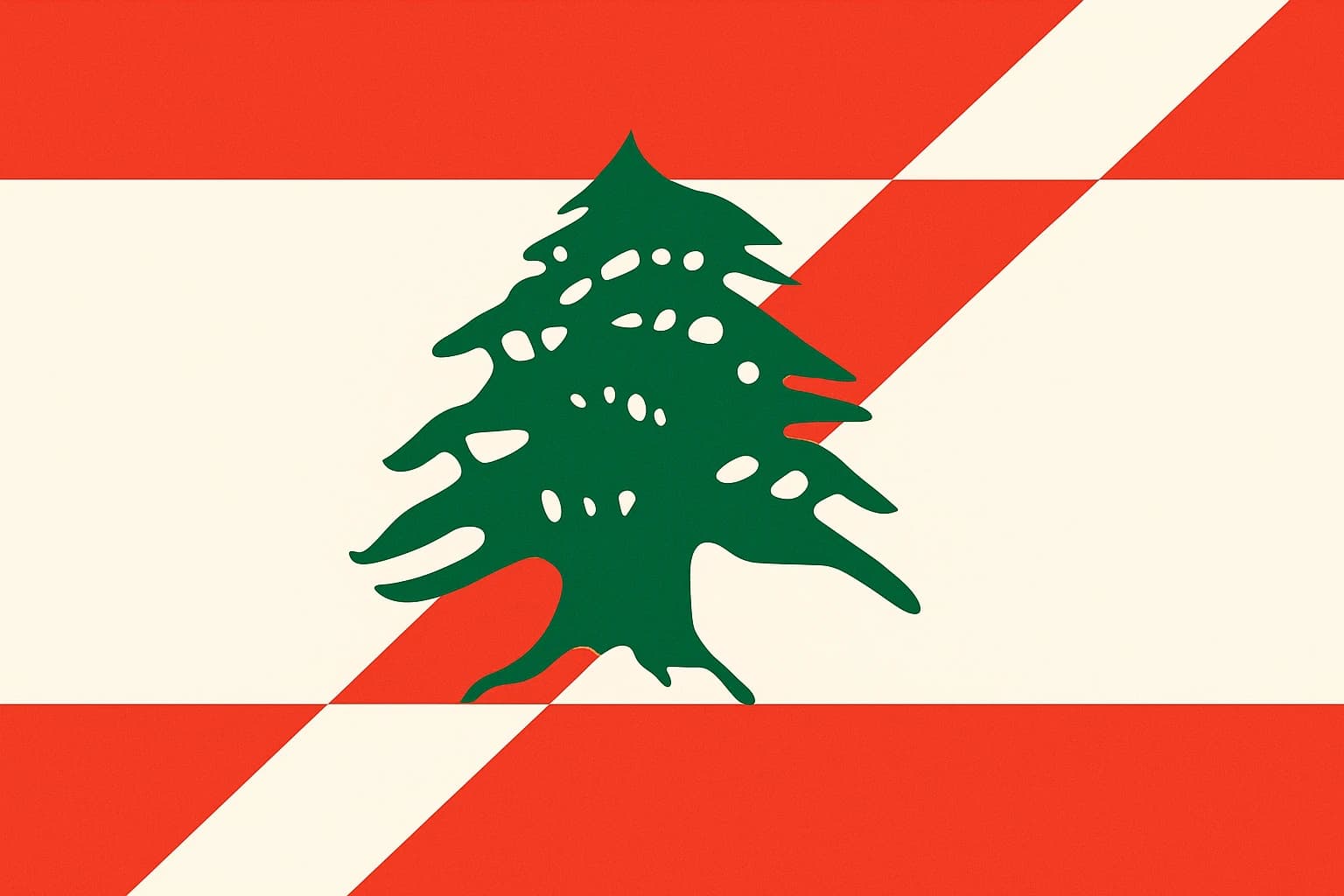
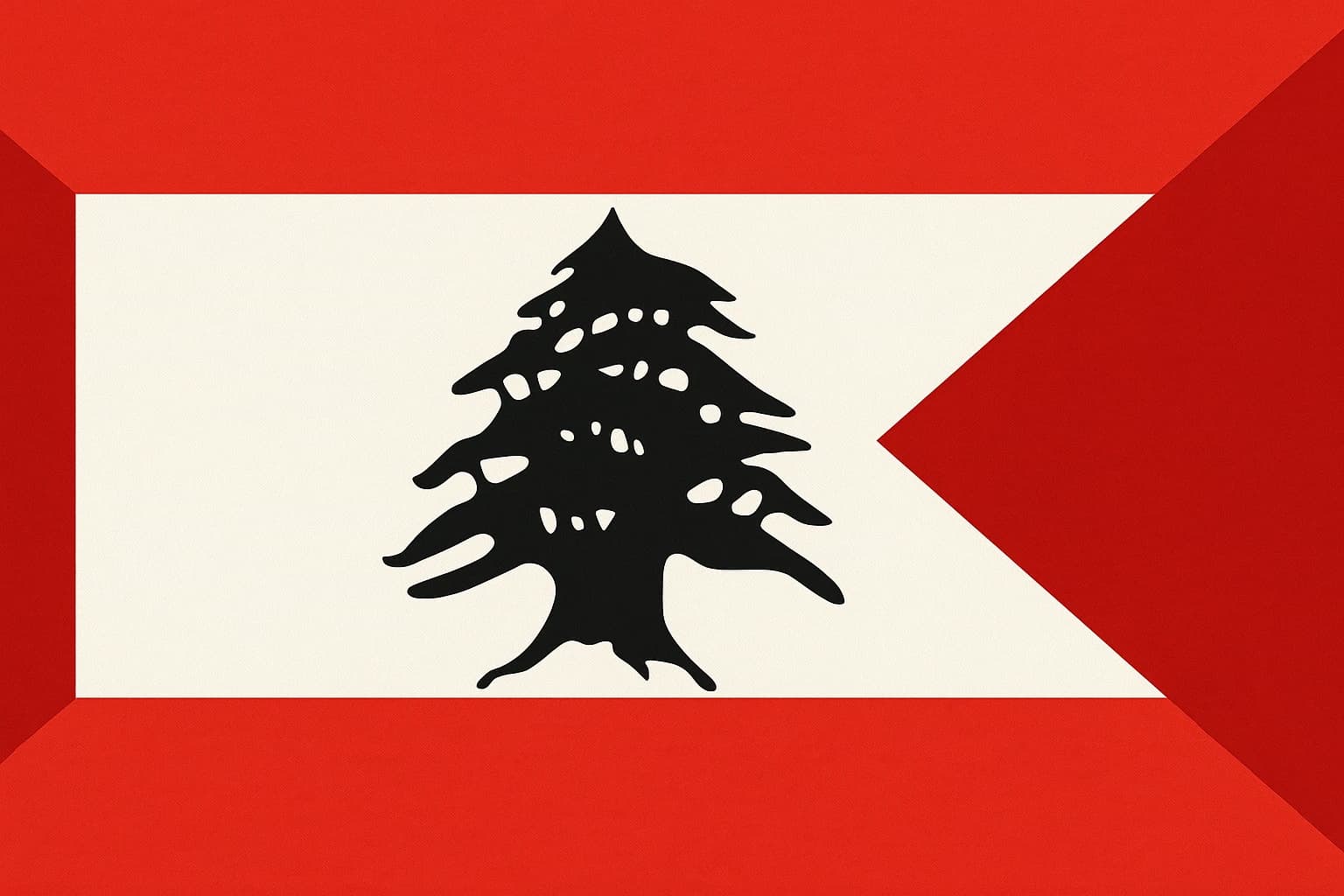
If you know one botanical flag symbol, it's this one. The green cedar of Lebanon, centered on a white band between two red stripes, is clean, recognizable, and loaded with meaning that goes back thousands of years.
The Cedrus libani, the species on the flag, is now endangered in Lebanon itself. Fewer than 17 intact cedar forests remain. The flag has become a kind of ecological elegy, a portrait of something the nation is losing even as it waves the symbol overhead.
But the cedar's power as a symbol comes from its extraordinary depth. It appears in the Epic of Gilgamesh, composed around 2100 BCE. Egyptian pharaohs prized cedar wood for shipbuilding. The Hebrew Bible references cedars over 70 times. This tree was famous, traded, and revered for millennia before anyone drew a border around the land we now call Lebanon. No coat of arms, no matter how elaborate, carries that kind of weight.
The current flag was officially adopted on December 7, 1943, the moment of Lebanese independence from France. The choice of the cedar was deliberate and politically shrewd. Lebanon's population was (and remains) deeply divided along sectarian lines: Maronite Christians, Sunni and Shia Muslims, Druze, and others. A cross would alienate Muslims. A crescent would alienate Christians. The cedar predates all of these religious traditions. It belongs to nobody and everybody. Botanical diplomacy, you might call it.
The design history tells its own story. During the French Mandate (1920 to 1943), the cedar sat awkwardly on a French tricolor, a colonial tree in a colonial frame. The independence flag stripped away that frame and let the cedar stand alone on Lebanese red and white. The act of removing heraldry was itself the statement.
Lebanon's cedar therefore does several things at once. It projects historical depth back to the Bronze Age, it sidesteps religious conflict by predating every sect in the country, and it grounds national identity in trade and craftsmanship rather than conquest. Few flag symbols are asked to work that hard.
Belize's mahogany: when the colonizer's cash crop becomes the colony's emblem
Belize presents a different, thornier relationship between a nation and its botanical symbol. The flag's coat of arms features two woodcutters flanking a mahogany tree, with the Latin motto "Sub Umbra Floreo" ("I Flourish in the Shade"). It's a beautiful image. It's also deeply complicated.
British Honduras, as Belize was known until independence, existed because of mahogany. That was the colony's entire economic purpose. The British brought enslaved Africans and indentured laborers specifically to harvest Swietenia macrophylla from the interior forests. The mahogany tree on the flag is a symbol of colonial extraction, a monument to the industry that built the territory on the backs of forced labor.
So when Belize gained independence on September 21, 1981, the new government faced a choice. Replace the mahogany imagery and start fresh? Or keep it and redefine it? They kept it. The two woodcutters were reinterpreted as representatives of Belize's mixed African and Mestizo heritage, figures of labor and resilience rather than exploitation. The tree itself shifted meaning: no longer the colonizer's cash crop, but the nation's own resource, something Belizeans had bled for and now owned.
Compare this with Lebanon. The cedar was chosen because it transcended political divisions, a neutral emblem out of deep history. Belize's mahogany was retained in spite of its origins, which makes it a piece of confrontational memory rather than neutral pride. The flag keeps the injury visible and claims ownership of it.
There's a partisan wrinkle too. The blue and red border added at independence in 1981 was partly a compromise to include the colors of both major political parties (the People's United Party and the United Democratic Party). Even botanical symbols get tangled in party politics.
The road not taken: wheat, cloves, and the flags that almost were
For every cedar and mahogany that made it onto a flag, dozens of agricultural symbols were proposed and rejected. These near-misses reveal a pattern worth examining.
Take Zanzibar. For centuries, the island's identity was synonymous with cloves. The Zanzibar Sultanate built its wealth on the spice trade, and by the 19th century, Zanzibar produced most of the world's cloves. When the Sultanate was overthrown in the 1964 revolution and the short-lived Republic of Zanzibar emerged (it lasted from January to April before merging with Tanganyika to form Tanzania), the revolutionary government chose a flag with stripes and a torch. No clove in sight.
Why? The revolutionaries wanted to signal a break from the commodity-based economy that had enriched the sultanate's Arab elite. The clove was too associated with the old regime, with plantation agriculture and economic inequality. Celebrating it would have felt like celebrating the system they'd overthrown.
Soviet-influenced flag design offers another angle. Several Soviet Socialist Republic flags incorporated agricultural imagery, wheat sheaves and cotton bolls, that reflected genuine economic realities. The Kazakh SSR flag featured wheat. But these were also propaganda tools for collectivization, complicating any reading of them as "honest" agricultural symbols. When Kazakhstan adopted a new flag after independence in 1992, the wheat was gone, replaced by a golden sun and a soaring steppe eagle.
Across newly independent Africa in the 1960s, early flag proposals for nations like Ghana included cocoa pods. Older Ethiopian regional flags featured coffee plants. But in the final designs, these botanical elements were replaced by pan-African stars, stripes, and abstract geometries. The preference was systematic: abstract ideological symbols won out over economically honest ones.
The reasons are revealing. Agricultural symbols were seen as too small, too tied to a single commodity, too reminiscent of the way colonial powers had categorized their territories by what they produced. Nobody wants their flag to evoke the phrase "banana republic." Even when a crop was more representative of a nation's daily life than any star or eagle, the stigma was too strong.
What it takes for a plant to fly
Not every plant works on a flag. The successful botanical symbols share a few specific qualities.
First, they must be instantly recognizable as silhouettes. The Lebanese cedar, with its layered, horizontal branches, is distinctive at any size. You can see it from across a stadium. Compare this with the baobab tree on Equatorial Guinea's coat of arms, adopted in 1968. The baobab is a magnificent tree, but on the flag it's buried inside a complex heraldic shield and loses all visual impact at a distance.
Second, botanical symbols need to carry meaning beyond the literal. A tree is not enough. The cedar works because it's simultaneously a historical artifact, a religious reference, an economic symbol, and an ecological marker. A tree that's "just a tree" won't sustain the weight of national identity.
Third, the symbol needs to resist easy appropriation by a single faction. Lebanon's cedar succeeds here because it predates every political and religious group in the country. A crop closely associated with one region, one ethnic group, or one economic class will divide rather than unite.
Color matters too. The Lebanese cedar's green against white creates sharp contrast and emotional resonance. Green for life and growth, white for peace. The designers chose naturalistic color over heraldic convention, which would have dictated gold or silver. That break from tradition reinforced the flag's larger message: this isn't European heraldry. This is something rooted in a specific place.
The North American Vexillological Association's "Good Flag, Bad Flag" guidelines emphasize economy of means: a flag should be simple enough for a child to draw from memory. Botanical symbols, when done well, achieve remarkable communicative efficiency. A single cedar silhouette tells you more about Lebanon than a crowded coat of arms ever will.
With climate politics and ecological identity becoming central to how nations present themselves in 2026, there may be new space for botanical flag symbolism. As countries define themselves by their environmental commitments and their conservation stories, a well-chosen plant on a flag starts looking less quaint and more prescient.
Why so few? The politics of humility
If agricultural symbols work so well visually and carry such historical depth, why do they remain so rare? The answer is political psychology.
Nations, especially newly independent ones, want to project strength. A lion says "power." An eagle says "sovereignty." A sword says "don't test us." A cedar tree says... what, exactly? To someone unfamiliar with Lebanese history, it says "nice tree." The symbol works beautifully for domestic audiences who understand the layers of meaning. For international audiences, it requires explanation. A lion never does.
There's also the colonial shadow. For post-colonial nations, agricultural products were the mechanism of exploitation. European powers had defined, catalogued, and extracted their colonies' crops for centuries. Sugar, rubber, cotton, cocoa: these were the commodities around which entire systems of forced labor were organized. Choosing one of these crops as your national symbol risked reinforcing the identity the colonizer had imposed. You're not a nation. You're a sugar producer.
Lebanon's cedar sidesteps this problem because it predates colonialism entirely. Its meaning operates on registers that no colonial power defined. The key variable isn't the agricultural symbol itself but how deeply embedded it is in a culture that predates extraction.
The conditions are shifting, though. Climate change has made ecological identity a political reality, and "food sovereignty" has become a genuine movement across the Global South. Nations are beginning to define themselves by what they protect and cultivate rather than what they conquered. A new wave of agricultural flag symbolism looks possible; what it lacks is a country willing to go first.
Planting a flag, literally
Picture that wall of flags at the UN General Assembly hall or an Olympic opening ceremony: eagles, crescents, and coats of arms crowding their tiny rectangles with lions and laurels and crossed swords. Somewhere in the row, a green tree on a white field, and a mahogany flanked by two workers.
The rarity of these symbols is a political outcome rather than a design one. Crops read as too humble, too small, and too colonial for the serious business of nation-building, and the flags that almost carried cloves, cocoa, and wheat did not fail to occur to anyone. They were proposed and turned down.