A flag has to compress a national story into a rectangle that still reads from a hundred meters away. Most countries manage it by borrowing a layout that already exists and changing the colors. A few put something specific on the cloth, and the specific thing usually turns out to be an argument about where the country came from and who won it.
Angola, 1975
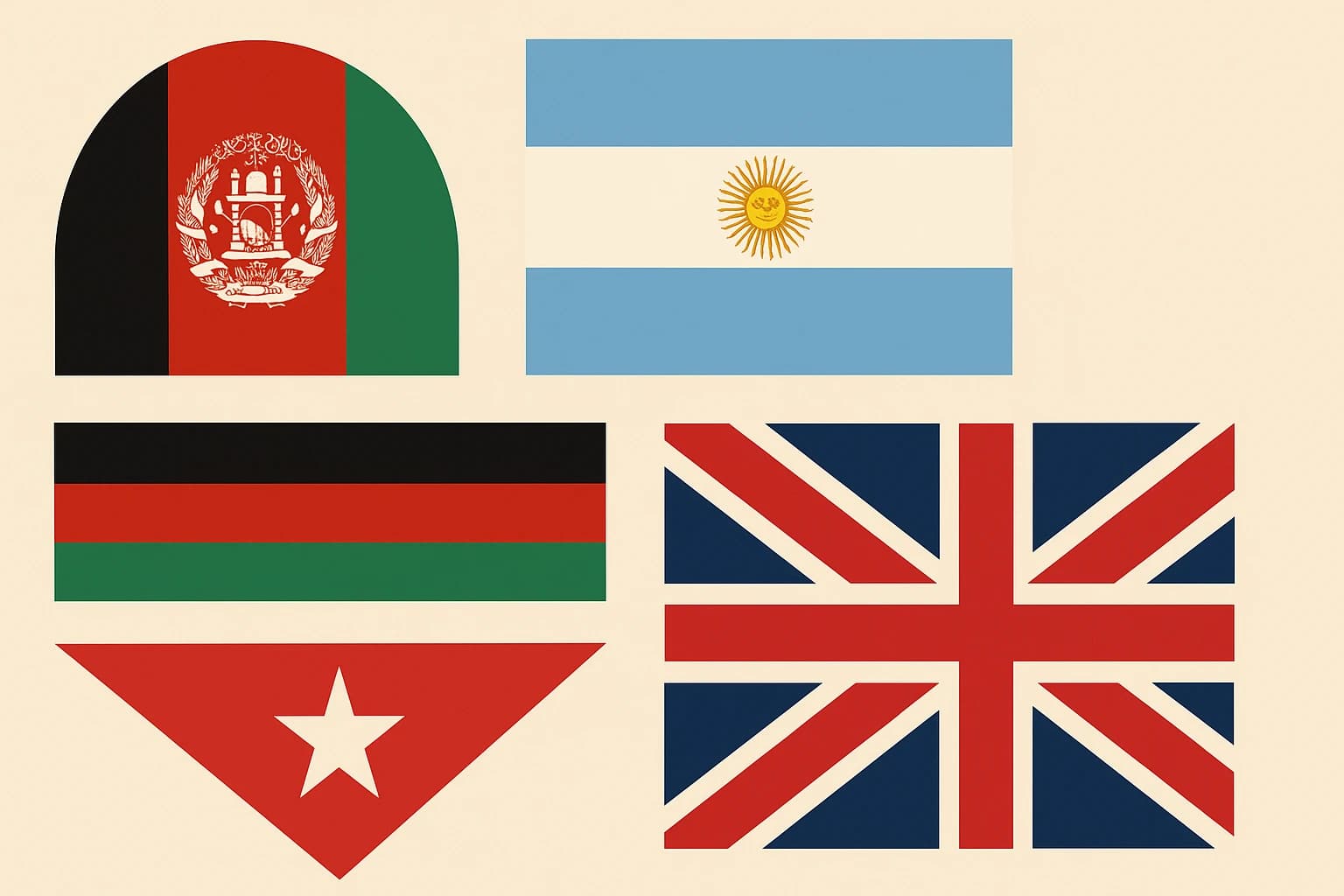
Angola's flag dates from the end of Portuguese colonial rule in 1975.
Black is for Africa and red for the blood spilled reaching independence. The emblem carries traces of both the colonial period and the liberation movements that ended it, which is an honest description of the country it was made for.
Argentina's blue and white
Argentina's colors get traced in two directions at once: back to the Inca flag, and across the Atlantic to European influence. Neither reading has driven the other out.
The sun at the center is the Sun of May, and it stands for the revolution and for independence rather than for any government that came afterwards.
The people who keep track
Vexillology is the study of flags, and most of the work is unglamorous: recording which designs changed, when, and under whose authority. Flags do change, more often than people assume, and usually in step with something happening in the country. Without someone cataloging the versions, a redesign quietly erases whatever the previous flag was arguing for.
Brazil and Japan
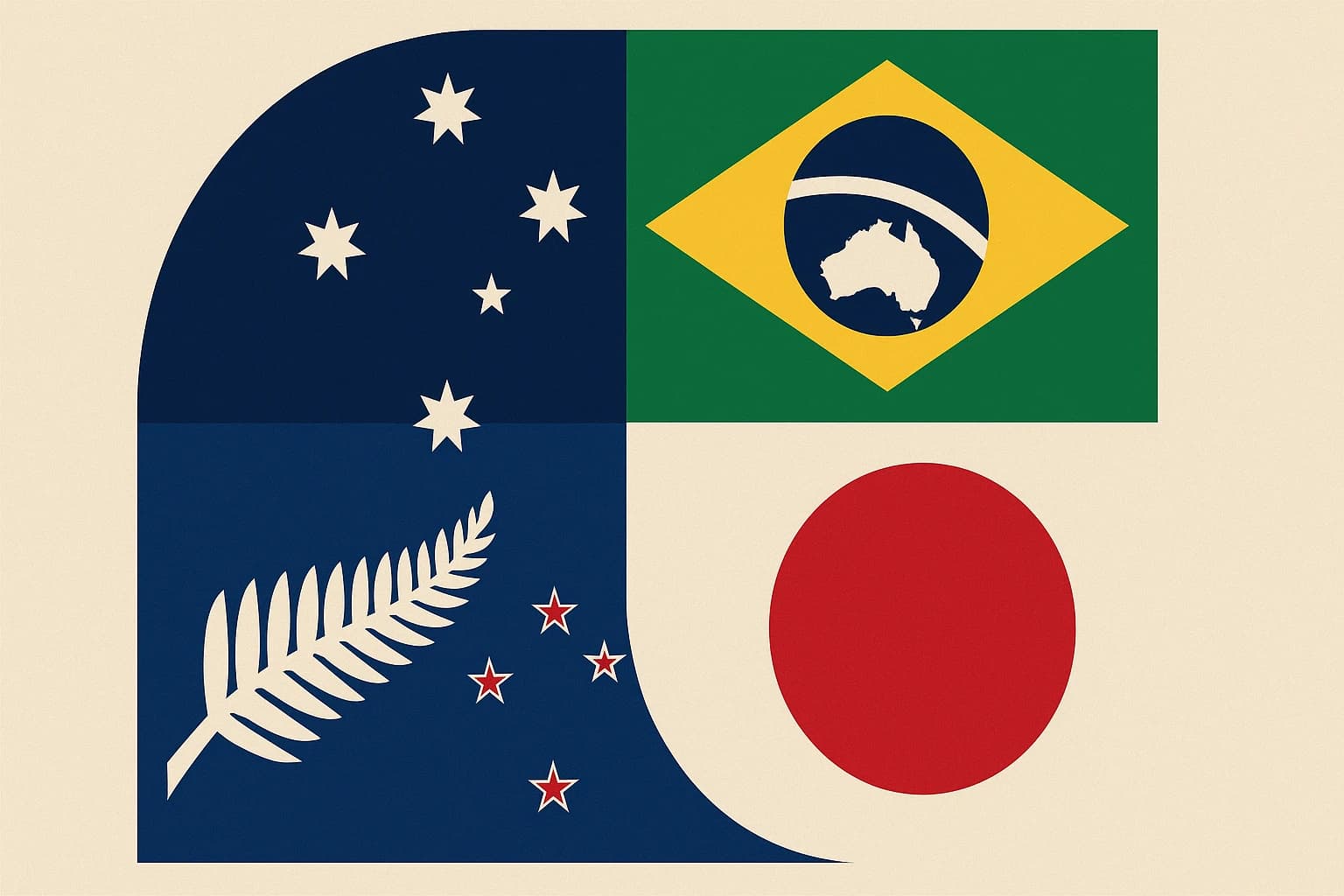
Brazil's design carries marks left by indigenous cultures alongside everything else crowded onto it.
Japan went the other way entirely. One circle on a plain field, and it has been read as peace and endurance for long enough that the plainness is now part of the meaning.
Countries that have lived through a rupture tend to keep it on the flag afterwards, whether or not anyone still points it out. That is why a flag adopted at independence rarely looks like the one it replaced.