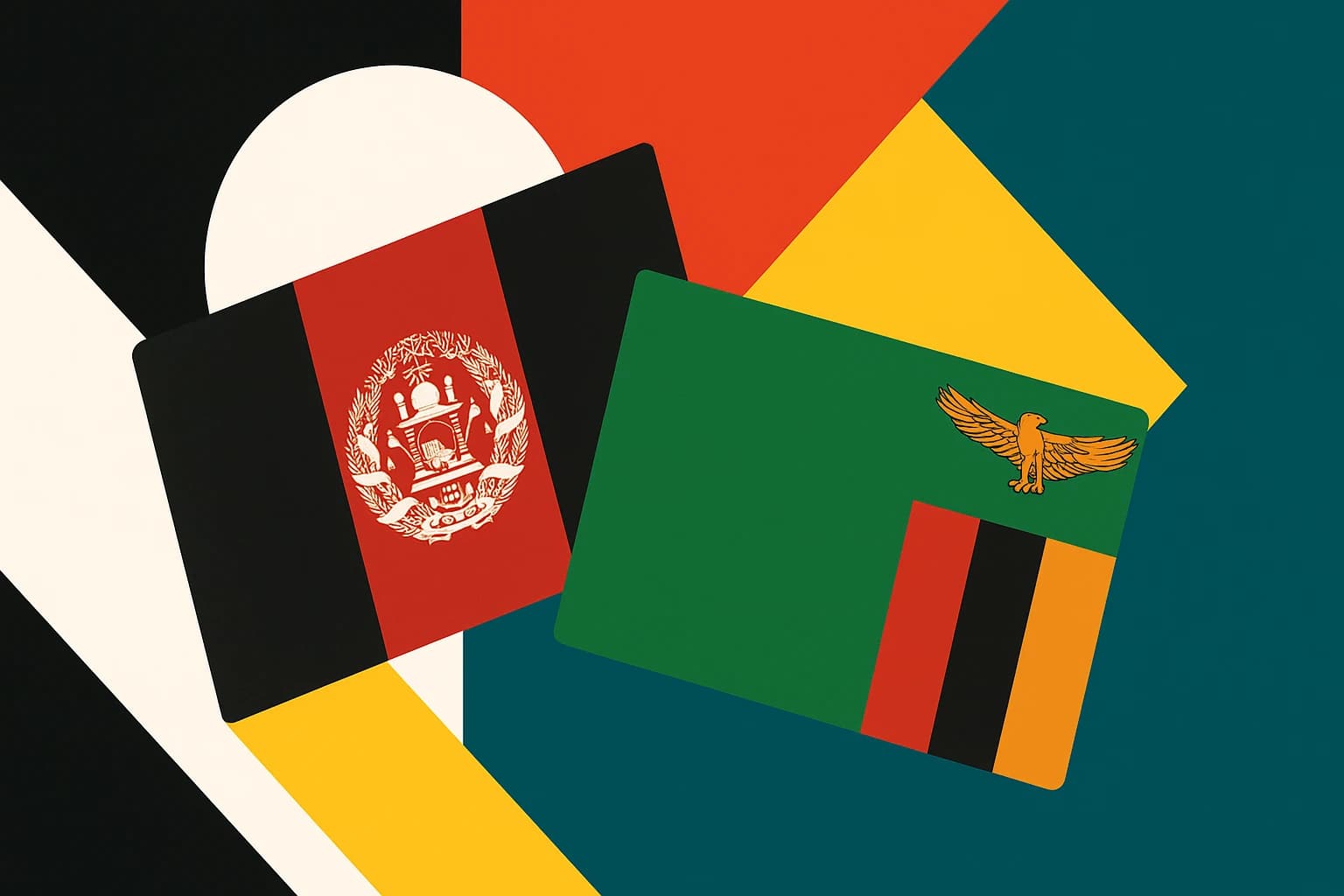
Afghanistan and Zambia have almost nothing in common historically, and their flags were adopted under completely different circumstances. Put them side by side anyway. Both use color the same way, and both were designed to be flown by people who had reason not to take the state for granted.
How to read a flag
Vexillology covers the history, symbolism and use of flags. Colors carry most of the load: the same red can mean revolution on one flag and sacrifice on another, and the meaning is assigned rather than inherent. Charges like stars and eagles usually stand for an ideal or a specific historical moment. The arrangement matters too, since where an element sits on the field often says as much as the element itself.
Afghanistan
Afghanistan's flag has been redrawn many times, with each change following a shift in who was governing and what they believed.
The current design has black, red and green with a white emblem. The colors stand for the past, for bloodshed, and for hope, in that order. What is notable is that this flag was flown continuously through years of conflict, which is a different kind of endurance from the sort a peaceful country's flag has to manage.
Zambia
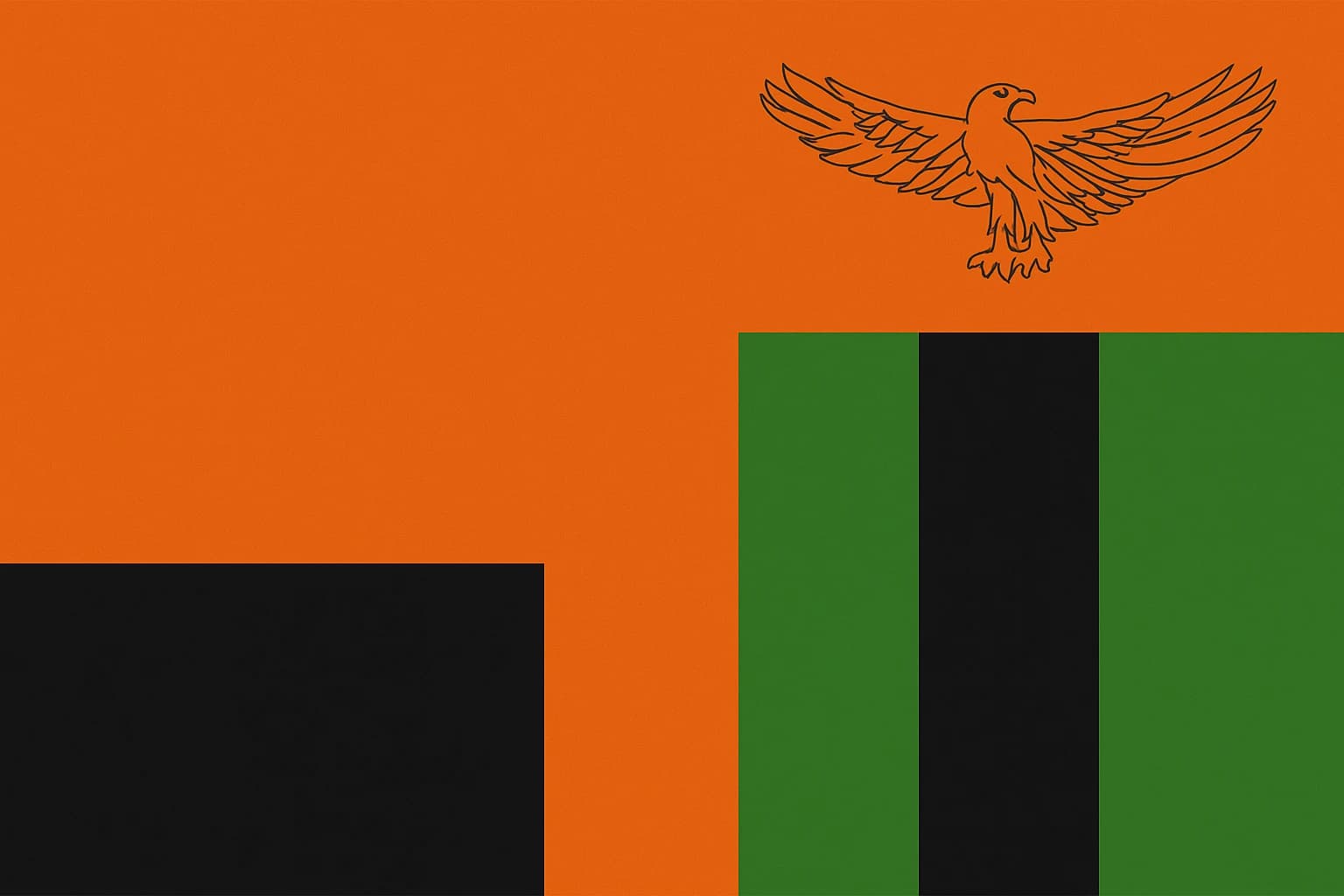
Zambia's flag was introduced in 1964, when the country gained independence from Britain.
It has green, red, black and orange, with an eagle. The eagle stands for freedom and for the ability to rise above difficulty, which is a fairly precise statement of what a new state in 1964 wanted to say about itself. The flag has been read as an emblem of unity ever since.
The shared vocabulary
Red for struggle or sacrifice, green for hope or for the land: these readings recur across flags designed thousands of miles apart, and they recur because the designers were solving the same problem. A flag adopted at a moment of upheaval has to acknowledge what it cost to get there and still point forward. Afghanistan and Zambia arrived at that balance independently.
What the flag does day to day
Most of the time a flag is not doing anything dramatic. It hangs on a building, appears on an independence day, gets waved at a match. That ordinariness is the point. The symbol becomes familiar enough that raising it at a difficult moment actually means something, because everyone already knows what it looks like on a normal day.