Flags do most of their public work in diplomacy, where they stand in a row behind a lectern and nobody looks at them closely. Look closely anyway. The flags of Angola and Argentina both encode arguments about where each country came from, and those arguments do not disappear when the flag goes on a summit backdrop.
What vexillology is for
Vexillology is the study of flags, which sounds like a niche hobby until you notice how much diplomatic weight flags carry. They mark sovereignty at borders, in international chambers and at treaty signings. When two states sign something, the pairing of their flags is the image that runs in the press, and it is doing real work: it says these two governments recognize each other as equals.
Angola
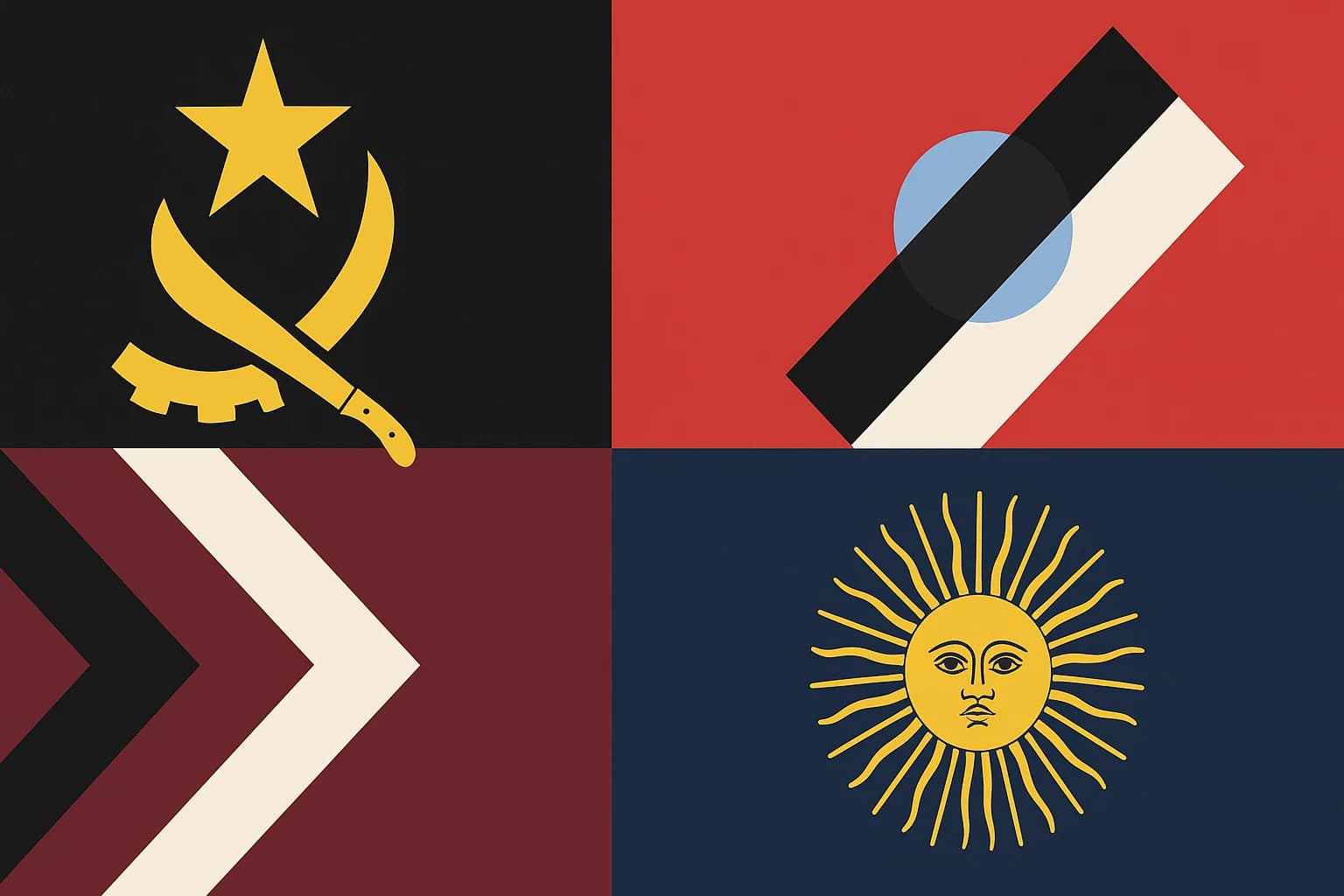
Angola's flag is red and black with a central emblem, and it is not a subtle design.
Red stands for the blood of those who fought for freedom, black for Africa. The emblem is the interesting part: a cogwheel, a machete and a star, standing for industry, agriculture and socialism. Those were the commitments of the independence movement, and putting tools rather than heraldry at the center of the flag was a deliberate statement about whose country it was meant to be.
Argentina
Argentina's flag is instantly recognizable: light blue and white bands with a sun at the center.
The design goes back to the Argentine War of Independence. The sun is the Sun of May, and it stands for liberty and for the future the new republic expected. As a national symbol it has proved durable, and Argentines read it as a marker of unity and sovereign identity rather than of any particular government.
Flags in the diplomatic setting
Flags are front and center in diplomacy. They fly at summits, they identify delegations, and they appear on the table at treaty signings. None of that is decoration. The arrangement of flags in a room is negotiated in advance, because equal height and equal prominence are how states signal they are meeting as peers. Get it wrong and it becomes the story.
Flags also track the political weather. In wartime they are raised in defiance or lowered in surrender. In peacetime they head parades and state funerals. In negotiations they mark who is at the table and on what terms.
What the two flags have in common
Angola and Argentina are continents apart, and their flags were designed under very different pressures. What they share is a refusal to be purely decorative. Both put a specific claim on the cloth: Angola about labor and liberation, Argentina about liberty and a founding war. Neither is a pattern that happened to look good.
That is the part worth remembering when the flags are lined up behind a lectern. Each one is a compressed argument, still being made.