The Flag of Sierra Leone
Republic of Sierra Leone
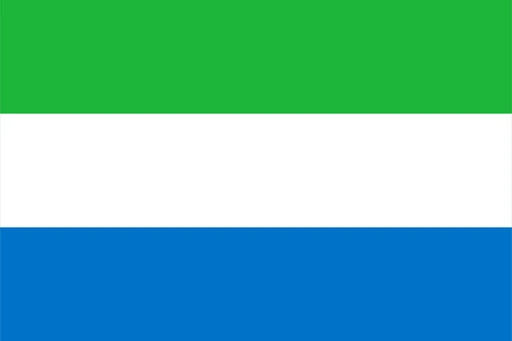
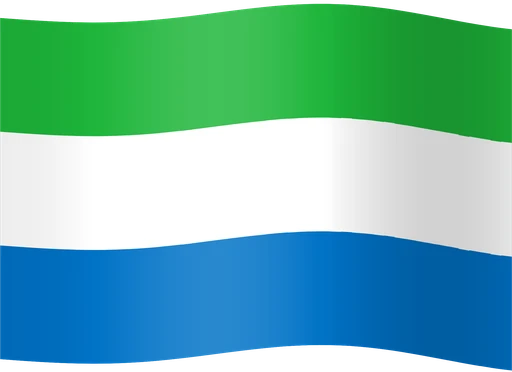
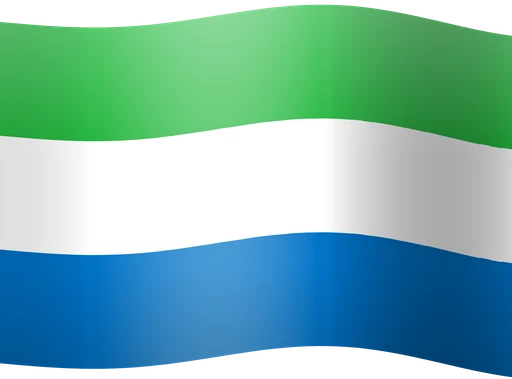
The flag of Sierra Leone is a tricolor of three horizontal bands: light green, white, and light blue. Green stands for agriculture, the mountains, and natural resources; white for unity and justice; blue for the sea and the natural harbor at Freetown, the capital.
Sierra Leone's flag is three horizontal stripes, green over white over blue, and it has looked that way since the day of independence.
Adopted at independence, 1961
The flag was adopted on April 27, 1961, the day Sierra Leone declared independence from British colonial rule. Before that the territory used the standard colonial pattern: a Union Jack in the canton and an emblem for the colony.
Pan-Africanism and the nationalist movements crossing the continent in the mid-20th century shaped what came next. Political leaders and nationalists worked on a design that avoided colonial imagery altogether and instead reached for things that would hold across the whole population. The exact designer has never been confirmed; the choice of colors was a collective decision by the country's leadership.
Green, white, and blue
Green, at the top, is for the agricultural land and the natural resources. White, in the middle, is for unity and justice. Blue, at the bottom, is for the Atlantic and for the natural harbor at Freetown, which has shaped the country's trade and contact with the outside world since long before independence.
Usage
The flag is displayed at government buildings, schools, and diplomatic missions. It is raised in ceremonies on Independence Day and at other public celebrations. Protocol requires it to be hoisted briskly and lowered ceremoniously, and it may be flown at half-mast during national mourning.
The military and other official organizations use variants that add emblems or insignia for the particular branch or institution.
It also appears in art, literature, and music, and in schools, where it does the ordinary work of teaching children what country they live in.
Similar flags or influences
The green, white, and blue combination is unusual in the region. Sierra Leone shares green and white with Nigeria, but the blue band, and the maritime history behind it, sets the flag apart. Colonial flags left no visual trace on the design.
Common questions
- What do the colors on the Sierra Leone flag mean?
- Green stands for agriculture and natural resources, white for unity and justice, and blue for the Atlantic Ocean and the harbor at Freetown.
- When did Sierra Leone adopt its flag?
- Sierra Leone adopted its flag on April 27, 1961, the day the country became independent of Britain.
Download this flag
Free in 12 styles, from 32px icons up to 2000px, as SVG, PNG, WebP and JPG.