The Flag of Saudi Arabia
Kingdom of Saudi Arabia
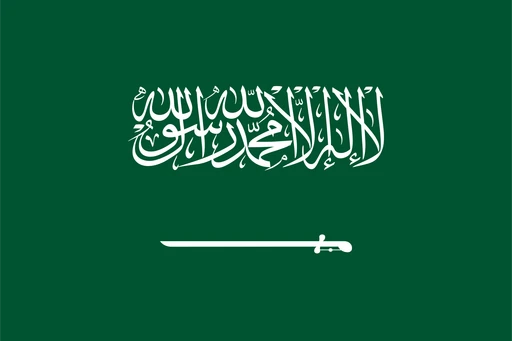
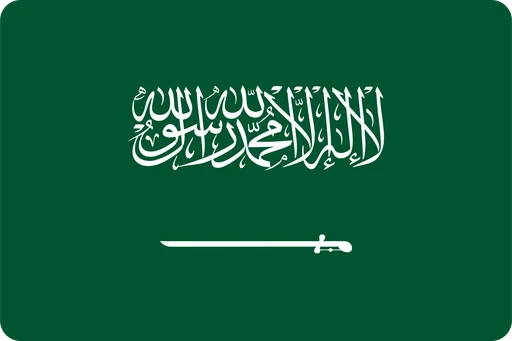
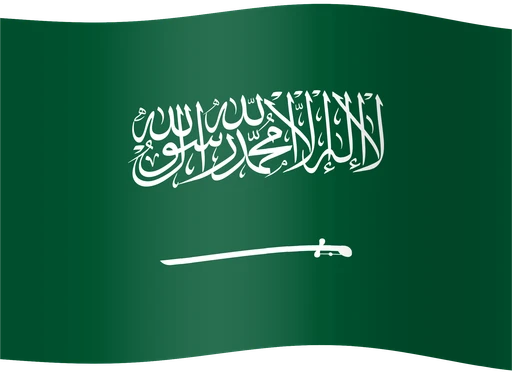
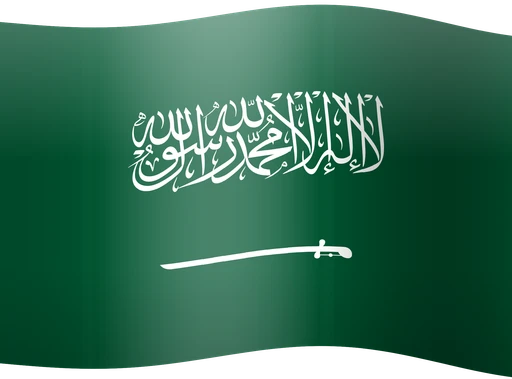
The flag of Saudi Arabia is a green field with the Shahada, the Islamic declaration of faith, in white Arabic script ("There is no god but God; Muhammad is the Messenger of God") above a white horizontal sword. It is one of the few national flags in the world to carry script, and the green is the color traditionally associated with Islam.
The flag of Saudi Arabia is green, with an Arabic inscription and a sword in white. Very few national flags carry writing, and fewer still carry a religious creed.
From Ibn Saud to the 1973 standard
The flag has its roots in the early 20th century, in the Saudi state taking shape under Abdulaziz Ibn Saud. Its current form was officially adopted on March 15, 1973, and its development is bound up with the unification of the Kingdom of Saudi Arabia in 1932.
Early versions were a plain green field for Islam with a white sword for the military strength of the House of Saud. The shahada became a standard part of the design in the 1920s. Later changes were mostly matters of the sword's position and orientation. Other flags in the region use the same green field to signal Islamic heritage, but none carry this inscription.
Green, the shahada, and the sword
The field is green, with the shahada in white above a horizontal sword. Green stands for Islam, and in Islamic tradition for life and paradise.
The inscription reads: "There is no god but Allah, Muhammad is the Messenger of Allah." The sword beneath it stands for justice and strength, and for the country's founding under Ibn Saud. It points to the left, in the direction of prayer toward Mecca.
The proportions are fixed. The flag is twice as long as it is tall, and the script takes up a large share of the field, set above the sword.
Usage and protocols
The flag flies at public buildings, government offices, and national events. Because it carries the shahada, the rules around it are stricter than for most national flags. It must never touch the ground or be handled disrespectfully, and printing it on clothing or on anything consumable is prohibited. It is raised briskly and lowered ceremoniously, and damaged flags are disposed of securely rather than discarded.
On Saudi National Day the flag is the center of the celebrations. Its religious content gives it a weight beyond the national: it is a statement of faith as much as a marker of the state.
Related flags and influences
Saudi Arabia's flag shares its green with other Islamic countries, and historical Arabian banners lie behind its design. Some flags have used designs close enough to cause momentary confusion, but the inscription settles the matter.
References
[1] Saudi Arabian Ministry of Culture. (https://moc.gov.sa)
[2] International Federation of Vexillological Associations. (https://ifvex.org)
[3] Encyclopedia of Islam and the Muslim World. (Gale Group)
Common questions
- Why is the flag of Saudi Arabia green?
- Green is the color of Islam, which is central to the country's identity. In Islamic tradition it stands for life and paradise.
- What does the inscription on the Saudi Arabian flag mean?
- It is the shahada: "There is no god but Allah, Muhammad is the Messenger of Allah." The declaration of faith is the foundation of the country's religious life.
- What does the sword on the Saudi Arabian flag represent?
- The sword stands for justice and strength. It refers to the military power of the House of Saud and to the founding of the country by Ibn Saud.
Featured in these articles
- The Only Flag in the World That Lies to You Depending on Which Side You're Standing On
- The Sword on the Flag: How Arabia's Most Loaded Symbol Became a Statement of Holy Authority
- The Cedar That Outlasted Every Regime: How Lebanon Built a Nation Around a Symbol No One Could Own
- The Color That Couldn't Decide: How Green Became the Most Ideologically Contested Hue in Flag Design
Download this flag
Free in 12 styles, from 32px icons up to 2000px, as SVG, PNG, WebP and JPG.