The Flag of Peru
Republic of Peru
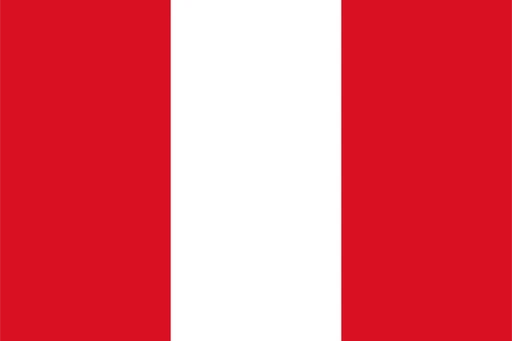
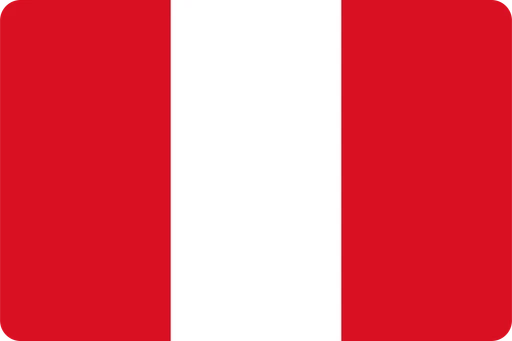
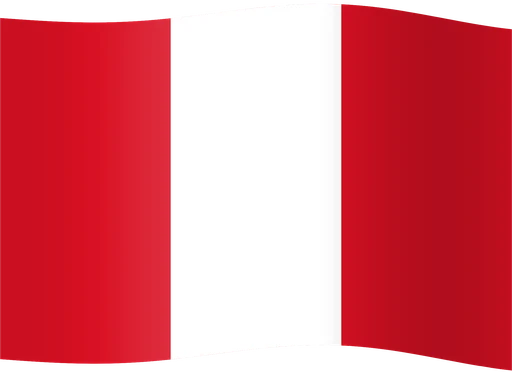
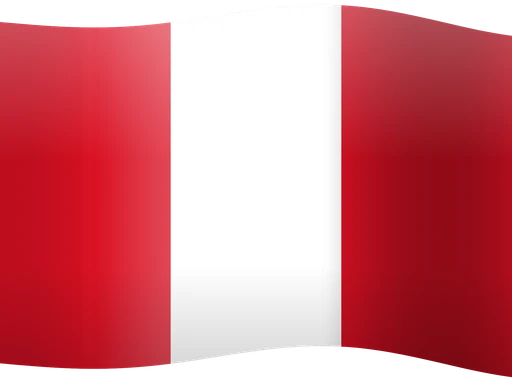
The national flag of Peru is three vertical stripes of equal width, red, white and red. The state and war versions carry the national coat of arms on the white stripe; the civil version, the one ordinary Peruvians fly, has no emblem at all. Red is the blood spilled for independence and white is peace.
The flag of Peru is three vertical stripes, red, white and red. Whether it carries the coat of arms depends on who is flying it.
From San Martín's diagonal to the stripes
José de San Martín, one of the leaders of the South American independence struggle, sketched the first Peruvian flag in 1821, and it looked nothing like the current one: a diagonal division of red and white. Peru declared independence from Spain on July 28, 1821. The diagonal design did not last long. It was never really put into practice.
The flag Peru still uses was decreed on February 25, 1825, by Simón Bolívar together with the Constituent Congress, part of the same effort to settle governance and national identity that was going on across the newly independent republics. Three vertical stripes, red and white. The changes since have been minor.
Red, white, and the coat of arms
Red is the blood shed by those who fought for independence, white is peace and unity.
The state flag adds the national coat of arms to the white stripe: a vicuña for Peru's animals, a cinchona tree for its plants, and a cornucopia for its mineral wealth. The civil flag leaves the white stripe bare, which is the version most Peruvians own. The navy uses the Bandera de Guerra, which puts the arms on a square field.
Similar flags
Peru's flag gets confused with Canada's, which shares the vertical red-white-red layout, and with Indonesia's, which shares the colors but not the arrangement. The similarities stop at the surface: Peru's design came out of the South American independence wars and carries meanings of its own.
Where it flies
The flag is displayed on government buildings and on national holidays, Independence Day above all, with Peruvian law setting out how it should be handled. Beyond the official calendar it turns up at sporting events and cultural celebrations, and it recurs in Peruvian art and literature.
Common questions
- What do the colors on the Peruvian flag mean?
- Red is the blood spilled for Peru's freedom and white is peace and unity.
- Why does the state flag of Peru have a coat of arms?
- The arms show a vicuña, a cinchona tree and a cornucopia, standing for Peru's animals, plants and mineral wealth.
Featured in these articles
Download this flag
Free in 12 styles, from 32px icons up to 2000px, as SVG, PNG, WebP and JPG.