The Flag of Pakistan
Islamic Republic of Pakistan
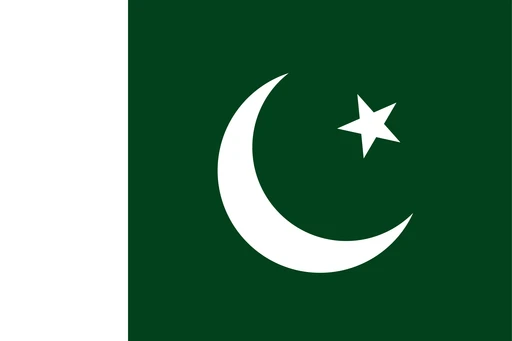
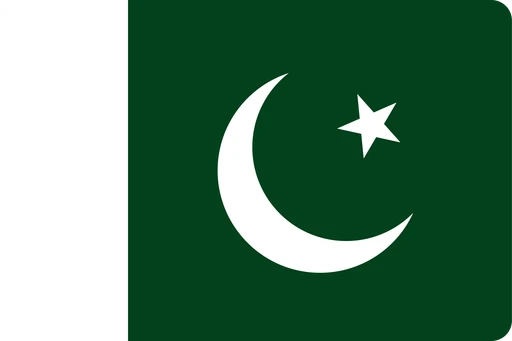
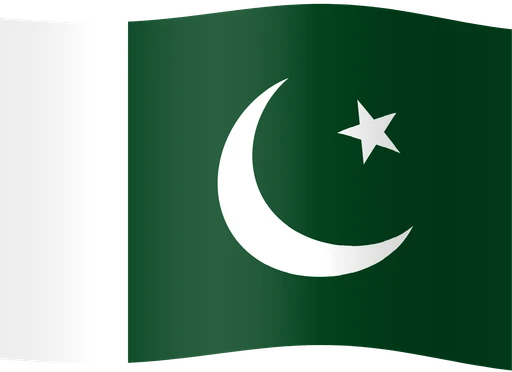
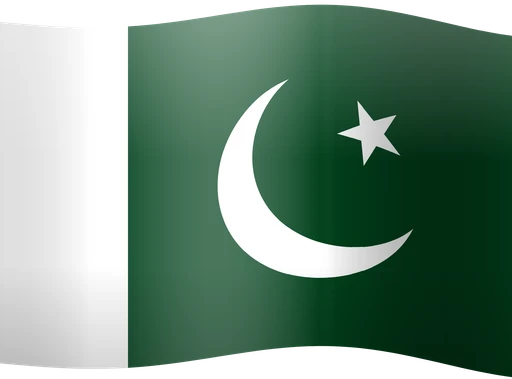
The flag of Pakistan is dark green with a white vertical stripe at the hoist and a white crescent moon and five-pointed star in the green field. The green is for Islam, the white stripe for the country's religious minorities. The crescent and star are long-standing Islamic symbols.
The flag of Pakistan, the Parcham-e-Sitāra-o-Hilāl, was adopted on August 11, 1947, three days before independence.
From a party banner to a national flag
Syed Amir-uddin Kedwaii designed it, and the source material was close at hand: the flag of the All-India Muslim League, founded in 1906, which had spent decades arguing for a separate Muslim-majority state. The new flag drew directly on that banner, with one addition that mattered. A white stripe at the hoist stood for the religious minorities who would be citizens of the new country. The Constituent Assembly of Pakistan approved the design on August 11, 1947, during the partition of British India, and Pakistan became independent on August 14.
Green, white, and the crescent
The flag is a dark green field in a 2:3 ratio, with a white crescent moon and five-pointed star at the center of the green and the white stripe running down the hoist. Green is Islam and the Muslim majority. White is the minorities, and peace. The crescent stands for progress and the star for light and knowledge.
The crescent and star appear on the flags of other Muslim-majority states, Turkey and Azerbaijan among them, where they carry much the same associations of growth and guidance.
Flag days and protocol
The flag flies on government buildings and military installations, and it comes out in quantity on Pakistan Day and Independence Day. Rules cover how it is handled, displayed, and disposed of, and it is flown at half-mast for mourning. Schools and public institutions build ceremonies around it. The navy and the other service branches use ensigns that keep the crescent and star but arrange them differently.
References
Government of Pakistan - National Symbols
International Federation of Vexillological Associations
Encyclopedia Britannica - Pakistan: History and Cultural Context
Common questions
- What do the colors on the Pakistan flag signify?
- Dark green is for Islam and the Muslim majority; the white stripe is for religious minorities and for peace.
- What do the crescent and star on the Pakistan flag mean?
- The crescent stands for progress and the five-pointed star for light and knowledge, both drawn from Islamic tradition.
Featured in these articles
- The Map That Became a Flag: Why Cyprus and Kosovo Put Their Own Borders on Their Banners, and What That Desperate Move Reveals
- The White Flag That Isn't Surrender: How Switzerland, Georgia, and the Holy Roman Empire Turned a Blank Canvas Into Bold Identity
- The Color That Couldn't Decide: How Green Became the Most Ideologically Contested Hue in Flag Design
- The Sun That Never Sets on Flags: Why Argentina, Uruguay, and Bangladesh All Looked to the Sky, and Meant Completely Different Things
Download this flag
Free in 12 styles, from 32px icons up to 2000px, as SVG, PNG, WebP and JPG.