The Flag of Namibia
Republic of Namibia
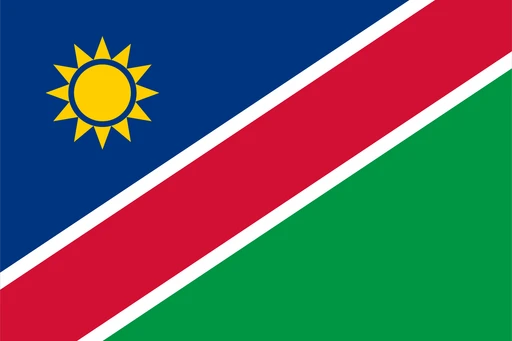
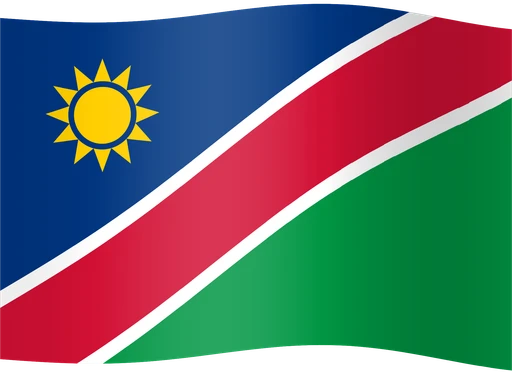
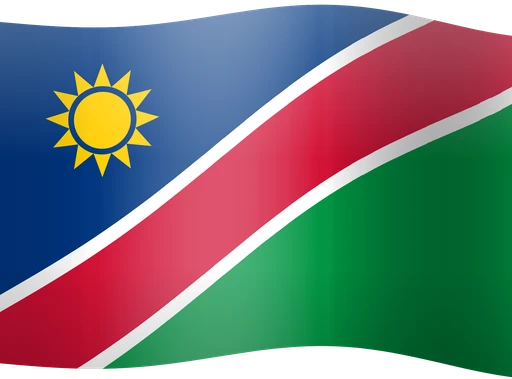
A red diagonal band edged in white splits the flag of Namibia into two triangles. The upper one is blue and carries a golden sun with twelve triangular rays; the lower one is green. The colors point to the country's natural resources, to peace, and to the hope of unity among its people.
Namibia's flag went up for the first time on March 21, 1990, the day the country became independent. Behind that date lay German colonial rule from the late 19th century, then South African administration under a League of Nations mandate after the First World War, and a long liberation struggle led principally by the South West Africa People's Organization (SWAPO). The United Nations pressed the case for Namibian sovereignty with sanctions and diplomacy, and the handover itself was UN-supervised.
The flag came out of a national competition run in preparation for independence. A special committee sifted more than 800 entries before settling on the winning design.
Reading the flag
A red band edged in white runs from the lower hoist corner to the upper fly corner, cutting the field into two triangles. The upper triangle is blue and carries a golden sun with twelve triangular rays. The lower one is green.
Blue is the Namibian sky and the Atlantic, which forms the country's western boundary. Red is the Namibian people, their struggles and their resilience. White is peace and unity. Green is vegetation and farmland. The sun stands for life and energy. The flag flies at a ratio of 2:3, and construction sheets fix the angles and dimensions for official reproduction.
The palette overlaps with the pan-African colors used across the continent, and the design carries the mark of the liberation movement that fought for independence, though the arrangement is Namibia's own.
Where it flies
The flag flies over government buildings, at Namibian embassies and high commissions, and on national holidays such as Independence Day. Protocol holds that it should not touch the ground, and it is flown from sunrise to sunset unless it is lit at night. Military versions carry distinguishing emblems for different branches or ranks. The flag also appears in the Namibian coat of arms and in the presidential standard.
References
[1] Government of Namibia. http://www.gov.na
[2] United Nations Archives on Namibia. https://archives.un.org
[3] Smith, Whitney. "Flags Through the Ages". Boston: McGraw-Hill, 1975.
Common questions
- What do the colors on the Namibian flag stand for?
- Blue is the sky and the Atlantic Ocean. Red is the Namibian people and their resilience. White is peace and unity, and green is vegetation and farmland. The golden sun stands for life and hope.
- Why is there a sun on the Namibian flag?
- The golden sun has twelve rays and stands for life, energy, and hope, matching the mood of the country at independence.
Featured in these articles
- South Africa's Flag Was Designed to Mean Nothing, and That's the Point
- The Diagonal That Refuses to Be Ignored: What Trinidad, Tanzania, and Namibia's Bold Stripes Are Really Saying
- Stripes That Tell the Wrong Story: How the Horizontal Band Became the Default, and What Countries Lost When They Copied It
- Diagonal Lines and Divided Futures: How Guyana, Tanzania, and Saint Kitts and Nevis Used Slashes to Tell Stories of Struggle
Download this flag
Free in 12 styles, from 32px icons up to 2000px, as SVG, PNG, WebP and JPG.