The Stories Behind Africa's Flags: Symbolism and History
Julio Song · · 3 min read
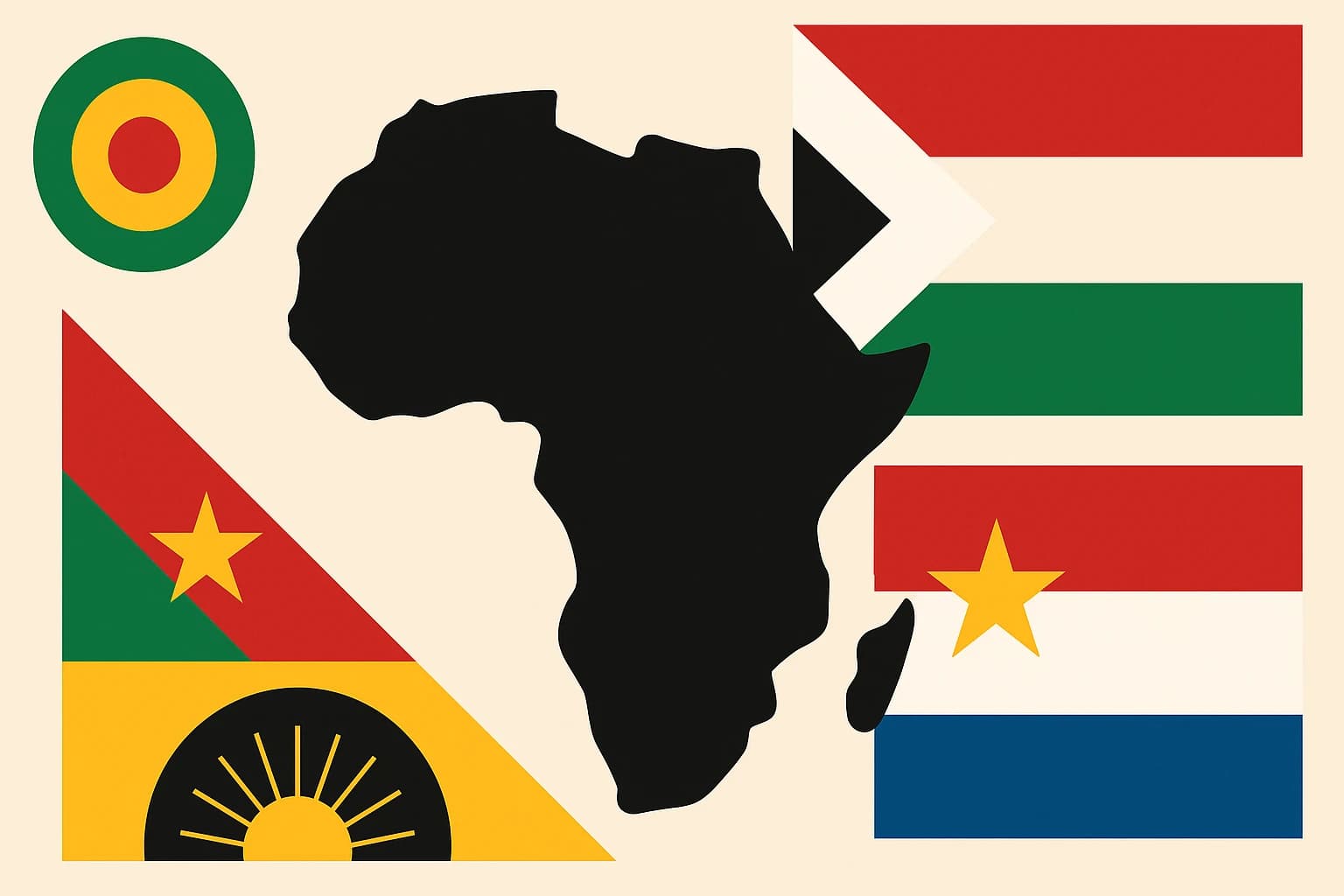
African flags are, for the most part, independence flags. They were designed at or near the moment colonial rule ended, by people who had just been through the fight, and the colors were picked to say something specific about what the country had come through. That makes them easier to read than flags that accumulated slowly over centuries. There is usually a stated meaning, and it is usually about the same handful of things.
Algeria: green, white, and a red crescent
Algeria's flag is a field divided between green and white with a red crescent and star in the middle.
Green stands for Islam, the country's predominant religion, and white for peace. The crescent and star carry both the Islamic heritage and the struggle that produced the state, which was a war against French rule. During the revolution the flag worked as a rallying point, which is the ordinary job of a liberation banner and one this design did well.
Angola: a star, a cogwheel, and a machete
Angola's flag is red over black, cut across the middle by a yellow emblem: a star, a cogwheel, and a machete.
Red is the blood spilled fighting Portuguese rule. Black is the African continent. The emblem together stands for progress, industry, and the struggle against oppression, which is about as explicit as flag symbolism gets. Most national flags gesture at their values. This one names the tools.
Zambia: an eagle over green
Zambia's flag is a green field with an orange eagle in flight.
Green is the country's vegetation, red the struggle for liberation from British colonial rule, black the people of Zambia, and orange its mineral wealth, copper in particular. The eagle stands for the country's ability to rise above its difficulties, which is the one piece of the design that is aspiration rather than history.
What the three have in common
Line them up and the same themes keep returning: unity, struggle, and cultural identity. Many African flags use the Pan-African colors, red, yellow, and green, which point at a shared history and a deliberate solidarity across the continent rather than at anything specific to one country. That is part of the reason these flags can look alike from a distance while meaning quite different things up close.
Who reads them now
Younger Africans have a lot to do with how these flags get read today. Social movements borrow flag symbolism to tie current demands to older struggles, which keeps the meanings moving. The independence-era explanations are still on the record, but what people mean when they raise the flag has kept changing since.
Julio Song
Writer
Julio is a staff writer at FlagDB. He studied Mathematics at the University of Madrid and has a passion for vexillology.
More from Julio Song →