A flag is a compression format. A country picks a handful of shapes and colors and asks them to carry a history, a set of values, and an argument about who belongs. The symbols that make the cut are usually the ones tied to a moment the nation wants remembered, or an attribute it wants claimed.
Four emblems and what they carry
Bhutan puts the Druk, the Thunder Dragon, across the center of its flag, and the reading attached to it is protection: an assertion of power and authority standing guard over the country's traditions.
Argentina's sun carries hope and freedom, which is about as direct as flag symbolism gets.
Canada's maple leaf stands for peace and for the natural world, a nod to the forests that cover much of the country.
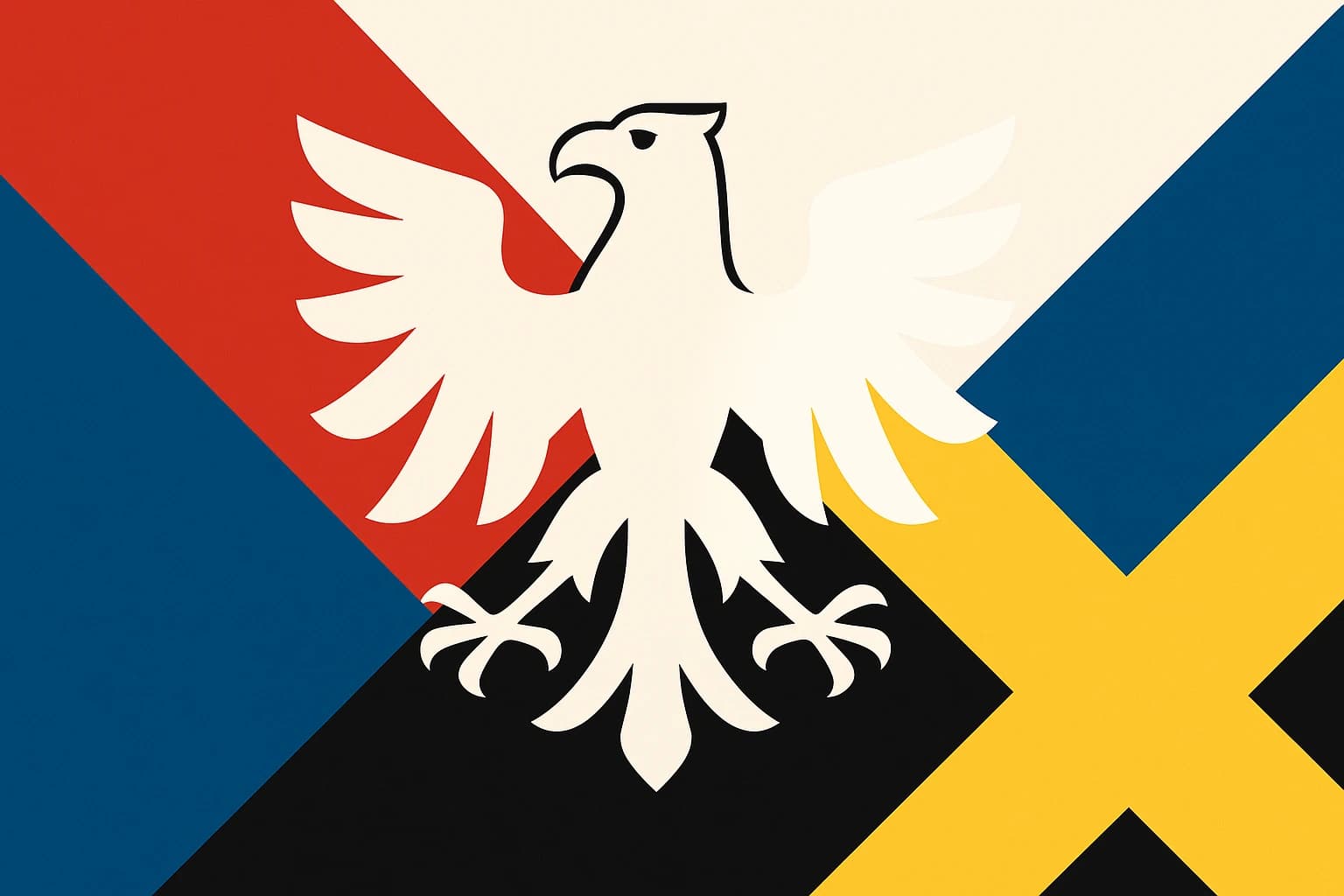
Mexico's eagle is both historical and cultural, reaching back into ancient myth while functioning as a straightforward patriotic emblem.
Color as a second layer
Colors on flags are chosen as deliberately as the symbols. Red usually signals bravery and resilience. White carries peace and purity. Blue suggests loyalty and justice.
Combinations complicate that. Red and white together can read as a nation pursuing peace through strength, which neither color says on its own. The meaning sits in the pairing rather than in either half.
Designs change, and so do readings
Flag designs are not fixed. They shift with political events, and traditional symbols get reinterpreted for modern use. Globalization pulls in elements from other design traditions while countries try to hold onto something distinctive, which is a tension most redesign debates end up circling.
Two common misconceptions
Symbols get misread more often than people assume. A charge that means one thing in the country that flies it can be read as something entirely different elsewhere, and symbols are sometimes borrowed with no understanding of what they mean to the people they came from.
There is also a definitional confusion worth clearing up. A flag represents a country's identity. A banner may be decorative or ceremonial. The two are not interchangeable, even though the words get used that way.