Flags of the World: A Colorful Journey Through Cultural Symbolism

Flags of the World: A Colorful Journey Through Cultural Symbolism

Adam Kusama
|
|
4 min read

Introduction

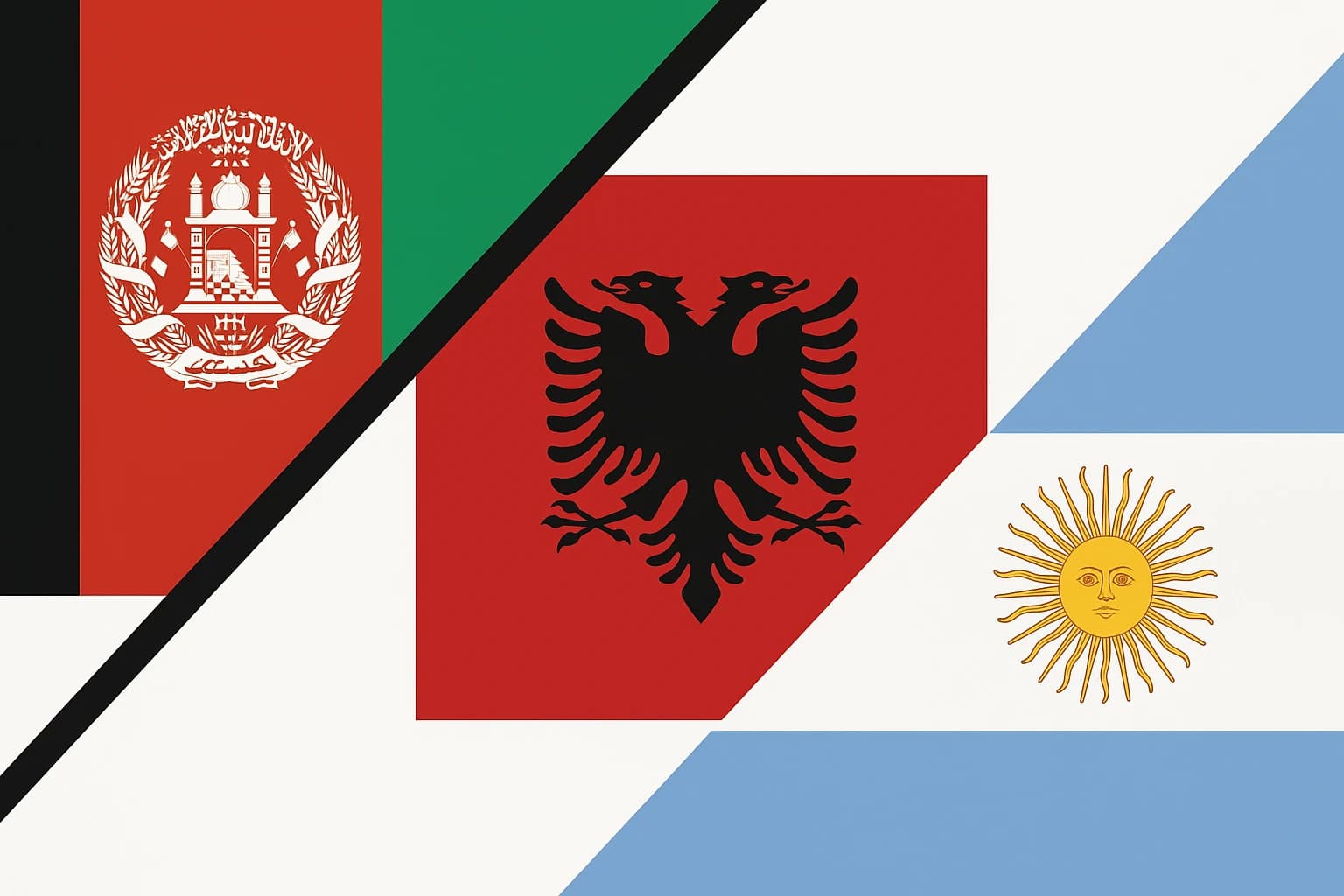
Flags. Simple pieces of cloth? Or deeply woven tales of culture, identity, and history? From the bustling streets of Kabul to the sunny shores of Buenos Aires, and through the historic landscapes of Tirana, these colorful emblems carry stories that resonate with nations. Today, we’ll journey through the flags of Afghanistan, Argentina, and Albania to uncover their unique symbolism and rich cultural heritage. Let’s dive into the captivating world of vexillology and explore how flags reflect the soul of a nation.

Understanding Vexillology: The Art and Science of Flags

Vexillology, the study of flags, isn’t just for historians or geography geeks. It is a window into a country's heart and soul. Flags anchor national identity. They inspire pride, unity, and sometimes defiance. The color of a flag plays a significant role in telling these stories.

Consider the importance of color — not just pretty hues, but vibrant representations of values. The red on a flag might symbolize the blood shed for freedom, while green could stand for fertility and wealth. Colors aren’t just visual; they are visceral.

The Symbolism of Colors in Flags

Let’s talk about colors on flags. Red, blue, green, and yellow appear frequently around the globe, each carrying nuanced meanings. Red, appearing on many flags, often denotes bravery or revolution. Blue might symbolize peace or the vastness of the sky and sea. Green, frequently, connotes growth or prosperity.

Yet, cultural interpretations of colors vary widely. A color that signifies hope in one culture may embody peace in another. It’s fascinating how a mere shade can echo a nation’s values or aspirations. Colors in flags are like cultural fingerprints, telling us where a nation has been and where it hopes to go.

Afghanistan: More Than Just a Flag

Afghanistan’s flag is a striking representation of the nation’s complex history and aspirations.

The Flag of Afghanistan
View Flag

Black, red, and green dominate this banner. Black stands for the dark past of foreign occupation, red signifies the struggle for independence, and green symbolizes a hopeful future and agricultural prosperity. The central emblem, featuring a mosque, provides a religious and historical touchstone.

Afghanistan's current flag reflects the trials and triumphs of its people. It encapsulates years of conflict and a future yet to be written in hopes and dreams.

Argentina: The Flag of the Sun and Sky

Now, let’s fly over to Argentina. Its flag is a serene tribute to the sky and the sun.

The Flag of Argentina
View Flag

The flag’s light blue and white colors are said to reflect the heavens and the clouds. But it’s not just about what’s overhead. It’s a nod to the Virgin Mary’s colors, showing the nation's Catholic roots.

The "Sun of May" at the center is rich with cultural narratives. It echoes the sun’s appearance during a historic revolt against Spanish rule. Argentina’s flag exudes a sense of warmth and pride, blending nature with national spirit.

Albania: The Power of the Black Hawk

Albania’s flag is fierce, iconic, and unforgettable.

The Flag of Albania
The Flag of Albania
View Flag

The crimson red background, coupled with a stark black double-headed eagle, symbolizes valor and defiance. The red signifies the blood of Albanian heroes, while the black eagle connects to national independence and unity.

With roots reaching back to Skanderbeg’s resistance against the Ottomans, this flag is more than an emblem; it is a dynamic symbol of national pride and historical resilience.

Global Perspectives: Flags as Cultural Narratives

Flags are more than the sum of their parts. They tell stories. Looking across the globe, it’s clear these symbols are diverse narratives woven into cloth. Whether it’s the Union Jack or the Japanese Nisshoki, each piece captures a narrative that’s both unique and universal.

Flags change, meaning evolves. What remained constant is their ability to convey heritage and inspire unity. These banners are alive with the past and flowing towards the future, connecting people in unique ways.

Conclusion: The Impact of Flags on National Identity

So, what do flags mean to a nation? Here’s the thing: Flags are powerful symbols. They carry the essence of their nation’s identity. Understanding them, from Afghanistan to Albania, helps us appreciate the rich tapestry of human history and diversity.

Let flags arouse your curiosity. There's always more to learn, and by understanding these symbols, you get a front-row seat to a nation’s story. Through vexillology, we see that every flag unfurls a narrative worth reading.

National flags are not mere pieces of fabric fluttering in the wind. They are emblems embedded with history, culture, and identity. As you appreciate Afghanistan, Argentina, and Albania’s flags, you're invited to celebrate the colorful narratives that unite people globally.

Our world is a canvas, rich with symbols waiting to be understood and celebrated. So next time you see a flag, remember — there’s more beneath the surface than meets the eye.

A

About the Author

Adam Kusama is a contributor to FlagDB, sharing knowledge and insights about flags from around the world.

Continue Reading

View All Articles
Flags of the World: A Colorful Journey Through Cultural Symbolism - FlagDB - The Flag Database