The Flag Czechoslovakia Split in Half: How the Czech Republic Kept a Banned Flag While Slovakia Started Over
Julio Song · · 8 min read
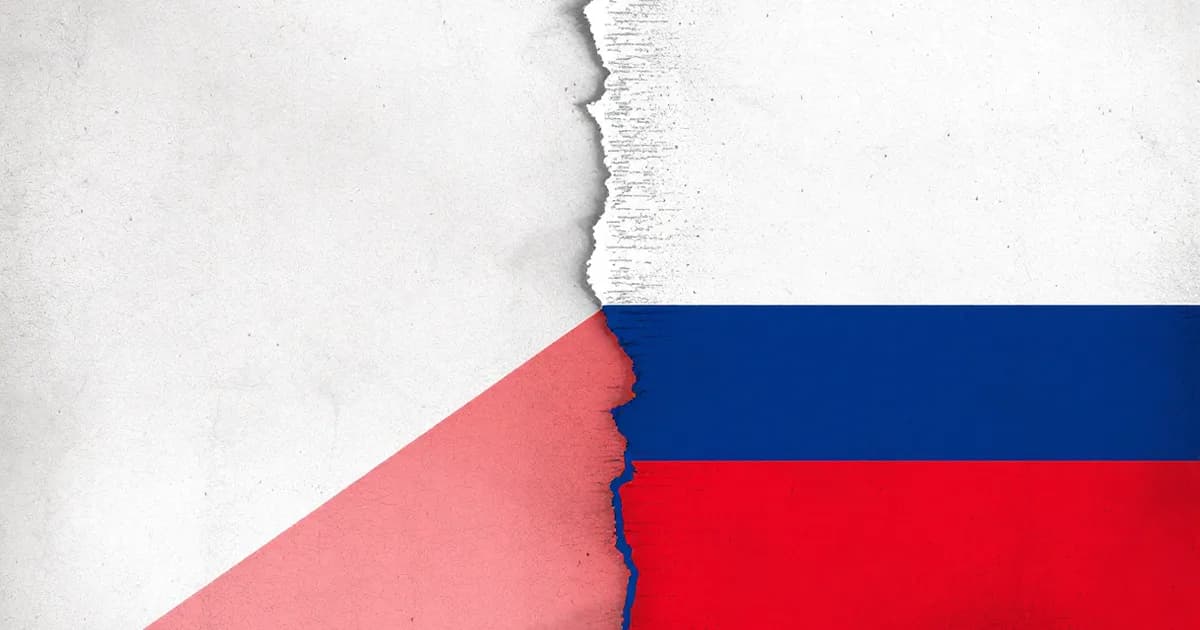
On January 1, 1993, Czechoslovakia stopped existing. Two new countries woke up in its place, and within days, one of them had broken a rule written into the treaty that created it. The rule was about a flag.
Nobody voted on the breakup. Nobody fought over it either. Historians call it the Velvet Divorce, a nod to the Velvet Revolution that had ended communist rule three years earlier. But divorces need paperwork, and one clause in that paperwork forbade either new country from keeping the old flag. The Czech Republic read the clause, kept the flag anyway, and told Slovakia the country that wrote the rule didn't exist anymore. Slovakia, left holding half a legal agreement and none of the goodwill, went and designed something new.
A flag built to hold two nations together
Czechoslovakia's flag started as a compromise, and it looked like one. Bohemia already had a flag: a plain white stripe over a red one. The trouble was that plain white-over-red was already spoken for. It was Poland's flag too, only rotated, and a brand new country sharing a flag with its neighbor was not the kind of confusion anyone wanted in 1920.
So Jaroslav Kursa, an archivist working for the new Czechoslovak Ministry of the Interior, added a blue triangle at the hoist. The National Assembly approved his design on March 30, 1920. White stood for Bohemia, red for Moravia and the idea of sacrifice for freedom, and the blue triangle did double duty. It nodded to Slovakia, which had used blue in its own flag since the 1848 revolutions, and it turned the whole thing red, white and blue, the colors nineteenth-century pan-Slavists had already claimed as their own. One triangle, two jobs: distinguish the flag from Poland's, and give Slovakia a stake in a country named after two peoples.
That balancing act held for 72 years. Then the country it was built for stopped wanting to be one country.
The divorce nobody voted on
The flag dispute wasn't the first fight over a symbol. In March 1990, months before anyone discussed splitting the country, parliament spent more than ten hours arguing over a hyphen. Slovak politicians wanted the country's name spelled Czecho-Slovakia, restoring a punctuation mark used briefly after independence in 1918 and again in 1938, as a mark of equal standing between the two nations. Czech politicians objected. Thousands of Slovaks rallied outside parliament over a single piece of punctuation, and the argument became known, only half joking, as the Hyphen War. The compromise that ended it, the clunky official name Czechoslovak Federative Republic, satisfied nobody and settled nothing. Two years later, the same underlying tension resurfaced with a flag instead of a hyphen, and this time there was no compromise available.
By 1992, Czechoslovakia's federal government was gridlocked between two men who agreed on almost nothing except that the arrangement wasn't working. Václav Klaus led the Czech side. Vladimír Mečiar led the Slovak side. In July 1992, the two of them struck a deal to split the country, and neither bothered putting it to a public vote.
That mattered, because the polling at the time didn't support them. Most Czechs and most Slovaks, asked directly, said they wanted to stay together. The federal parliament approved the split anyway, and the two men set the date: January 1, 1993. It became one of the most peaceful national breakups of the twentieth century, and one of the least democratic in how it happened.
Buried inside the dissolution legislation was a single clause meant to close off an obvious fight before it started. Neither successor state, the clause said, was permitted to go on using the symbols of the country that no longer existed. That included the flag. It read like a tidy solution. It lasted about as long as it takes to read it.
The country that made the rule doesn't exist anymore
Here's the surprising part. The Czech Republic didn't quietly ignore the clause. It looked at it, and kept the Czechoslovak flag anyway, triangle and all.
Officially, the Czech National Council passed Act No. 3/1993 on December 17, 1992, two weeks before Czechoslovakia legally ended, defining the new Czech Republic's state symbols. The flag in that act was Kursa's 1920 design, unchanged down to the shade of blue. For a brief stretch between 1990 and 1992, as the federation wound down, the Czech lands had reverted to using the old plain Bohemian white-and-red flag on its own. Then, with independence approaching, they went back and claimed the full Czechoslovak tricolor with the triangle for themselves.
When Slovak officials raised the obvious objection, that a clause explicitly barring this had been signed by both sides only months earlier, the Czech response was blunt: the state that wrote that rule was Czechoslovakia, and Czechoslovakia was gone. A party cannot be bound by a contract with nobody left to enforce it. It's the kind of argument a first-year law student might make as a joke. The Czech Republic made it in earnest, and it held, because there was no Czechoslovak government left standing to object on the rule's behalf.
Slovakia was not amused. There was no lawsuit, no international tribunal, nothing that rises to a formal dispute. What there was, according to vexillologists who tracked the fallout, was lasting resentment. Slovakia had lived up to its end of the agreement. The Czech Republic hadn't, and got to keep the more recognizable flag while paying no visible price for it.
Slovakia starts from scratch, then has to start again
Slovakia's response to the split was to build something entirely its own, and it took two tries to get there.
The first version came even before the divorce was final. On March 1, 1990, in the loosened political climate after the Velvet Revolution, Slovakia adopted a plain white-blue-red horizontal tricolor, the same pan-Slavic colors traced back to that 1848 flag first waved in the town of Brezová. It was simple, it was historically grounded, and it had one glaring problem nobody seemed to catch until independence got close: it was identical to the flag of Russia.
That same plain tricolor carried some baggage too. The white-blue-red stripes had already flown once before, over the wartime Slovak Republic, the state allied with Nazi Germany and led by Jozef Tiso from 1939 to 1945. Reviving the design in 1990 was not a simple return to an uncontested folk symbol. It was a flag with more than one chapter in its history, and Slovakia was about to add a third.
Two countries do not want to fly the same flag, especially not a newly independent one and a former Soviet superpower. So on September 3, 1992, the same year the dissolution clause was being drafted and ignored, Slovakia's constitution added a coat of arms to the hoist side of the tricolor: a white double cross standing on three blue hills, representing the Tatra, Fatra and Mátra mountain ranges, designed by Ladislav Čisárik and Ladislav Vrtel, who based it on a fourteenth-century coat of arms from the Kingdom of Hungary and enlarged the three hills to make it read as distinctly Slovak. The finished flag was raised for the first time at 20:22 local time that evening, in front of Bratislava Castle.
It's a strange bit of timing, when you line it up. Slovakia spent 1992 fixing its own flag so it wouldn't be mistaken for Russia's, while the Czech Republic spent the same year deciding it didn't need to change anything at all, agreement or no agreement.
What the clause never settled
The dissolution of Czechoslovakia is remembered as the model for how to split a country without violence, and on that count, it earned the reputation. Nobody was hurt. Borders were drawn on paper, not fought over on the ground. But the flag clause shows how a peaceful divorce still leaves one side feeling shortchanged, quietly, in ways that never make the international news.
A national flag is more than a design. It's a claim to continuity, a signal that says this is who we've been. The Czech Republic wanted that continuity and took it, betting correctly that a dissolved government couldn't come back to enforce a rule it had already stopped existing to defend. Slovakia wanted a clean break and a flag nobody would confuse with someone else's, and ended up needing two attempts and a coat of arms to get one.
Three decades on, both flags fly without controversy in their own countries. The Czech tricolor with its blue triangle still looks exactly like it did in 1920, still carrying Kursa's compromise design for a country that hasn't used it since Kursa was alive. Slovakia's flag, meanwhile, is the version people mean when they picture Slovakia today, coat of arms included, built specifically so nobody would mistake it for something else. The rule meant to prevent all of this got written down, signed, and broken within the same year, and the two flags that resulted are still telling that story, whether anyone reads the fine print or not.
Julio Song
Writer
Julio is a staff writer at FlagDB. He studied Mathematics at the University of Madrid and has a passion for vexillology.
More from Julio Song →