Red Means Courage, Blue Means Calm: The Working Vocabulary of Flag Color
Julio Song · · 2 min read
Why the color choices matter
Flag colors are deliberate. They carry psychological associations and cultural conventions that feed straight into national identity: red stirs up courage, blue tends to calm and reassure. The study of all this is vexillology, and much of it comes down to a small shared vocabulary of color that works as shorthand for a country's values.
Red: valor and sacrifice
Red has meant bravery for a very long time. It is intense and hard to ignore, which is part of why it turns up on the flags of Afghanistan, China, and Canada. Usually it honors people who fought, or a revolution that succeeded.
In Afghanistan's flag, red is courage and the struggle for independence.
Blue: peace and freedom
Blue is open sky and open ocean. The United Nations, Israel, and Argentina all use it.
For the UN, blue stands for global cooperation and tranquility.
Green: nature, prosperity, and Islam
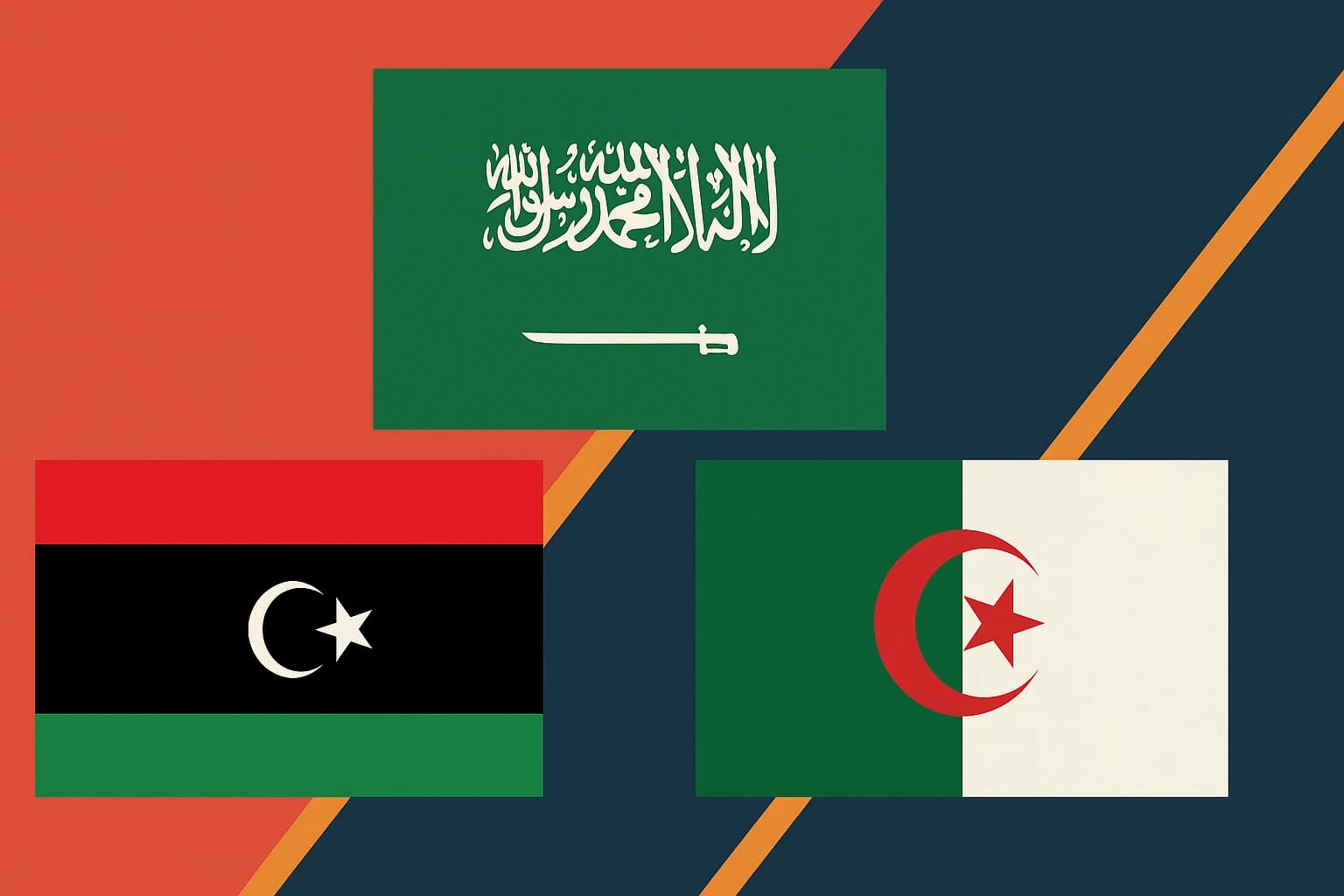
Green does its heaviest work in Muslim-majority countries, where it carries faith alongside prosperity and nature. Algeria, Libya, and Nigeria all use it.
In Algeria's flag, green is the Islamic faith and the hope of growth. Religion and national identity end up in the same stripe.
Black and yellow: unity and wealth
Black is not only a somber shade. On the flags of Germany and Ethiopia it means unity.
Germany's black is read as strength and resilience carried out of historical struggle.
Yellow is the opposite register: wealth and optimism, and it brightens whatever sits next to it.
What the combinations do
The interesting part is often the combination rather than any single color. The palettes of Germany and Russia both carry histories of alliance and conflict.
Russia's tricolor has shifted meaning across centuries, each band picking up its own associations along the way.
Colors move over time
A flag has to be read inside its own culture, and that reading changes. Post-colonial redesigns are the clearest case: new national identities emerged out of periods of upheaval, and the flags were rewritten to match.
Julio Song
Writer
Julio is a staff writer at FlagDB. He studied Mathematics at the University of Madrid and has a passion for vexillology.
More from Julio Song →Related articles
Fierce Colors: The Psychological Impact of Flag Colors Across Cultures
The Flag That Had to Please Everyone: How the European Union's Circle of Stars Became the Most Negotiated Image in History