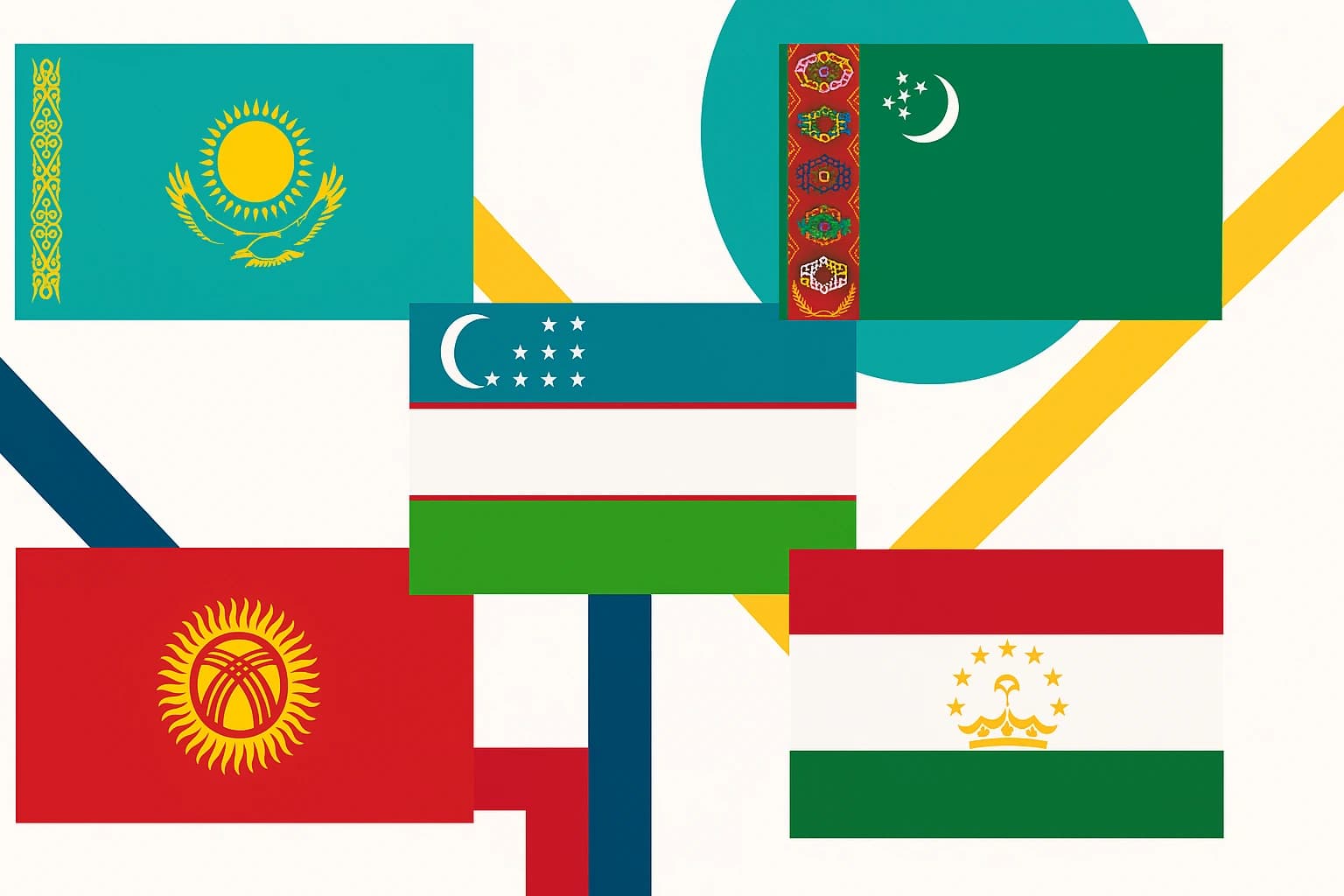
Kazakhstan, Uzbekistan, Turkmenistan, Kyrgyzstan, Tajikistan, and Afghanistan sit on what was once the heartland of the Silk Road, and their flags carry a fair amount of that history. Most of them are young designs, adopted within a few years of each other, and they borrow from the same pool of colors and motifs without ever quite matching.
The history behind the designs
Central Asia spent centuries as a trade corridor, shaped by the Silk Road and later by the Mongol Empire. In the modern era the region fell under the influence of outside powers, most consequentially the Soviet Union, until independence arrived in the early 1990s. The flags date from that moment, which is why so many of them read as deliberate statements about what came before.
Kazakhstan
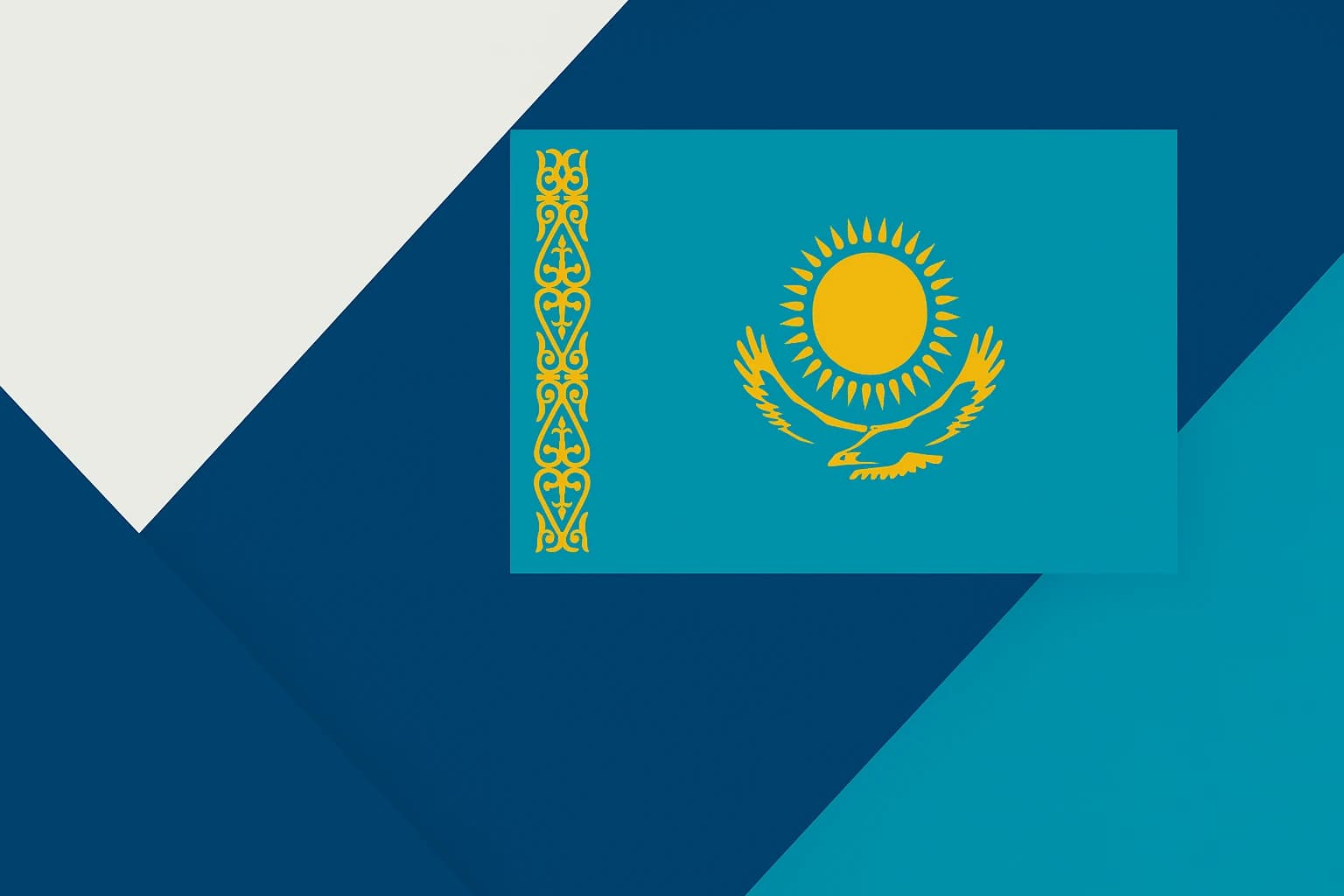
A golden eagle flies beneath a sun on a sky blue field. The imagery points to the country's nomadic heritage and to freedom.
Uzbekistan
Horizontal bands of blue, white, and green, with a crescent moon and twelve stars. The crescent stands for a new era; the stars stand for progress and peace.
Turkmenistan
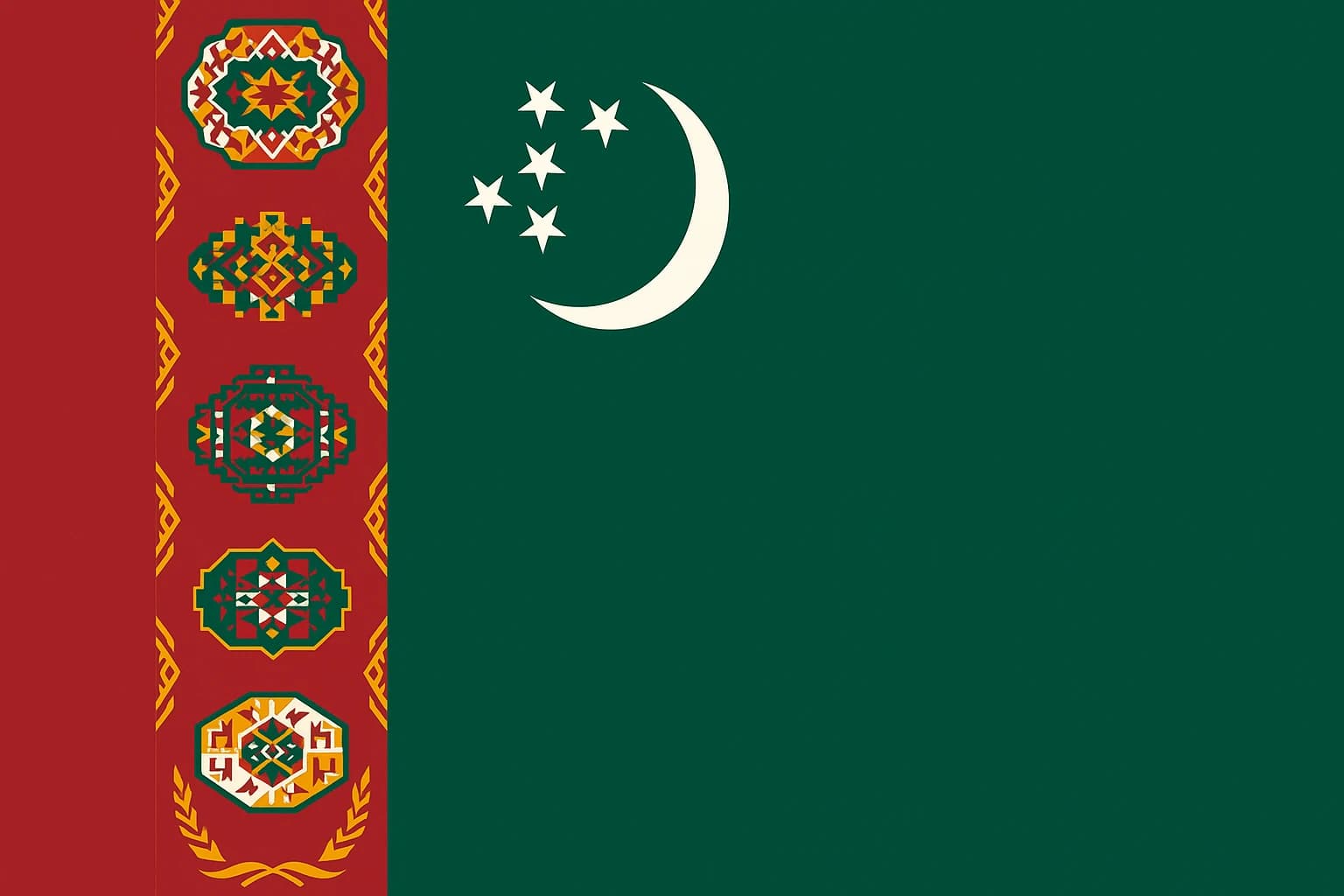
Carpet motifs, a reference to Turkmen textile work, on a green field that represents life and prosperity.
Kyrgyzstan
Red, with a sun at the center and the crown of a yurt inside it.
Tajikistan
A crown and seven stars, an emblem of sovereignty and a nod to the country's landscape.
Afghanistan
Afghanistan's flag has changed more often than any other in the region, each version tracking a change of regime.
Shared symbols
Several of these flags reuse the same elements. Green usually signals vitality and Islam. Red and blue turn up as courage and tranquility. Islamic decorative art and Central Asian textile patterns run through many of the designs, which is part of why the flags feel related even where the countries' histories diverge.
After independence
Each of these countries redesigned its flag after independence, and those designs have since become fixed points of national identity. Any proposed change tends to attract public attention out of proportion to the change itself.