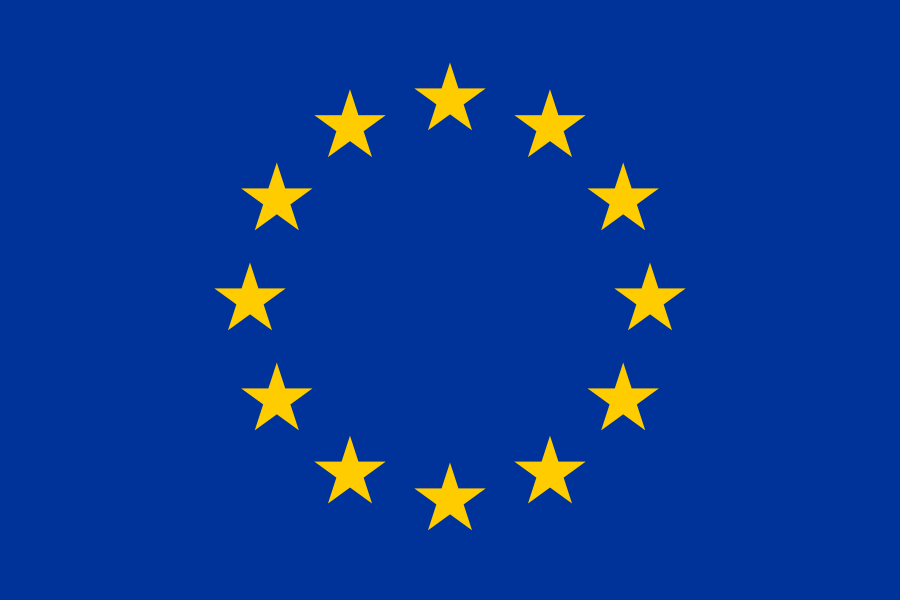
The Flag of The Council of Europe
The Council of Europe
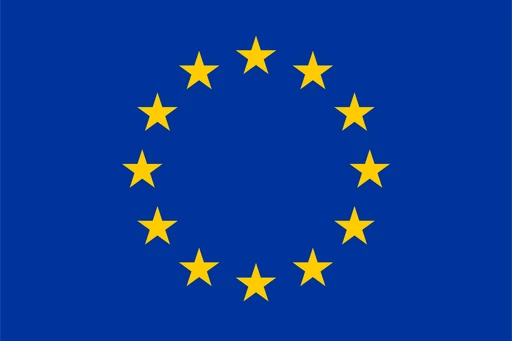
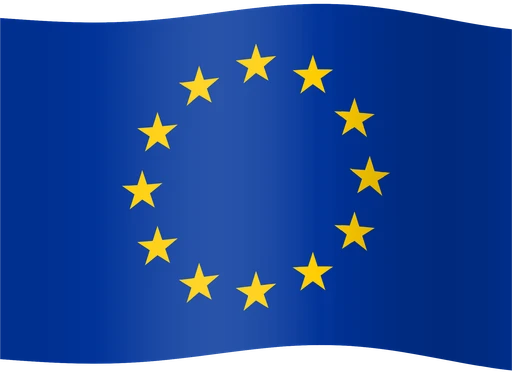
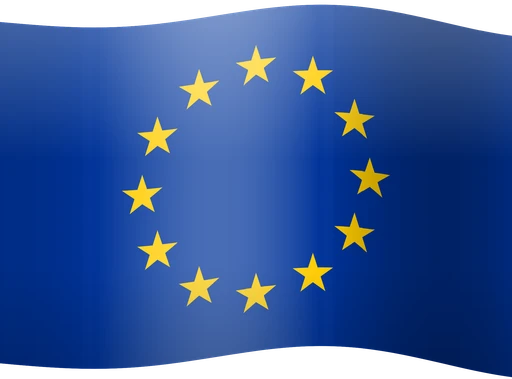
The flag of the Council of Europe is a circle of twelve golden stars on a blue field, in proportions of 2:3. The stars sit in a ring with no star above the rest, which stands for the union of the member countries. The number twelve was fixed on purpose. It stands for perfection and fulfilment, and it does not count members. The blue is Pantone Reflex Blue and the gold is Pantone Yellow. Many people know the design as the flag of the European Union, but the Council of Europe, a separate human rights organisation, chose it first.
Most people have seen this flag a hundred times and filed it under the European Union. It belongs to the Council of Europe first. A circle of twelve golden stars on a blue field was chosen by a human rights organisation in Strasbourg in 1955, thirty years before the EU institutions adopted it. The Council still flies it, and it is the plain version that remains its official flag.
Six years without a flag
The Council of Europe was established on 5 May 1949 by the Treaty of London. Its first Secretary General, Jacques-Camille Paris, asked the Assembly's Bureau to look at a flag in September 1949. The Bureau said the question was outside its competence. Proposals from the public arrived anyway, and many are still in the Council's archives.
In December 1951 the Assembly held a referendum on a shortlist of twelve designs. The result favoured Coudenhove-Kalergi's proposal. Turkey protested that a cross would not be acceptable to it. The flag question went quiet for a while.
Stars were the way out. In September 1953 the Assembly adopted its own emblem of fifteen gold stars on blue, after a report by the rapporteur Bichet. Germany objected. The number of stars matched the number of member states, and that count included the disputed Saarland. The Ministers' Deputies asked the Assembly to stop using the flag.
A committee of three Assembly members and three heraldic experts then produced eight interlocking rings, in the style of the Olympic flag. The Deputies rejected it in December 1954. The Italians compared the rings to a telephone, and the Germans compared them to chains.
Twelve stars and a mail clerk
In January 1955 the Secretariat staged a small exhibition of designs for the Deputies. Two survived: a design of twelve stars by Arsène Heitz and a constellation by Salvador de Madariaga. Madariaga placed a gold star for each sovereign European nation of 1938 at the position of its capital on the map. The Deputies preferred Heitz.
Heitz worked in the Council's mail office and sent in designs from 1951 until 1955. Almost thirty of them are kept in the archives. His first favourite was a flag based on the standard of Charlemagne. The Assembly backed the twelve-star flag on 25 October 1955 and recommended that the Deputies adopt it. They did so on 9 December 1955. It was launched officially in Paris on 13 December.
Some sources give 8 December as the adoption date. The Council's own account says 9 December.
Who deserves the credit is still argued. Heitz is the name the Council gives. Paul Lévy, the Director of Information, said in 1998 that he had designed the flag and calculated its proportions. In 1987 Heitz said the stars came from the crown of twelve stars in Marian imagery. Lévy denied knowing of any such link.
Blue, gold and a fixed number
The flag is a rectangle in proportions of 2:3. According to graphical specifications the Council published online in 2004, the blue is Pantone Reflex Blue and the stars are Pantone Yellow. Those translate to roughly #003399 and #ffcc00 on screen.
The twelve stars form a circle, upright and evenly spaced, with no star above any other. The Council's visual identity manual describes the circle as the union of its member countries. It calls twelve a number of perfection and fulfilment, and compares it to the months of the year and our time system.
That is why the count has never changed. The 1955 design dropped the idea of one star per member. A flag with a fixed number of stars has nothing to update when a country joins.
A flag lent to Brussels
For thirty years the flag was the Council's alone. In 1983 the European Parliament adopted the Council's design and proposed it as the emblem of the European Communities. EU leaders approved it in June 1985, and the institutions began to use it in 1986. In 1986 the Ministers' Deputies took note with satisfaction of the Community's decision to use the flag and the European anthem.
The European Union's own account of the flag starts in 1955 with the Council of Europe. Both organisations share the duty of preventing misuse of the symbol. Use of it is allowed, commercial or not, unless it suggests a false link to either body or supports aims that conflict with theirs.
Telling the two apart
Because the flag is shared, the Council often needs a way to show that it is not the EU. Its answer is a logo. Flags of the World reports that the current logo dates from June 2013 and pairs the flag with a white spiral. The logo flag is used in official settings where the difference matters. It has not replaced the plain flag as the official design.
The Council also awards a Flag of Honour to municipalities that promote European unity. More than a thousand have been awarded since 1961. It is a paler blue than the standard flag, with a gold fringe and two blue sashes bearing the Council's name in English and French.
References
[1] "The European Flag," European Union. https://european-union.europa.eu/principles-countries-history/symbols/european-flag_en
[2] "Council of Europe," Flags of the World (FOTW), quoting the Council of Europe's flag history, Statute and visual identity manual. https://www.crwflags.com/fotw/flags/eu_ce.html
[3] "Flag of Europe," Wikipedia. https://en.wikipedia.org/wiki/Flag_of_Europe
[4] "File:Flag of Europe.svg," Wikimedia Commons. https://commons.wikimedia.org/wiki/File:Flag_of_Europe.svg
Common questions
- Is the Council of Europe flag the same as the EU flag?
- Yes. Both organisations fly the same design, a circle of twelve golden stars on blue. The Council of Europe adopted it in 1955. The European Communities, which became the European Union, adopted it in 1985. The two organisations are separate. The Council is a human rights body, while the EU is a political and economic union.
- Who designed the Council of Europe flag?
- The Council credits Arsène Heitz, who worked in its mail office and submitted designs from 1951 to 1955. The credit is disputed. Paul Lévy, the Council's Director of Information, said in a 1998 interview that he designed the final flag and worked out its proportions himself.
- Why does the flag have twelve stars?
- The Council of Europe chose twelve as a fixed number, a symbol of perfection and fulfilment. It is not a count of member states. An earlier fifteen-star plan was dropped in 1955 because the number matched the membership at the time, and Germany objected to how that number counted the Saarland.
- What was the Council of Europe flag before 1955?
- There was no official one. The Council had no flag from its founding in 1949 until December 1955, although the Assembly used its own fifteen-star emblem from 1953. Proposals included Coudenhove-Kalergi's Paneuropa flag, a white flag with fifteen green stars, a design of eight interlocking rings and a constellation drawn by Salvador de Madariaga.
- What is the Council of Europe logo flag?
- It is the plain flag with the Council's logo added, a white spiral. It dates from 2013, according to Flags of the World, and it is used when the Council needs to be told apart from the EU. It has not replaced the plain twelve-star flag as the official design.
Download this flag
Free in 12 styles, from 32px icons up to 2000px, as SVG, PNG, WebP and JPG.