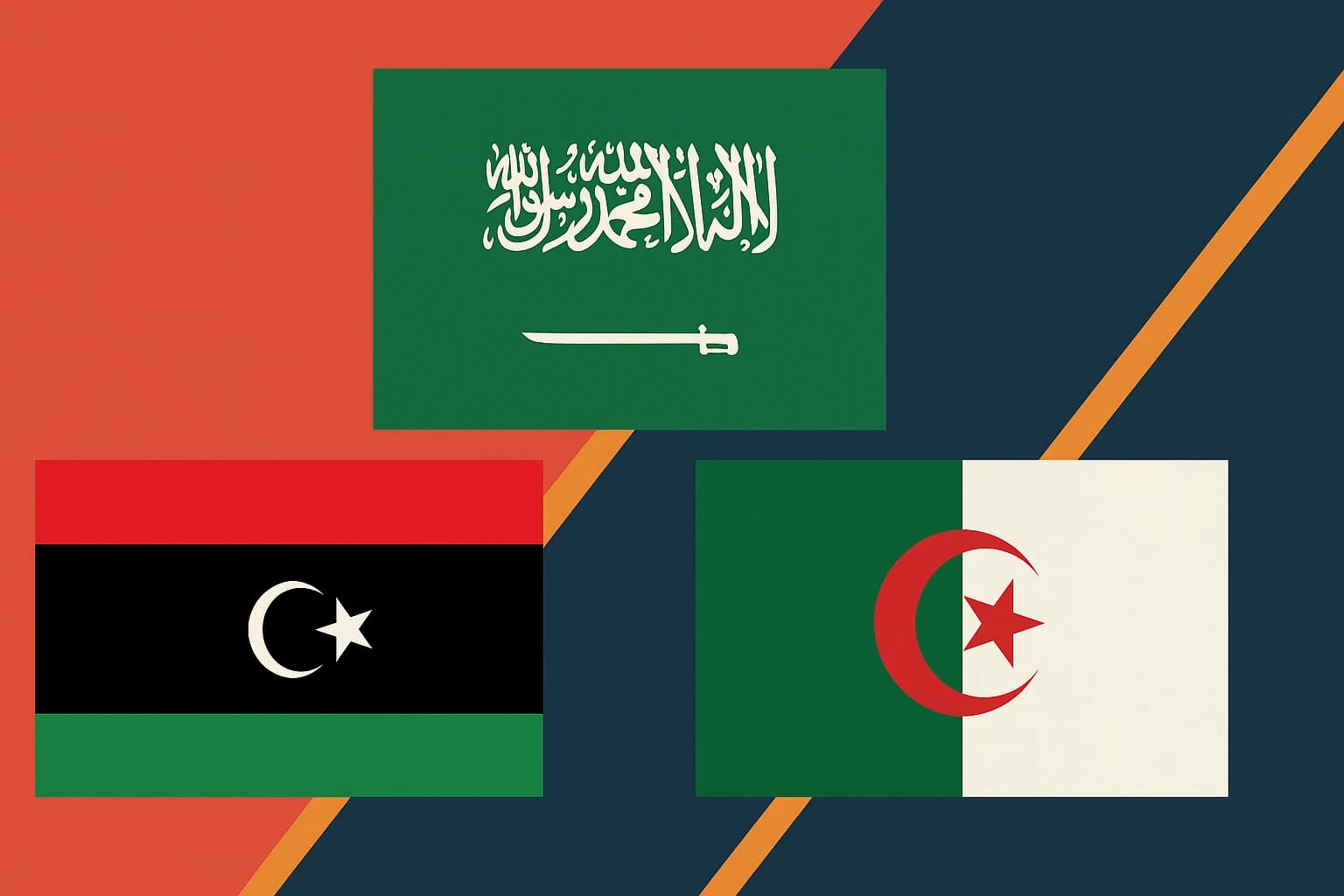
Afghanistan and Algeria are far apart in most respects, but their flags were built out of similar materials: a colonial past to answer, an Islamic identity to state, and a need to do both in a few square feet of fabric. Vexillology, the study of flags, is mostly the work of reading those choices back.
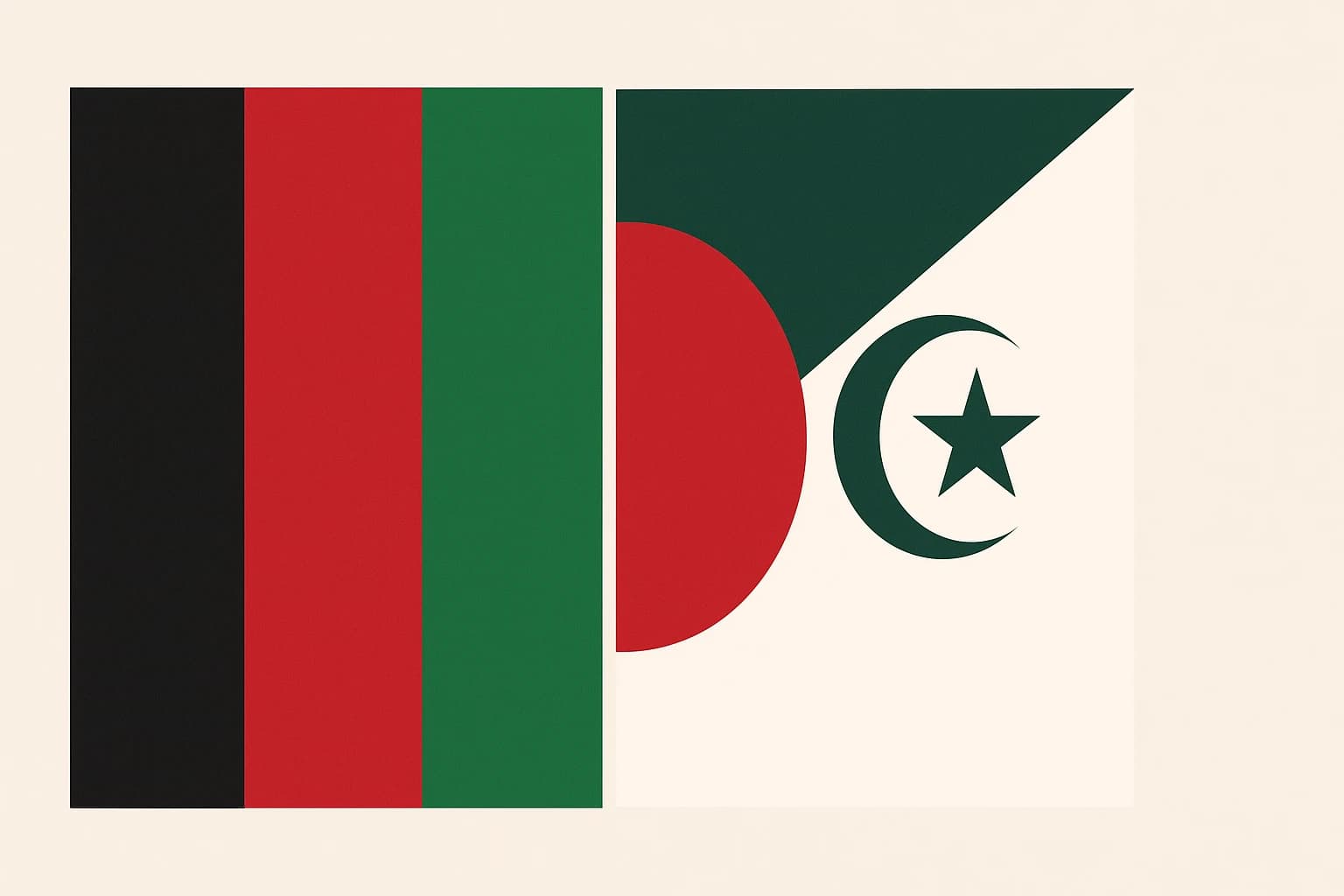
Afghanistan: black, red and green
Afghanistan's flag has changed many times. The colors have stayed more constant than the designs.
Black is for the country's troubled past, red for the blood shed for independence, green for hope and prosperity. At the center is a mosque with a laurel wreath around it, which puts Islamic heritage and a wish for peace in the same emblem.
Algeria: green, white and the crescent
Algeria's flag is about a long fight rather than a long history.
Green stands for Islam and for nature, white for purity and peace, and the red star and crescent for Islamic heritage and national pride. Algerians carried it through the war against French colonial rule, which is most of why it means what it means.
What the two have in common
Both countries were colonized and both used their flags to say so. Both also reached for plant imagery to talk about peace, the olive branch in Algeria and the laurel in Afghanistan, rather than leaving the flag entirely to the language of struggle.
Both flags still get used. They go up at protests and at celebrations, sometimes in the same week, and arguments about national identity in either country tend to end up as arguments about the flag.