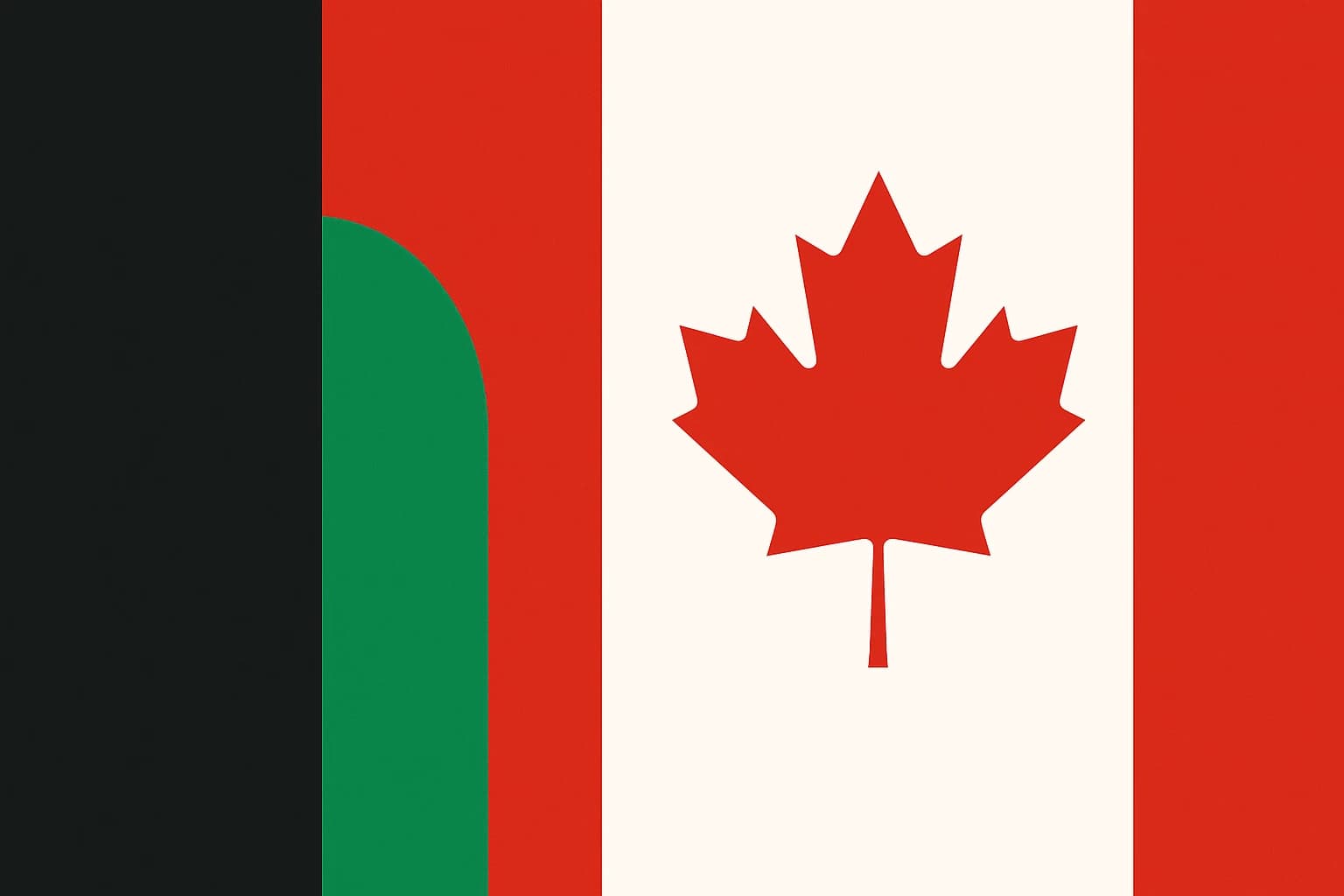
Afghanistan's national flag has been redrawn again and again. Canada's has been the same since 1965. Putting the two next to each other is a useful exercise, because it shows what a flag really records. Not a country's values so much as the current state of the argument about them.
Vexillology, the study of flags, is largely the study of that argument. It is also the reason a piece of cloth going up a pole at a national event produces a reaction that has nothing to do with the cloth.
Afghanistan, redrawn by each regime
The Afghan flag's origins go back to the 18th century, and it has been through many versions since. Wars, changes of government, and cultural shifts all left marks on the design.
The current flag has black, red, and green stripes and carries emblems for the country's struggle and its resilience. You can read the pattern of constant redesign as instability, and that reading is fair enough. It is also an honest record. A flag that changes with every regime is telling you exactly how contested the state has been.
Canada, and the maple leaf
Canada's flag came out of a long public argument about what the country was, rather than out of a war.
Earlier designs carried British rule on their face. The maple leaf, adopted officially in 1965, points instead at the country's own landscape, and at a society of many origins gathered under one emblem. A single leaf standing in for a very large mosaic is a lot to ask of a design, and it mostly works.
What the flags do now
In Afghanistan, flags turn up in protests, where they function as symbols of resistance and hope. In Canada the flag shows up in arguments about national identity and reconciliation, in a country that keeps redefining itself in public. Different roles, but both are political rather than ceremonial.
Diaspora communities on both sides keep the traditions going far from the country itself, which is often where flag customs are observed most carefully.
Etiquette, tradition, and law
Afghan flag customs sit in tradition, and displaying the flag respectfully is part of that inheritance. Canada handles the same question through law, with rules governing how the flag is to be treated. Two routes to the same result.
Teaching younger generations where a flag came from is what keeps any of it meaningful. Without the history, the etiquette is just a set of rules about cloth.