On the morning of October 21, 2010, government workers across Myanmar climbed flagpoles, ladders, and rooftops to haul down the flag that had flown over their country for 36 years. By nightfall, the socialist-era banner, a blue canton bearing a rice sheaf ringed by a cogwheel on a red field, had vanished from every official building in the country. In its place hung something no citizen had been asked about, voted on, or even seen before that week: a horizontal tricolor of yellow, green, and red with a large white five-pointed star at its center.
There was no national ceremony. No presidential address. The old flags were collected by soldiers and, according to multiple reports, burned. The entire visual identity of a nation of 50 million people changed in a single day, three weeks before a general election meant to mark Myanmar's supposed transition from military junta to civilian democracy.
The old flag, a socialist relic that outlived its ideology
Myanmar's previous flag was adopted on January 3, 1974, when the country ratified a new constitution under General Ne Win's Burma Socialist Programme Party (BSPP). It replaced an earlier independence-era flag (1948 to 1974), which featured a blue canton with five small stars surrounding a larger one on a red field.
The 1974 design placed a blue canton in the upper hoist containing a rice sheaf (representing agriculture) encircled by a 14-toothed cogwheel (representing industry and the 14 states and divisions), all surrounded by 14 stars. The red field symbolized courage. The blue canton stood for integrity. White elements meant purity. It was a clean piece of Cold War-era socialist iconography, the kind of design you'd find pinned to the wall of any one-party state in the 1970s.
The strange part is that by 2010 the socialist economy that flag celebrated had been dead for nearly two decades. The BSPP collapsed in 1988 amid pro-democracy uprisings. The military State Law and Order Restoration Council (SLORC) that replaced it rebranded the country from "Burma" to "Myanmar" in 1989, yet kept the socialist flag flying for another 21 years.
That was institutional inertia rather than nostalgia. The junta had bigger priorities than graphic design, being busy crushing dissent, managing sanctions, and enriching themselves. By the late 2000s, as the generals drafted a new constitution to engineer a transition to quasi-civilian rule, every symbol of the old state was on the table.
The 2008 constitution
The legal basis for the flag change was Article 437 of Myanmar's 2008 Constitution. That constitution was drafted by the military and approved in a referendum held just days after Cyclone Nargis killed over 130,000 people in May 2008. The timing was grotesque. While bodies floated in the Irrawaddy Delta and aid organizations begged for access, the junta pushed ahead with its vote. The constitution specified that the new flag, anthem, and seal would take effect on the date the document came into force.
The document reserved 25% of parliamentary seats for the military, granted the commander-in-chief sweeping emergency powers, and barred Aung San Suu Kyi from the presidency through a clause disqualifying anyone with a foreign spouse or children. The flag change was part of that project of controlled reinvention.
Senior General Than Shwe, the reclusive head of the State Peace and Development Council (SPDC), is credited as the driving force behind both the constitution and the flag. Than Shwe was known for consulting astrologers and numerologists, and many Myanmar analysts believe the flag's colors and the timing of its unveiling had astrological dimensions. That sounds eccentric from the outside, but in a political culture where generals have moved entire capital cities on astrological advice (Naypyidaw was inaugurated in 2005 at a time chosen by soothsayers), it tracks.
The constitution came into force on October 21, 2010, triggering the flag change. The timing, exactly 16 days before the November 7 general election, was not accidental. The new flag was meant to inaugurate the "new Myanmar" the junta was selling to the world.
What the new flag was supposed to say
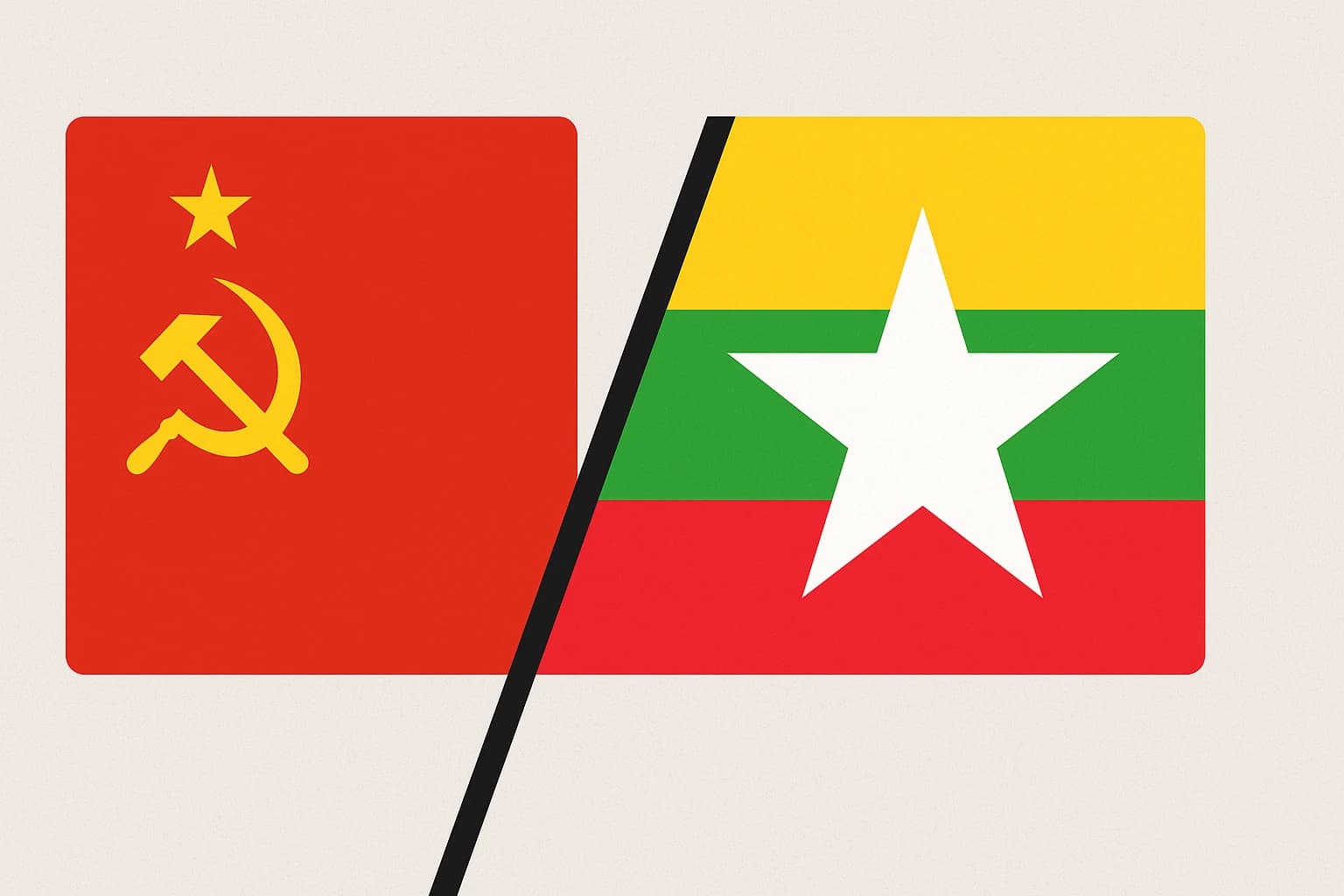
Officially, the new flag's yellow stripe represents solidarity. Green represents peace and the lush environment. Red represents valor and decisiveness. The white star represents the union of the country. State media described the tricolor layout as "modern" and "forward-looking," befitting a new democratic era.
Critics and vexillologists (flag scholars, for those unfamiliar with the term) read it differently. The color scheme closely mirrors the flag of the BSPP's predecessor, the Anti-Fascist People's Freedom League (AFPFL), and resembles the flags of several other Southeast Asian nations. Some saw an attempt to invoke the pre-socialist, early-independence period while skipping over the democratic movement of the 1980s and 1990s.
The white star drew particular criticism from ethnic-minority leaders. The old flag's 14 stars and 14-toothed cogwheel had referenced Myanmar's states and divisions. A single star suggested a unitary identity dictated from Naypyidaw. For the Karen, the Kachin, the Shan, and dozens of other ethnic groups who had spent decades fighting for federal recognition, the point was hard to miss.
Then there was the process, or lack of one. No public design competition, no parliamentary debate, no consultation. The flag was designed behind closed doors, likely by a committee within the SPDC. South Africa in 1994 ran the opposite kind of process, deliberate and inclusive, to create a post-apartheid flag with broad public input.
The absence of process became part of the symbol's meaning. The new flag communicated the military's power to impose an identity rather than any identity the people had chosen.
October 21, 2010
The physical changeover was executed with military precision. Orders went out to government offices, schools, embassies, and military installations simultaneously. Old flags were to be lowered, folded, and surrendered to local authorities. Replacement flags were distributed through military supply chains, the same logistics networks that moved ammunition and rice rations.
Multiple eyewitness accounts and media reports, including from The Irrawaddy and Democratic Voice of Burma (then operating in exile from Thailand and Norway), described old flags being collected and destroyed, often by burning. The junta did not want socialist-era flags circulating as potential symbols of resistance or alternative identity, and burning them made the point that no souvenirs of the old order would be kept.
Public reaction was muted. In a country under authoritarian surveillance, open dissent was dangerous. Some citizens were confused, and many in rural areas learned of the change only when they saw the new flag flying at the local school or township office. Others privately mourned a familiar symbol regardless of their feelings about socialism, because a flag you grew up saluting carries weight whatever its politics.
Among the Myanmar diaspora, reaction was louder. Exile media organizations debated whether to use the new flag in their coverage. Some pro-democracy groups refused to recognize it, continuing to display the old flag or the fighting-peacock flag associated with the 1988 uprising and the student movement.
International reaction was minimal. Most countries updated their flag databases without comment and the UN switched to the new flag in its displays. The change barely registered in global media, overshadowed by coverage of the election itself. A nation of 50 million people got a new visual identity and the world shrugged.
When other countries changed flags overnight
Myanmar's flag swap was dramatic but not unique.
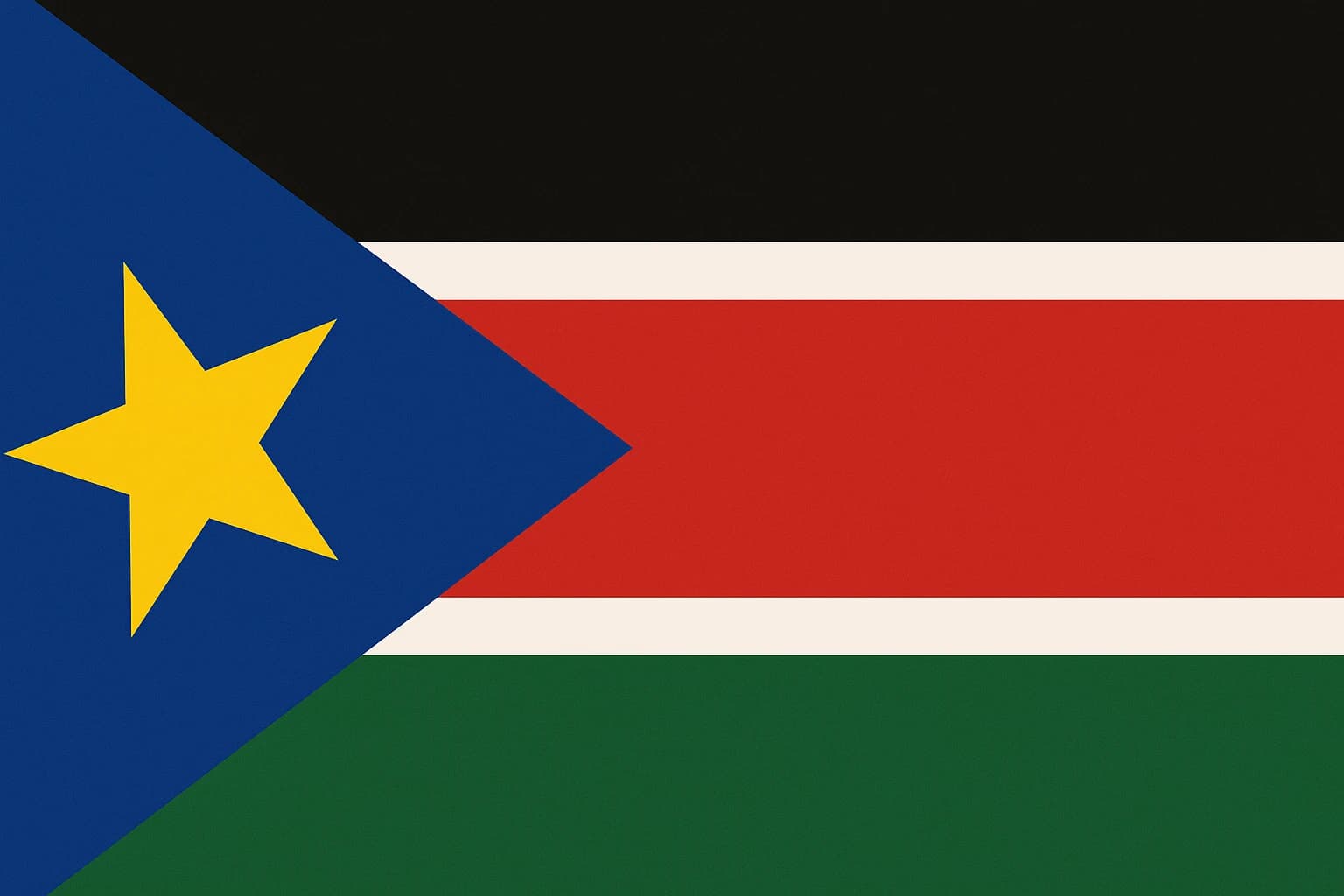
Sudan's 1970 change is a close parallel. After Jaafar Nimeiry's 1969 coup, Sudan replaced its blue-yellow-green horizontal tricolor (adopted at independence in 1956) with the current red-white-black Pan-Arab tricolor with a green triangle. Like Myanmar's change, it was a top-down decision meant to align the country with a new ideological project: Arab nationalism and solidarity with Egypt and Libya.
Eritrea's 1993 flag, adopted at independence, derived directly from the banner of the Eritrean People's Liberation Front (EPLF). The EPLF flag's red triangle and gold star were adapted into the national flag, symbolizing the inseparability of the liberation movement from the new state. Unlike Myanmar, Eritrea was building a new state from scratch. But the principle was the same: the flag encoded who had won.
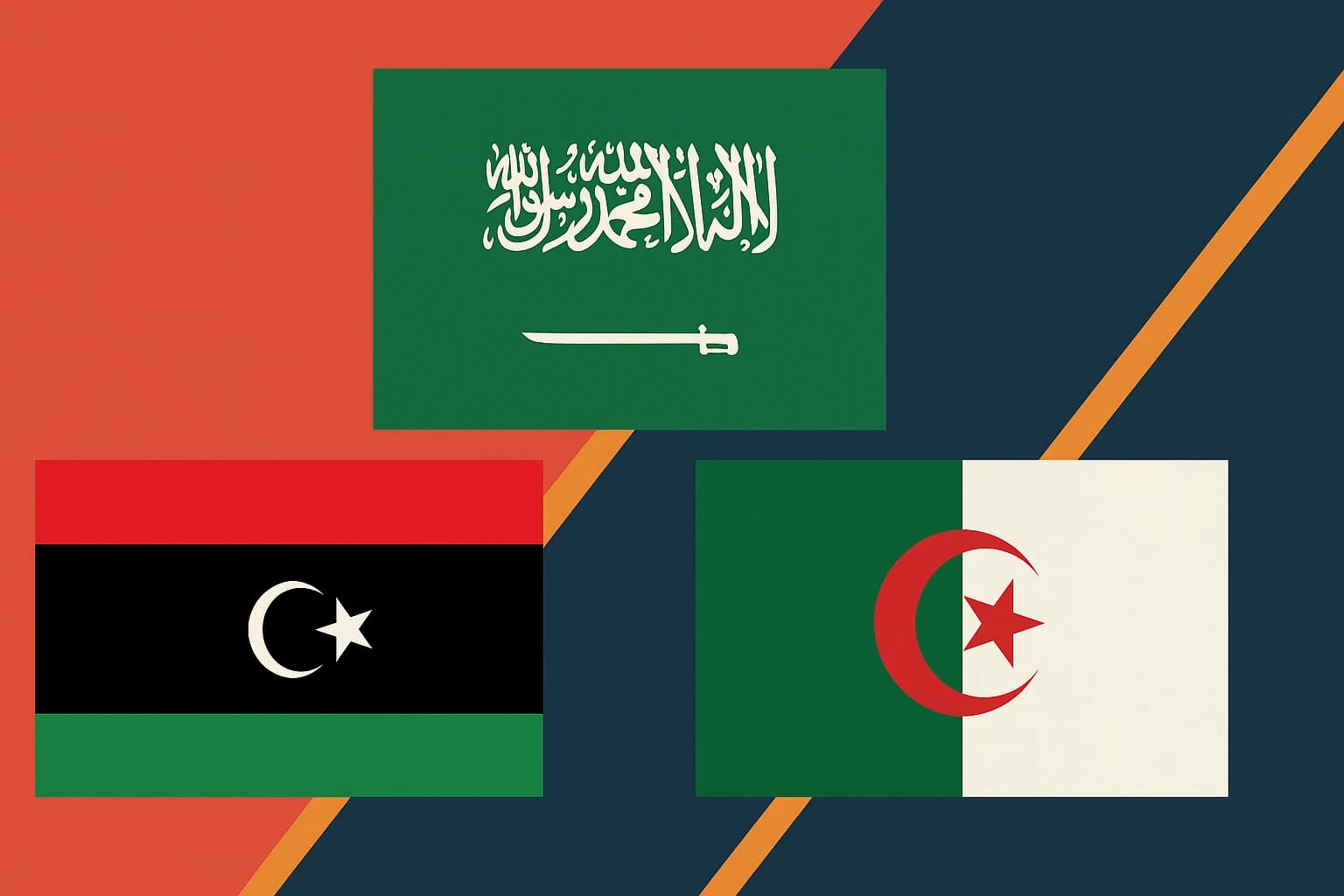
Libya under Gaddafi offers the most extreme example. In 1977, the country adopted a plain green flag with no emblem, seal, or inscription whatsoever. It was the only monochrome national flag in the world at the time. After Gaddafi's overthrow in 2011, rebels immediately revived the independence-era red-black-green tricolor with crescent and star, making the flag one of the first casualties of the revolution.
In each case the change was about political legitimation rather than aesthetics. New regimes erase old symbols to make the past invisible and the new order look inevitable. The cloth changes and the power structures stay.
Afterlife of the old flag
After the February 1, 2021 military coup led by Senior General Min Aung Hlaing, Myanmar's streets filled with protesters carrying the three-finger salute borrowed from Thailand's democracy movement, images of Aung San Suu Kyi, and the fighting-peacock flag. Not the old socialist-era flag. The 1974 design had no constituency and no emotional anchor in the democracy movement.
The 2010 flag became contested in a different way. Some protesters rejected it as the junta's creation, yet the National Unity Government (NUG), the shadow civilian government formed in exile, continued to use it as the de jure flag of Myanmar. The NUG opposes the same military establishment that designed the flag it flies.
As of 2026, Myanmar remains fractured by civil war. The military junta (State Administration Council) flies the 2010 flag from the buildings it controls. Resistance forces in ethnic territories sometimes fly their own flags, the Karen National Union flag, the Kachin Independence Army flag, alongside or instead of any national banner. The question of what flag a future democratic Myanmar might adopt remains unanswered.
Collectors and historians have noted that original 1974-era flags are now rare. The junta's destruction campaign was largely effective. Those that survive are held in private collections, museums outside Myanmar, and occasionally surface in online auctions. They are artifacts of an erased identity, going for a few hundred dollars on sites where people also sell Soviet pins and old East German patches.
Rebranding, not democratization
Myanmar's 2010 flag change was never about colors, stars, or stripes. It was political engineering by a military regime determined to control not only the country's future but its relationship to its own past. The socialist-era flag was itself a product of authoritarianism, but erasing it overnight without a single citizen's input said a great deal about the transition it was supposed to herald.
Sixteen years later, as the civil war grinds on and multiple flags compete for legitimacy across fractured territory, the question the generals never let anyone answer is still open: what flag should fly over a free Myanmar?