The Cedar That Carries a Nation: Lebanon's Tree and the Burden of a Symbol Under Siege
Julio Song · · 9 min read
Of the roughly 2,000 square miles of cedar forest that once covered Lebanon's mountains in antiquity, fewer than 12 square miles survive today. That is a loss of over 99%.
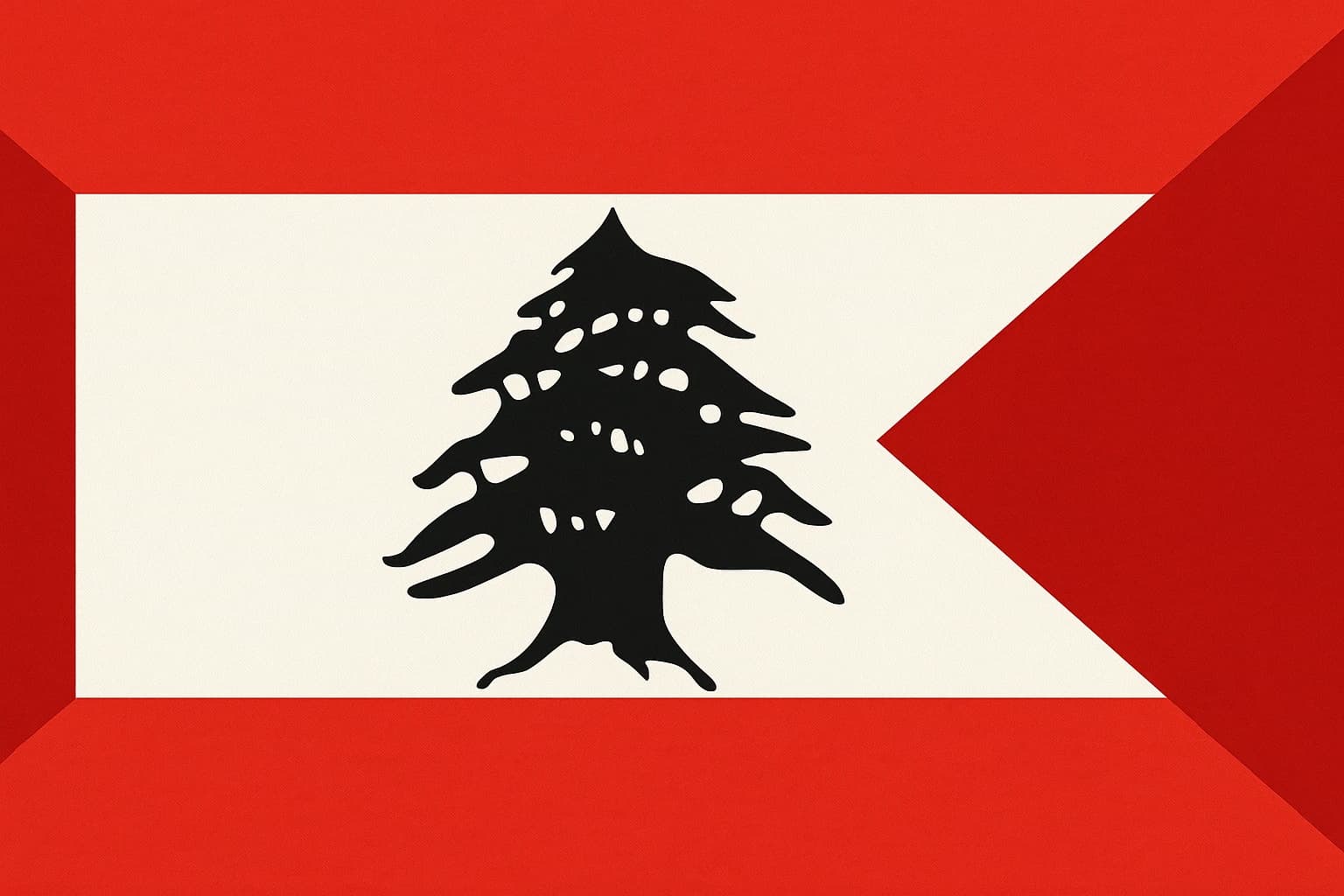
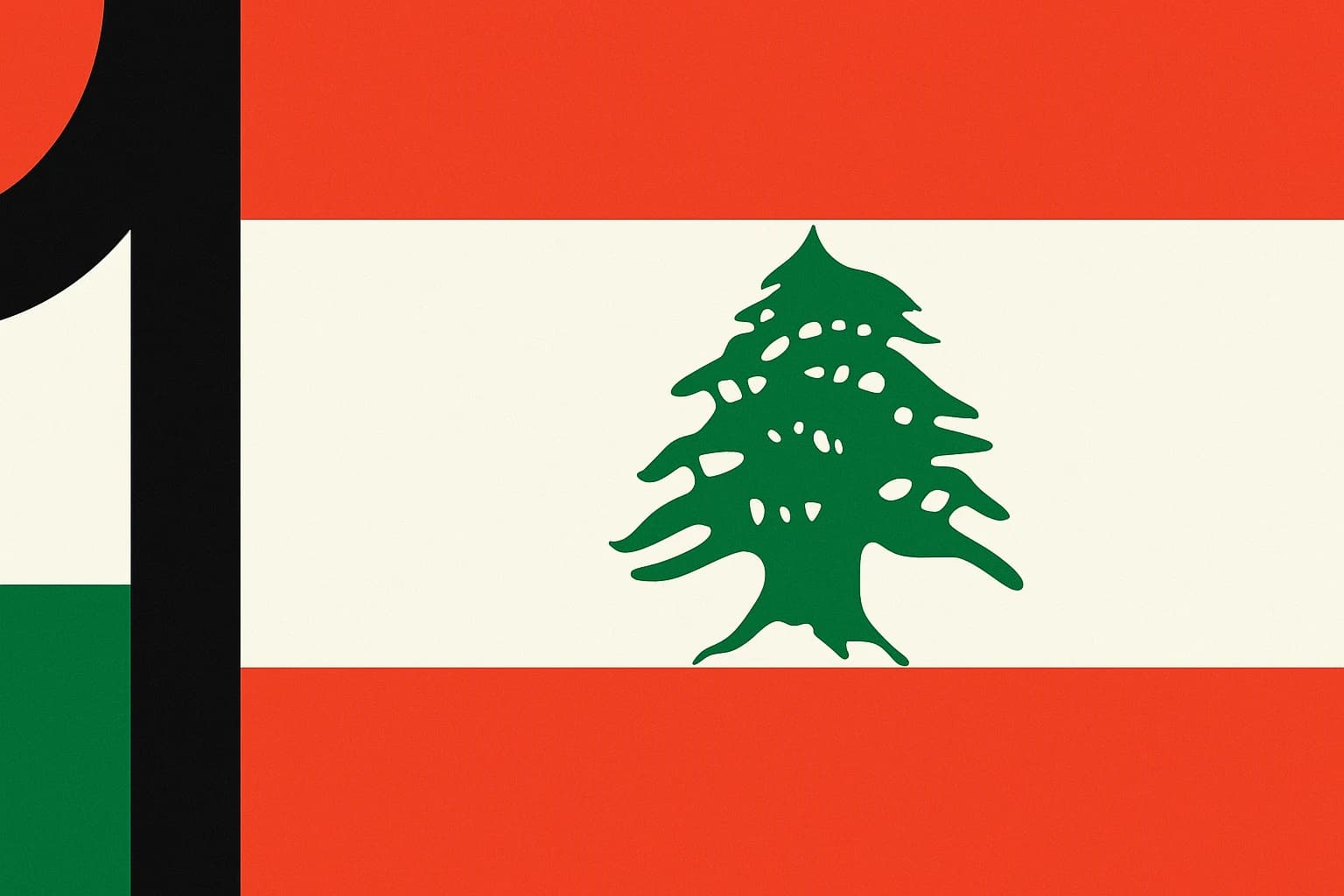
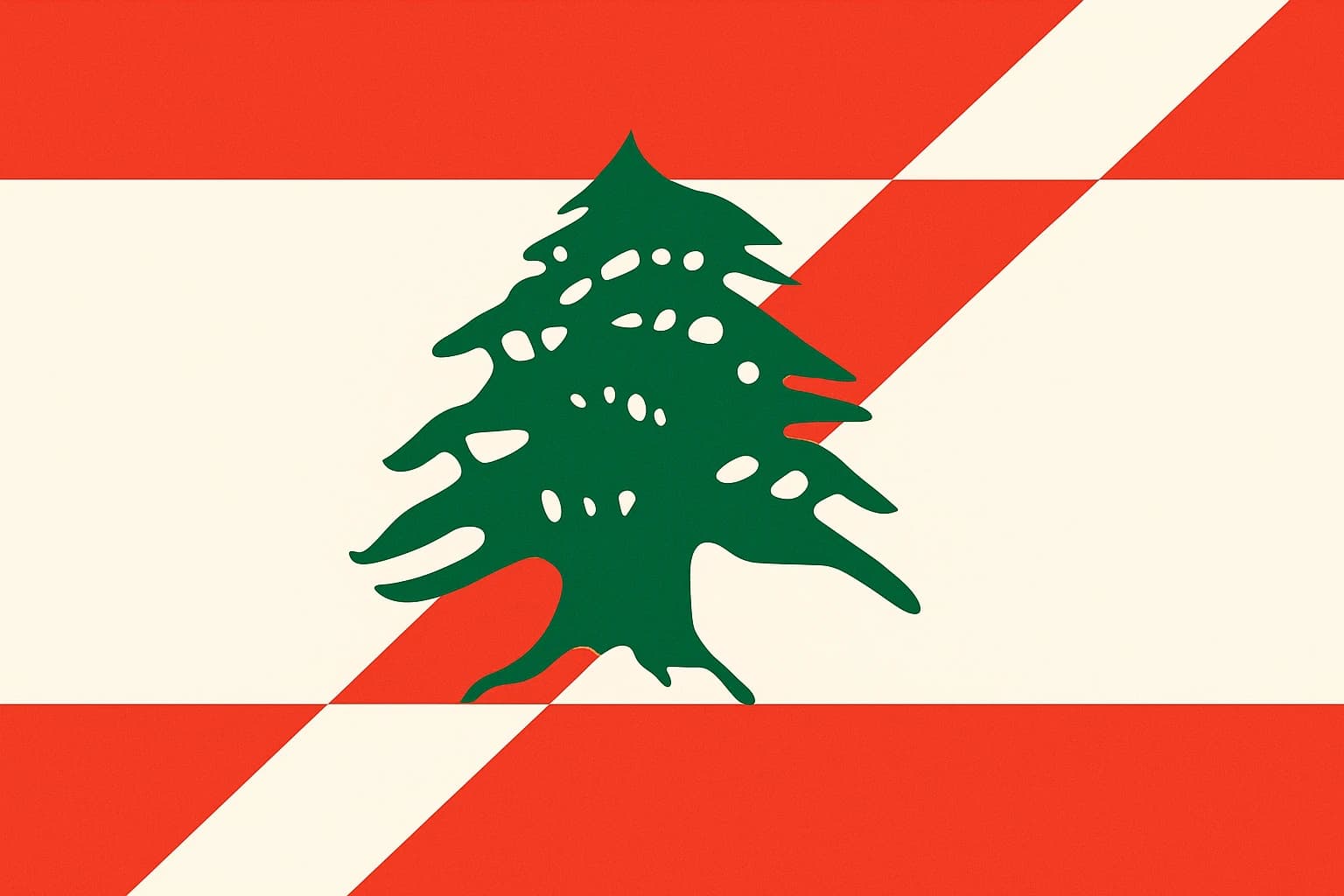
That same tree sits at the center of Lebanon's flag, one of the only national banners in the world dominated not by a cross, a crescent, a star, or a geometric shape, but by a living plant.
Which leaves an awkward question. What does it mean for a fractured, multi-faith, politically combustible nation to plant its identity in a tree, and what happens to that identity when the tree is dying?
The Cedar of Lebanon is both the country's most successful piece of diplomacy, a symbol every sect agreed to accept, and its bleakest metaphor: ancient glory reduced to scattered remnants.
A commodity before it was a symbol
Before the cedar was sacred, it was profitable. Cedrus libani was the most coveted timber in the ancient Near East. Straighter, more fragrant, and more rot-resistant than almost anything available on the treeless plains of Egypt or Mesopotamia, it was the construction material of empires.
Egyptian pharaohs, including Sneferu around 2600 BCE, sent entire fleets to Byblos (modern Jubayl) for cedar logs. The Epic of Gilgamesh features a Cedar Forest as a mythic place of divine power, which puts the tree's cultural weight earlier than written history.
1 Kings 5 records that King Solomon contracted with Hiram of Tyre to supply cedars for the First Temple in Jerusalem around 950 BCE. Roughly 80,000 woodcutters were reportedly dispatched to the mountains. That single project made the Lebanese cedar literally foundational to three of the world's major religions.
The Phoenicians, Lebanon's ancient ancestors in the national narrative, used cedar to build the Mediterranean's dominant merchant fleet. The commerce and seafaring that modern Lebanon claims as its inheritance were built from cedar planks.
Ancient Assyrian and Egyptian demand, combined with zero reforestation, began stripping these forests millennia before modern industry existed. Lebanon's ecological crisis is not a story of modern neglect but a wound thousands of years in the making.
Why a tree and not a cross or crescent
In 1943, as the French Mandate expired, Lebanon had to agree on a single national symbol. It was a country of 17 officially recognized religious sects, among them Maronite Christians, Sunni Muslims, Shia Muslims, Druze, and Greek Orthodox.
The National Pact of 1943, an unwritten confessional agreement, distributed political power by sect: Maronite president, Sunni prime minister, Shia speaker of parliament. That same logic of careful balance applied to the flag. A cross would alienate Muslims. A crescent would alienate Christians. Any ideological emblem would fracture the coalition before it formed.
The solution: retain the red-and-white horizontal stripes from the French Mandate era (themselves a nod to the red-and-white banner of the medieval Maanid dynasty) and place the cedar at the center. The tree belonged to no religion. It predated all of them.
Henri Pharaoun, a Lebanese politician instrumental in the independence negotiations, is often credited with championing the cedar as the central device. The choice was a deliberate act of secular, pre-Islamic, pre-Christian identity-making rooted in Phoenician heritage.
The result is one of the world's most self-consciously pluralist flag designs. It gets there not through abstraction, the way many post-colonial flags use deliberately ambiguous color symbolism, but by picking something ancient and spiritually neutral.
What the cedar looks like on cloth
The cedar is green on a white central band, flanked by two horizontal red stripes, and occupies roughly one-third of the flag's width. Unlike most flag fauna, the eagles and lions, it is botanically specific. A real tree, not a heraldic abstraction.
That specificity has caused problems. The cedar on Lebanon's flag has been criticized by botanists and designers alike for looking more like a simplified cartoon than Cedrus libani's spreading, multi-tiered silhouette. Various governments and artists have redrawn it subtly over the decades, and no two reproductions look quite the same.
Only a handful of national flags feature plants as central symbols. Canada's maple leaf, adopted in 1965, is the most famous comparison. But it's a leaf, not a full tree.
Belize features a mahogany tree in its coat of arms within the flag, but it's embedded in a complex scene with human figures and tools.
Lebanon's cedar is singular in its centrality and simplicity.
There's a color problem too. In certain printings and lighting conditions the green tree fades into the white. Lebanese commentators have called this unintentionally symbolic.
Lebanon's choice arrived ahead of a broader 20th-century turn toward "natural" national symbols, but it got there through ancient identity rather than mid-century environmentalism, which sets it apart from Canada's maple leaf moment.
The Cedars of God
The most famous surviving grove is the Cedars of God (Arz el-Rab), near Bsharri in the Qadisha Valley. It's been a UNESCO World Heritage Site since 1998. Roughly 375 ancient trees survive there, some estimated to be over 3,000 years old. They were centuries old when Solomon's Temple was built.
Lebanon's cedar forests once covered an estimated 500,000 hectares. By 2026, protected cedar stands total roughly 2,000 hectares across a handful of reserves, less than 0.5% of the original coverage. It is one of the most dramatic deforestation records in human history.
The destruction came in waves. Phoenician and Egyptian harvesting set the pattern. Ottoman-era logging accelerated the damage, especially when forests were cleared to fuel the Hejaz Railway in the early 20th century, a chapter that rarely gets mentioned. French Mandate road-building carved through more stands. Post-independence urban sprawl and the collapse of conservation during the civil war finished much of what remained.
Those fifteen years of war from 1975 to 1990 did particular damage. Reforestation programs stopped, illegal logging went unpoliced in the mountains, and the cedar's depletion became a political crisis on top of an ecological one.
Since the 1990s, NGOs including the Lebanese Cedar Society, along with government initiatives, have planted tens of thousands of seedlings. But cedar grows slowly, taking roughly 25 to 40 years to reach meaningful size, and the 2020 Beirut port explosion, the economic collapse that followed, and continuing political paralysis have starved conservation budgets. Recovery is a multigenerational project at best.
The symbol at war with itself
The cedar's neutrality was always, to some degree, a fiction. Within years of independence, different factions began claiming the symbol. The Lebanese Forces, a Maronite Christian militia, and the Kataeb (Phalangist) party both adopted cedar imagery in their logos, effectively re-confessionalizing the supposedly non-sectarian emblem.
During the civil war, cedar iconography appeared on the propaganda of opposing sides, used by both Christian militias and some nationalist Muslim factions. A symbol meant to transcend division was claimed by everyone at once, which cost it most of its unifying power.
Hezbollah's refusal to use it cuts the other way. Lebanon's most influential political and military force flies its own green-and-yellow emblem with a Quranic inscription and a raised fist holding an AK-47, a conscious rejection of cedar-centric Lebanese nationalism in favor of Islamic resistance identity. The two flags stand for competing ideas of what Lebanon is.
The diaspora complicates it further. Roughly 14 to 18 million Lebanese live abroad against 5 to 6 million in Lebanon itself, and the cedar flag hangs in São Paulo, Dearborn, Sydney, and Paris, often in the homes of people who left because the pluralist promise the cedar represents failed to hold.
The 2019 protests, often called the October Revolution, were a brief reclamation. Demonstrators waving Lebanese flags filled Martyrs' Square in Beirut in the largest cross-sectarian protests in the country's history, and for a few weeks the cedar felt like everyone's again.
Climate change and the cedar's future
The Levant has warmed by roughly 1.5°C above pre-industrial levels, which is pushing the cedar's viable altitude range upward. The trees need the cooler conditions found at higher elevations, and many of those elevations are already at or near Lebanon's mountain peaks. There is nowhere further to go.
Reduced winter snowpack (cedars depend on consistent snowmelt for moisture), longer summer droughts, and the northward spread of bark beetles and fungal pathogens are all stressing the surviving stands. A 2023 Lebanese University study projected that without intervention, up to 75% of current cedar habitat could become climatically unsuitable by 2100. Lebanon's national symbol could be functionally extinct in the wild within two or three generations, leaving the flag as a monument to a vanished ecosystem, rather like a flag bearing a dodo.
Politics makes this worse. The economic collapse (the Lebanese pound lost over 95% of its value between 2019 and 2026), political deadlock, and periodic military crises have made sustained environmental policy nearly impossible. Conservation needs stable institutions, and Lebanon has had few.
There is some money, at least. International interest in the cedar as a climate case study has attracted funding from UNESCO, the IUCN, and several European government conservation programs. As of 2026 there are serious proposals for assisted migration, moving cedar seedlings to higher-altitude sites ahead of the habitat shift. Whether any of it works depends on the present holding together long enough for the trees to grow.
The compromise that cannot be updated
The cedar was chosen in 1943 because it was the one thing Lebanese factions could agree was Lebanese: pre-religious, pre-colonial, geographically specific, historically glorious. As political design it worked.
The irony is that a symbol picked for its pre-political neutrality is now among the most contested, politicized, and ecologically imperiled emblems in the world. A tree that everyone claims and nobody has adequately protected.
The parallel between tree and nation is hard to avoid. Lebanon survives in permanent unresolved tension, too fractured to govern well and too culturally rich and strategically placed to disappear. The cedar forests are in the same condition: diminished, stressed, still there.
What the Lebanese case shows is the limit of what a flag symbol can do. It creates a shared space for identity without resolving the conflicts underneath it, and it is no substitute for the political work it was supposed to make possible.
Somewhere in São Paulo or Dearborn or Sydney tonight, a Lebanese grandmother has a cedar flag on her wall. She might be Maronite or Shia or Druze. She might have left during the civil war, the 2006 war, or after the 2020 explosion. The flag is still hers, which is the cedar's quiet achievement and also the measure of how much remains unfinished.
Twelve square miles of cedar forest remain against the 2,000 that once existed. Choosing a tree over a crescent or a cross was an act of political imagination that deserves more credit than it gets. Keeping the tree alive has never received the same effort.
Julio Song
Writer
Julio is a staff writer at FlagDB. He studied Mathematics at the University of Madrid and has a passion for vexillology.
More from Julio Song →