Afghanistan and Algeria sit thousands of miles apart and share no obvious history, but their flags were assembled from similar raw material: a colonial or occupying power to define themselves against, an Islamic visual tradition to draw on, and a war of independence to commemorate. Reading the two side by side shows how differently that material can be arranged.
The flag of Afghanistan
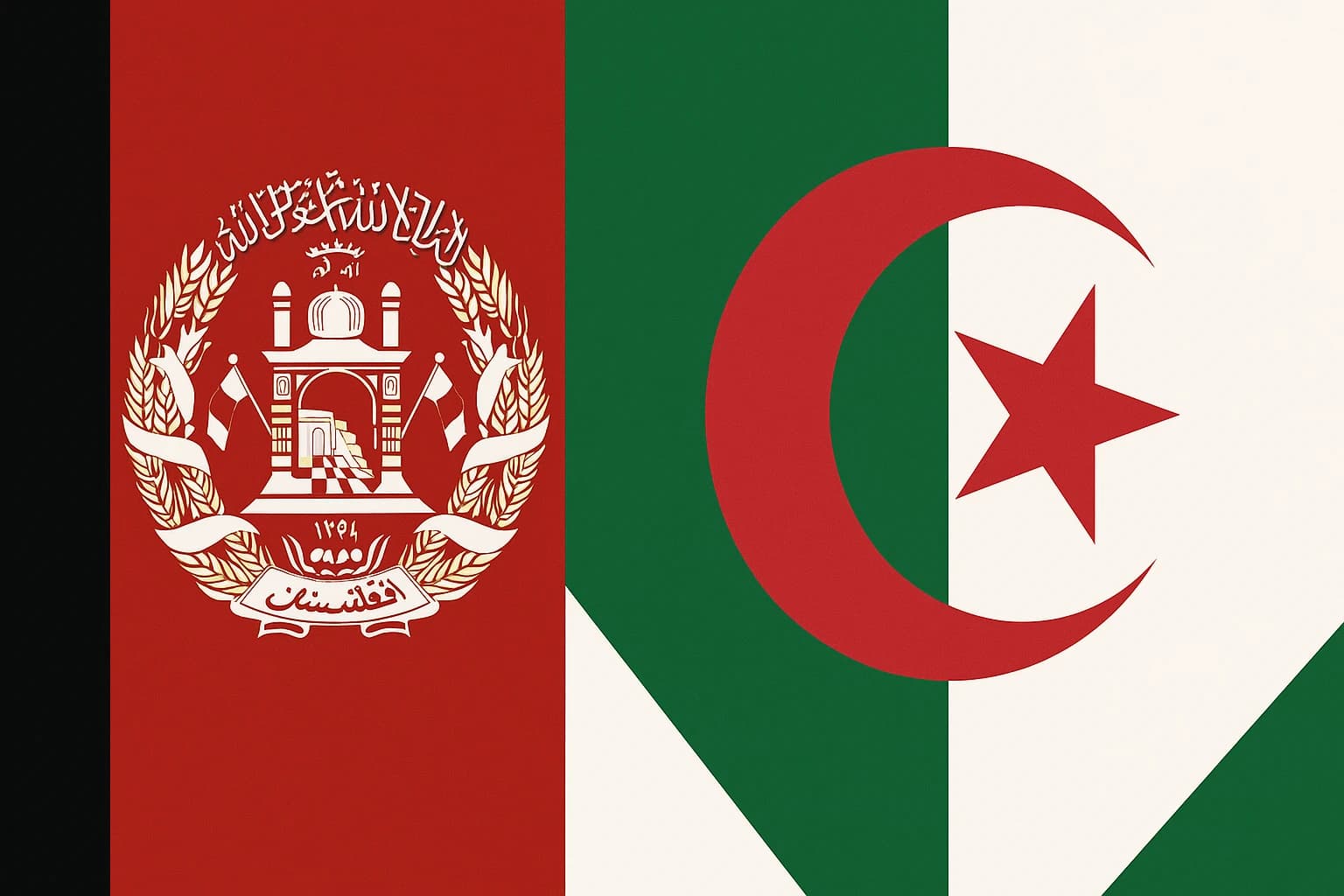
Afghanistan's flag uses black, red, and green.
Each color carries an assigned meaning. Black stands for the troubled past. Red is the bloodshed of the struggle for independence. Green is hope and prosperity.
The emblem adds another layer: a mosque with two crossed swords, representing faith and defense. Those elements have shifted with political change over the decades, but they keep returning to the same two claims about what the country is and what it has had to defend.
The flag of Algeria
Algeria pairs green and white, with a red crescent and star.
The green and white are rooted in Islamic tradition and stand for peace and purity. The red crescent and star tie the flag to Algeria's Islamic heritage and to the fight for independence from colonial rule. The design emerged after independence, which is why the war is legible in the emblem rather than in the field behind it.
What the two have in common
The parallel is in the subject matter rather than the design. Both flags are built around resistance, and both convert a specific national struggle into a small set of colors and shapes. Their historical contexts have almost nothing else in common, which makes the similarity of approach more interesting than coincidental resemblance would be.
Where the flags turn up now
In both countries the flags are not confined to state occasions. They appear in art, in literature, and in the visual language of international relations. Globalization has changed how those images circulate and who sees them, but it has not diluted what they are used to assert.