The Flags of the Ancients: Tracing Historical Symbolism from Afghanistan to Algeria
Julio Song · · 2 min read
Two flags, two ways of carrying the past
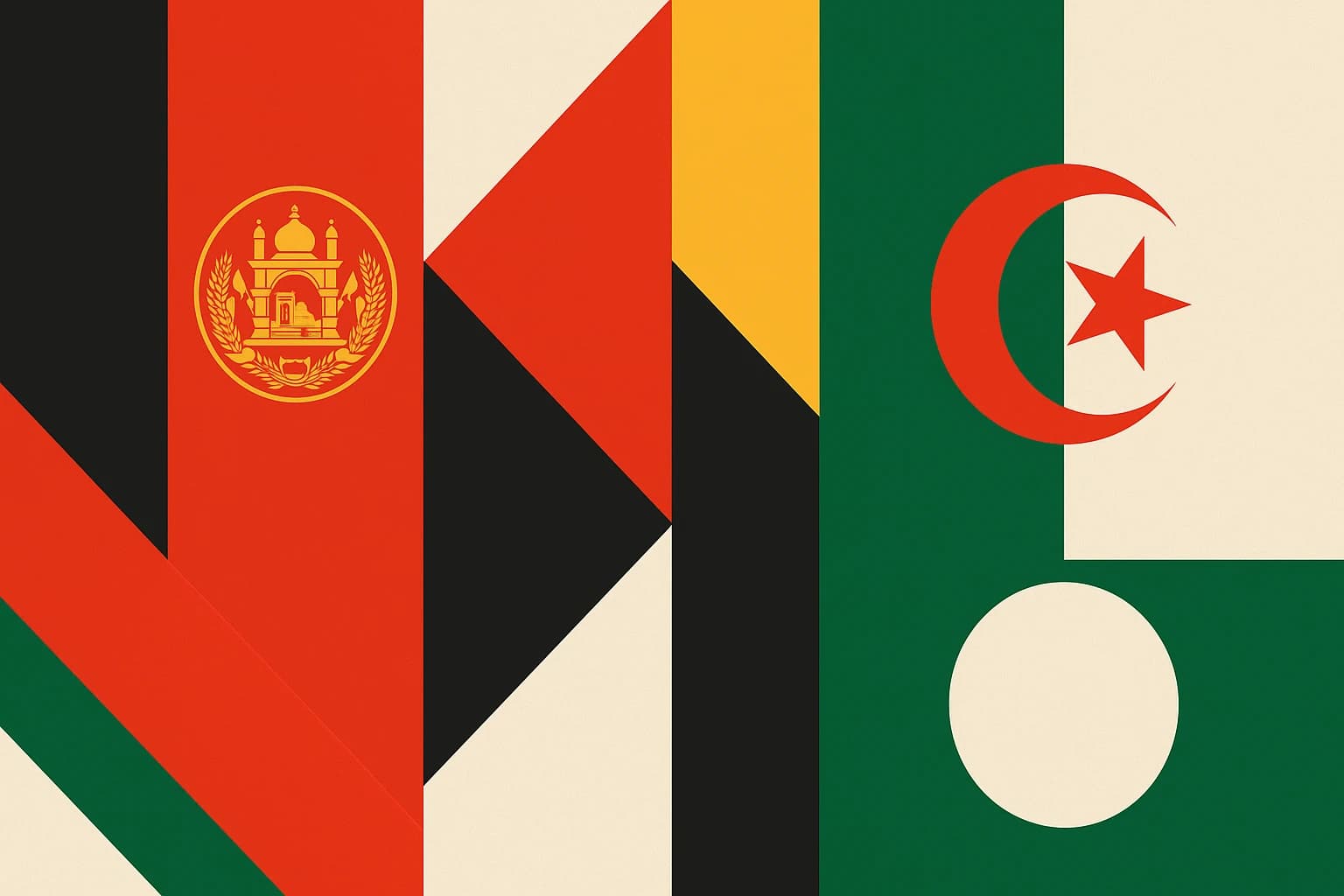
Afghanistan and Algeria both put ancient material on modern flags, and they do it for opposite reasons. Afghanistan's flag has changed repeatedly, and each version reaches back for a different set of symbols. Algeria's has barely changed since independence, and the symbols it carries were chosen once and left alone.
Afghanistan: a flag that keeps being rewritten
Afghanistan's flag has gone through many versions, and each one tracks a change in who was governing and on what terms. The lineage runs back to antiquity, to empires such as the Achaemenids, and the motifs come in and out of use: lions, suns, mosques, minarets.
The lion and the sun were the dominant pair historically, standing for power and unity. The mosque and minarets on later designs point to the country's Islamic heritage and to hopes for peace and prosperity. Some of these motifs also connect to Zoroastrian tradition, which puts a pre-Islamic layer underneath the Islamic one rather than replacing it.
Algeria: fixed after independence
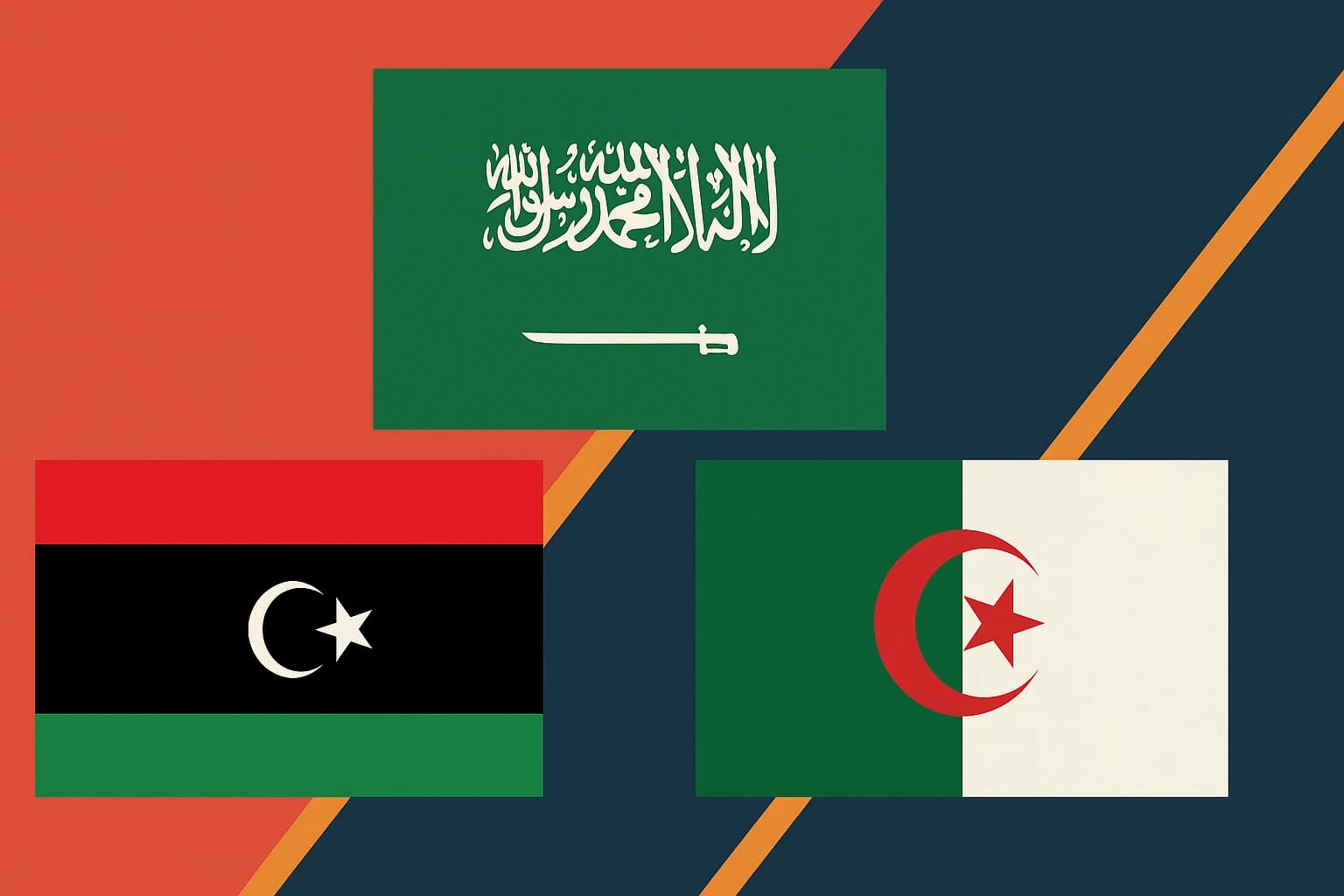
Algeria's flag was shaped by colonialism and then by the break from it. The colors were not arbitrary: green for Islam, white for peace, red for the blood of the martyrs.
The crescent and star at the center are shared with many Islamic countries, but on this flag they carry a national reading as much as a religious one. The design also acknowledges Berber identity, and behind that sits Algeria's Numidian past and the period of Ottoman influence.
What the comparison shows
Both flags draw on ancient symbolism, but for different ends. Afghanistan's motifs record a succession of empires and religions. Algeria's record one fight and its outcome.
The frequency of change follows from that. Afghanistan's flag has moved with its politics; Algeria's has stayed still since independence. One flag documents internal conflict, the other documents a war against an outside power, and each ends up with the design its history requires.
Globalization presses on both. National symbols now compete with a great deal of shared visual culture, and how a flag changes, or refuses to, depends mostly on what the public will accept.
Julio Song
Writer
Julio is a staff writer at FlagDB. He studied Mathematics at the University of Madrid and has a passion for vexillology.
More from Julio Song →