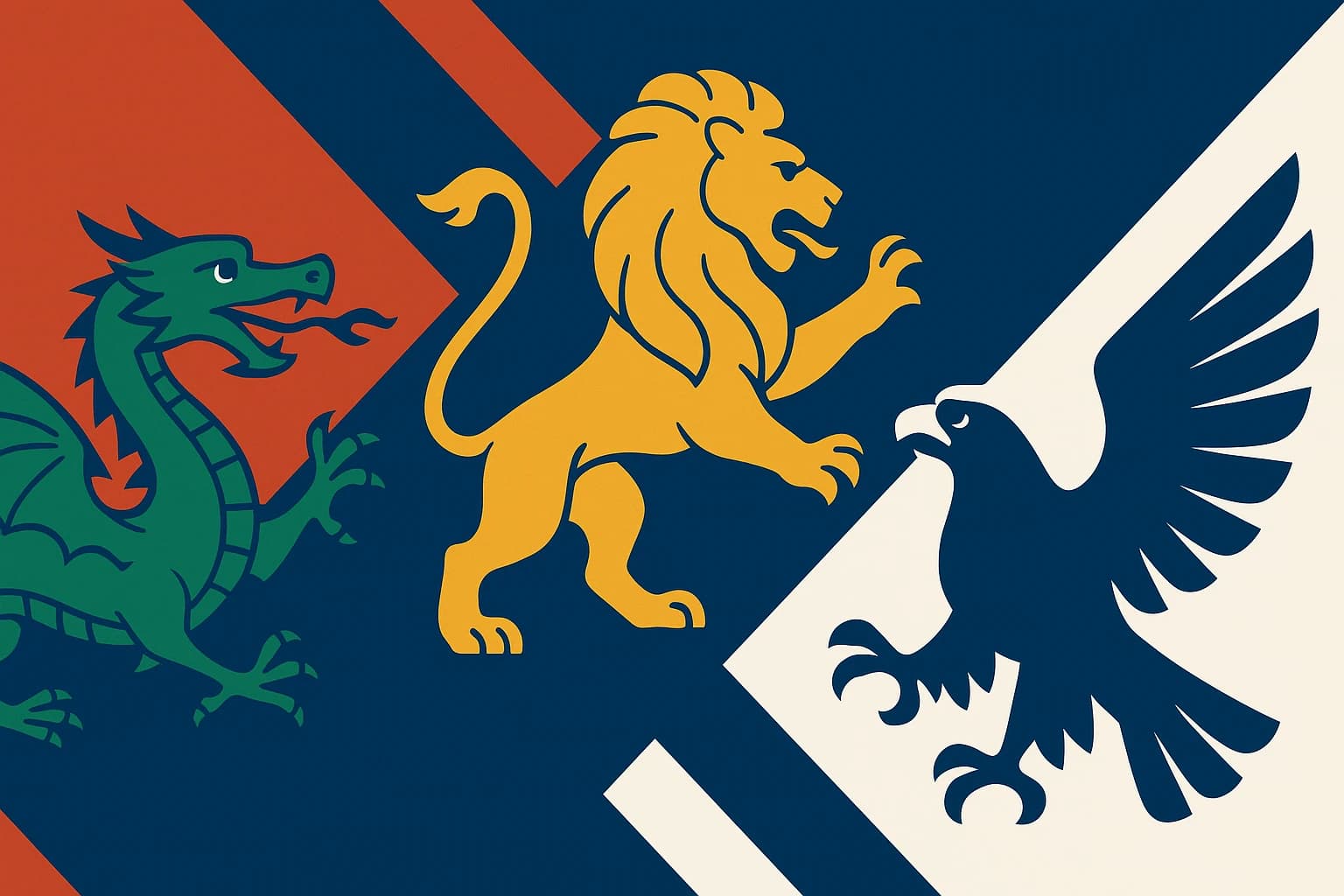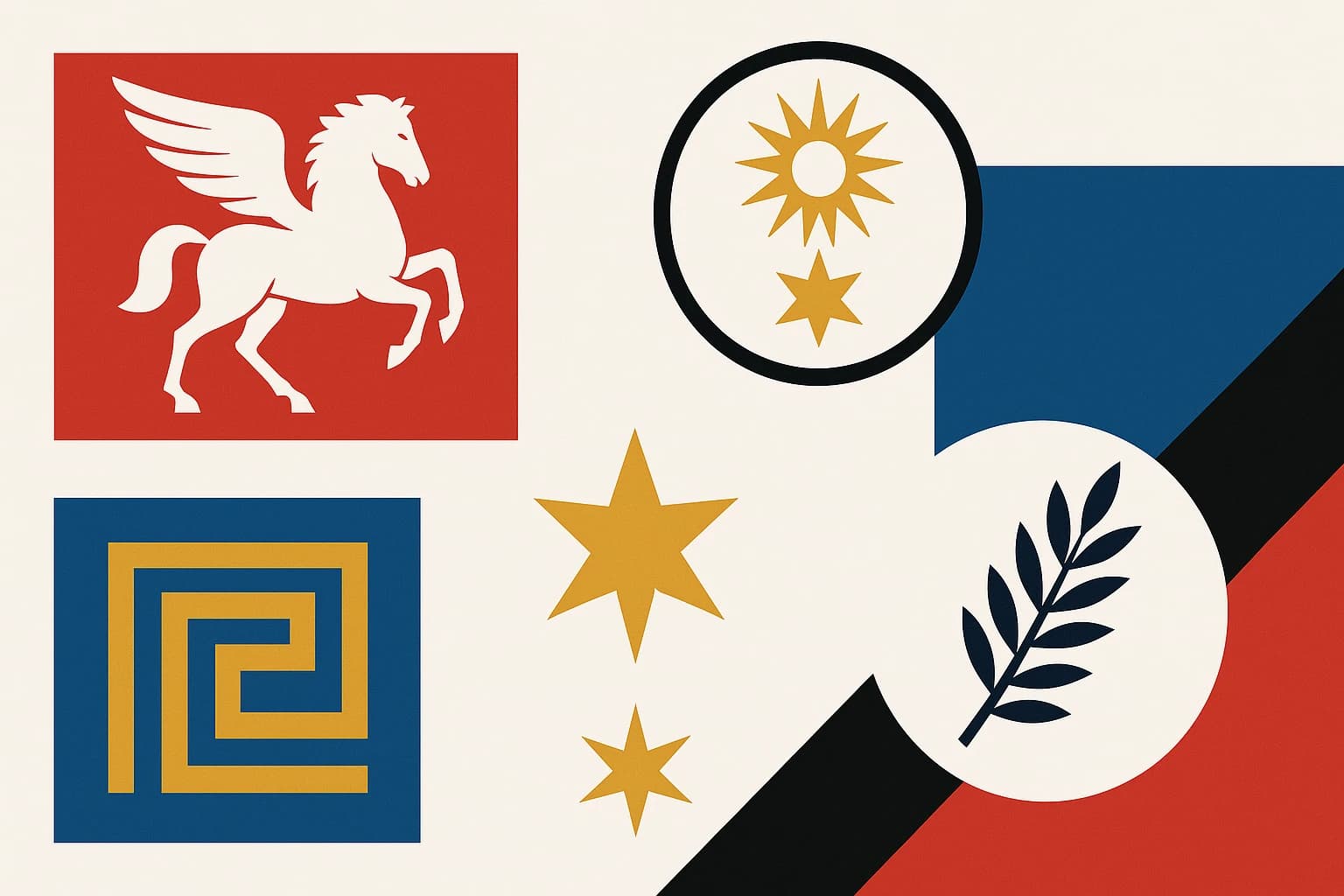
A surprising number of national flags carry a creature that never existed. Dragons, double-headed eagles, gods borrowed from older religions: these are not design flourishes but claims about descent, and countries put them on the flag precisely because a myth reaches further back than any documented history does.
Why the study of flags takes myth seriously
Vexillology covers flag design, history and symbolism, and mythology keeps turning up in all three. A flag has to say something about a country in a shape that can be sewn, and legend gives designers a ready-made vocabulary that citizens already recognize. Once a symbol is on the flag it starts shaping collective memory in return, which is how a story becomes something closer to a national fact.
Albania and the double-headed eagle
Albania's flag is a red field with a black double-headed eagle across it.
The eagle is believed to date back to the Byzantine Empire, where it stood for the unity of church and state. Albania took it in a different direction: there it reads as vigilance and freedom. It flew at the declaration of independence in 1912, and it has stayed on the flag through everything that followed, which is unusual for a symbol with that much history attached.
Bhutan and the thunder dragon
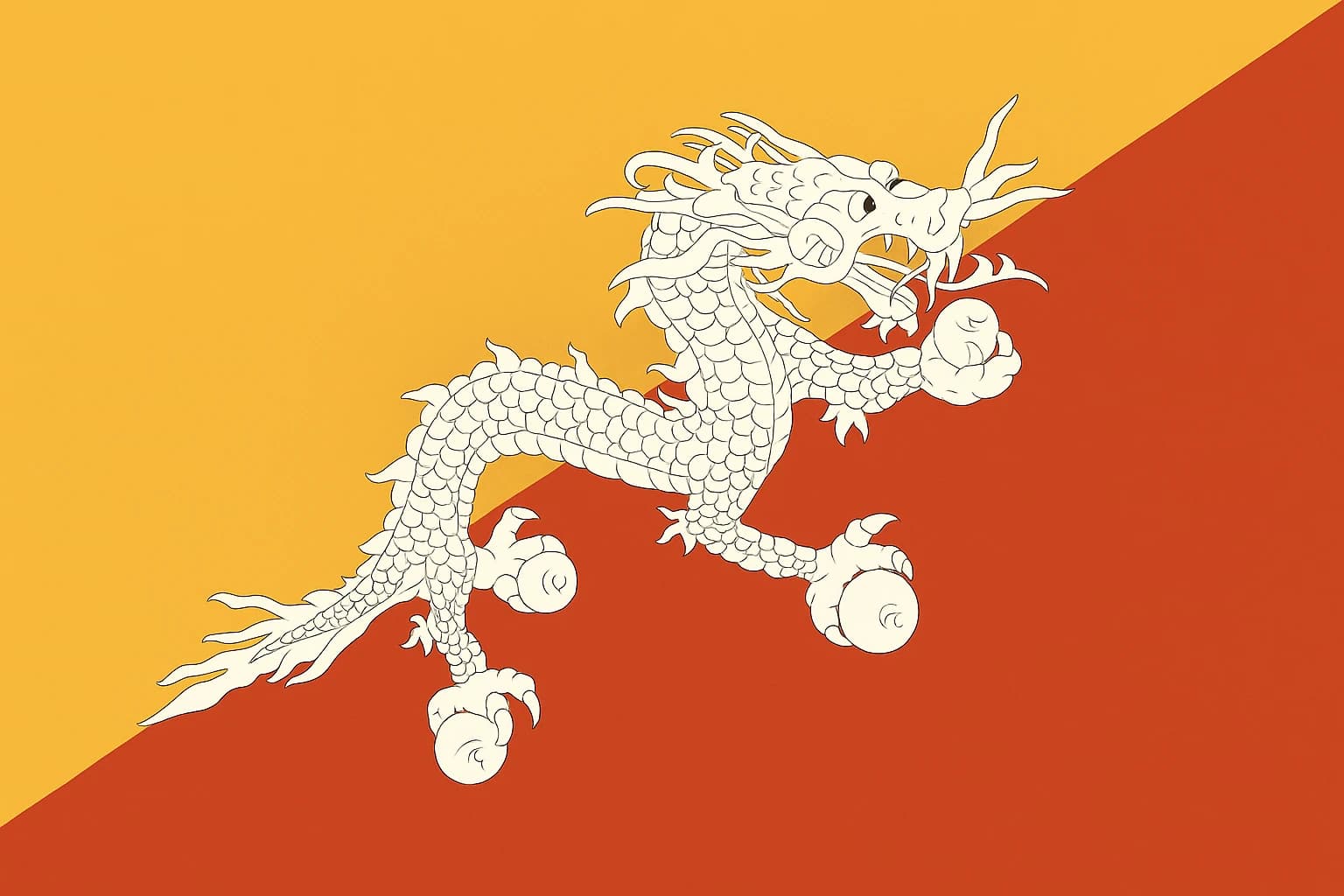
Bhutan sits in the Himalayas, and its flag puts a dragon across a field split between yellow and orange.
The dragon is Druk, the thunder dragon, and it is central to Bhutanese folklore. Its roar is said to protect the land, and the flag ties that to the power of the people and to the voice of the monarchy. Buddhism supplies a second reading, in which the dragon signifies enlightenment. Both meanings sit on the same design, and neither is decorative.
Greece and Wales
Greece's flag is read through freedom and democracy, ideas that connect back to the myths of Hercules and the ancient gods, which is about as long a lineage as a modern state can claim.
The Welsh dragon works differently. It comes from legends of dragons as protectors and as signs of might, and it survives on a flag that represents a nation without a state of its own.
Cyprus and Portugal do similar work with their own mythological references, each pointing at a specific past rather than at a general idea of antiquity.
What a myth on a flag actually does
A flag with a legend on it is making a claim about continuity: that the country now is the same country as the one in the story. That is why these symbols survive regime changes that flatten everything else on the flag. Governments come and go, and the eagle or the dragon stays, because removing it would look like conceding the claim.
Redesign without losing the creature
Flags do change with political shifts, and countries regularly redesign them to match a modern sense of who they are. What is striking is how often the old mythological element survives the redesign and becomes the anchor for the new version. The rest of the flag can be rebuilt around it.