The Flags of Diverse Cultures: Symbolism and Design Across Nations
Julio Song · · 3 min read
Every national flag is a design brief with impossible constraints: represent a whole country, in a few colors, at a size legible from a distance. Bhutan, Belize and the Bahamas solved it in three very different ways, and the differences are more interesting than the similarities.
What flags are for
Flags mark territory, but that is the least of what they do. They have rallied people through revolutions and social movements, and the colors and symbols on them usually encode particular values or events rather than a general sentiment. A design that simple holding that much is the part worth noticing.
Bhutan
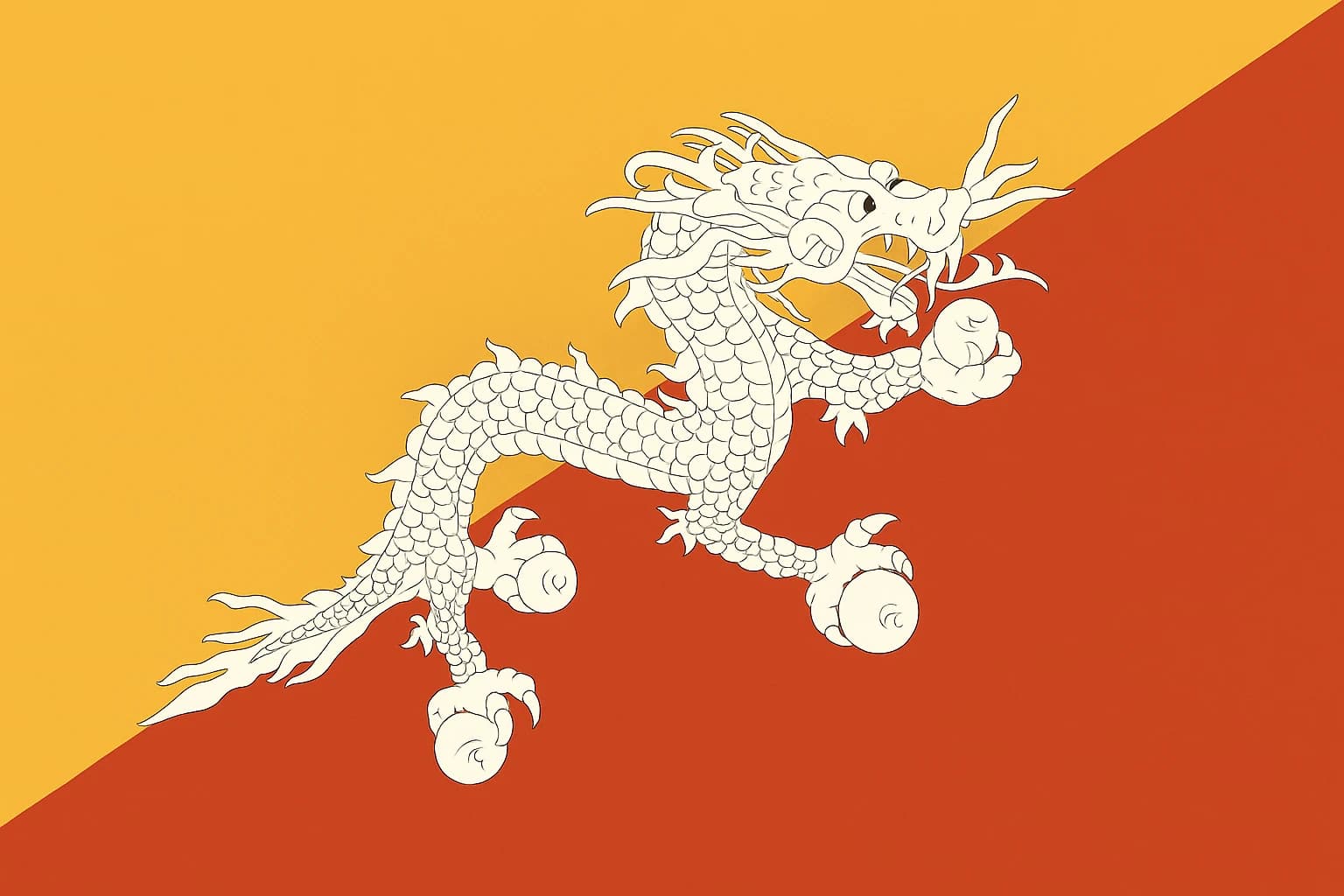
Bhutan's flag has a dragon on it, which puts it in a very small club.
The dragon is Druk, associated with thunder, and it gives the country its own name for itself: Druk Yul, the Land of the Thunder Dragon. The flag is not decorative. It carries the reverence Bhutanese culture holds for its guardian, and the dragon is drawn snarling rather than benign. As Bhutan has moved between tradition and modernity, the flag has moved with it.
Belize
Belize went the opposite way and put an entire coat of arms in the middle of the flag, which by most design standards is a mistake and in this case is the point.
The shield's tools stand for agriculture and industry. The two supporters, a mestizo and an Afro-Belizean, stand for racial harmony, and that is an unusually direct thing to put on a flag rather than gesture at. The red, white and blue nod to Belize's ties to the British Commonwealth while also standing for vitality, peace and integrity.
The Bahamas
The Bahamian flag is the most abstract of the three: turquoise for the sea, gold for the sand, and a black triangle for the determination and strength of the people.
It was designed around independence, which explains the optimism in it. The colors describe the physical place and the triangle describes who lives there.
A few others worth knowing
Nepal's flag is not a rectangle. Its triangular shape echoes the mountains and makes it the odd one out in a world of rectangles.
Mexico's carries an eagle and a snake, an image drawn from legend and read as resilience.
South Africa's packs in a great deal of color, all of it in service of unity after apartheid.
Vexillology
Vexillology is the study of flags, and it is more useful than it sounds. Working out why a country chose a dragon, a coat of arms or a bare triangle tells you what that country wanted to say about itself at the moment it had the chance to decide.
Julio Song
Writer
Julio is a staff writer at FlagDB. He studied Mathematics at the University of Madrid and has a passion for vexillology.
More from Julio Song →