Vexillology, and where flags come from
Flags began as battle standards and heraldic banners, which is to say they began as a way of telling friend from enemy at a distance. Vexillology, the study of flags, follows what happened after that: how a purely practical marker turned into the thing a country points to when it wants to explain itself.
The short answer to why flags persist is that they are constant. A design outlives governments, and citizens end up sharing an identity with people who otherwise have very little in common.
What the colors are doing
The colors and shapes are chosen, not decorative. Red in many flags means courage or sacrifice. Green can mean hope, or fertile land, depending on the country. Every element carries a claim of some kind.
Stars, stripes and crosses are more than patterns too. They usually point at a particular historical triumph or a particular ambition, which is why two flags with identical geometry can mean entirely different things.
Afghanistan's flag since the 19th century
Afghanistan's flag has been through numerous versions since the 19th century, and each one reflects the political situation that produced it.
Periods of conservatism and periods of reform both left their mark. Every change to an emblem or a color corresponds to a change of regime and to whatever that regime wanted the country to aspire to.
Australia's Southern Cross and Union Jack
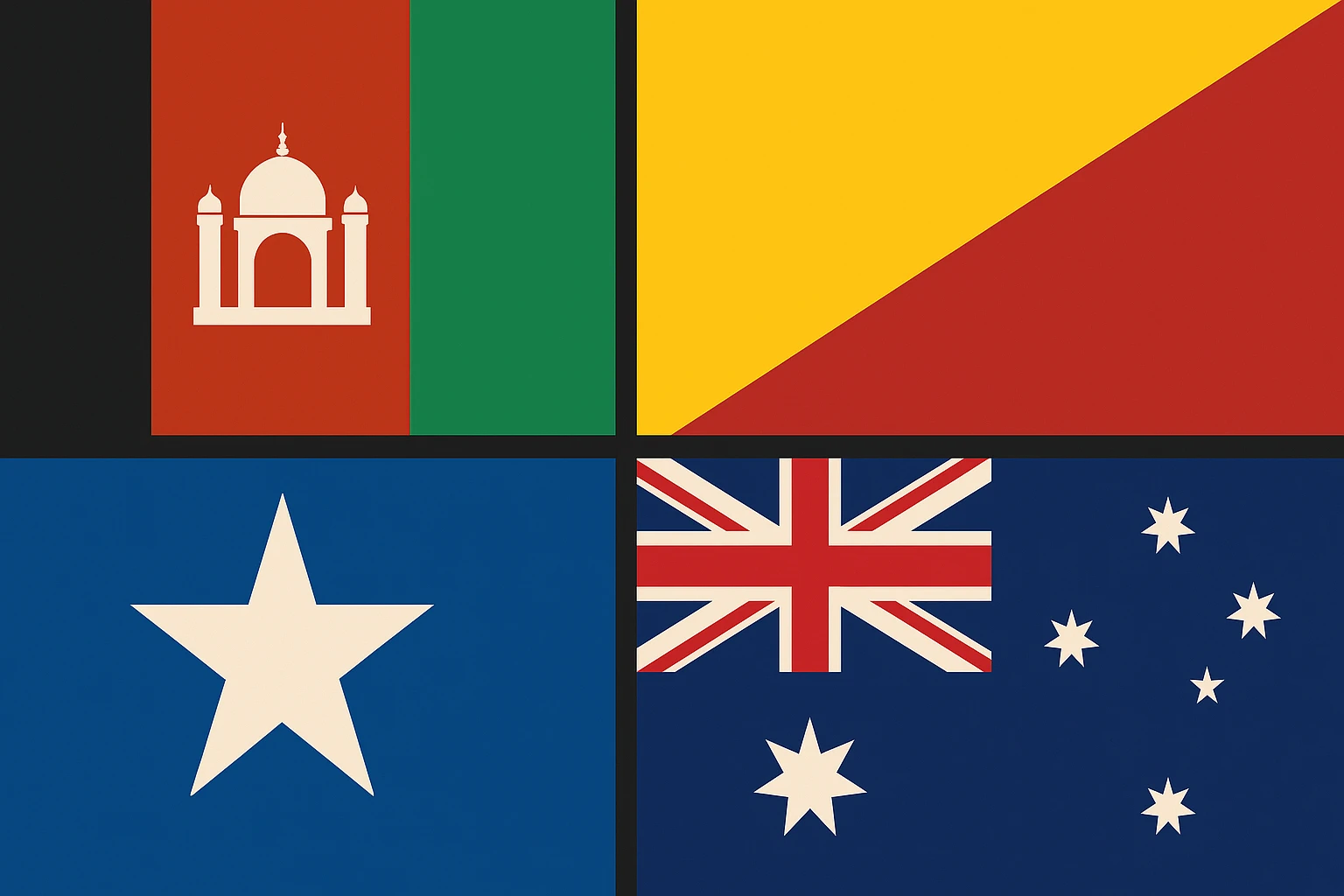
The Australian flag combines the Southern Cross with the Union Jack, which puts colonial history and geography on the same piece of cloth.
The Southern Cross places Australia in the southern hemisphere. The Union Jack has been the subject of long-running debate about whether the flag reflects the country's cultural diversity, and public conversation regularly returns to whether a new design would better represent Australia's indigenous heritage and multicultural society.
Flags as catalysts for change
Flags do their most visible work during revolutions and social movements, when a crowd needs one thing to gather under. In Afghanistan, flags have been rallying points for unity against foreign intrusion. In Australia, protests for indigenous rights are marked by the Aboriginal flag rather than the national one, which is its own kind of argument.
Global patterns
Look at national symbolism worldwide and some habits emerge. Colors follow recognizable conventions, red for revolution and blue for peace among them, while globalization has changed how people read their own flags and everyone else's.
In Europe and the Americas alike, flags keep shifting, sometimes seriously and sometimes comically, in response to cultural change and outside influence.
What comes next
Technology is the obvious variable. Digital designs and new materials could change what a flag physically is, and globalization will keep pulling at how they look. Whatever happens to the medium, the flags themselves are unlikely to go anywhere.