Why a flag carries so much
A flag has to do several jobs at once. It claims freedom and sovereignty, it carries cultural values and history, and it has to pull a diverse population under one emblem without anyone feeling written out of it.
That last part is why flags provoke the reactions they do. Seeing one connects you to a collective identity that may stretch back centuries. Flags fly at public events, they carry national pride, and they turn up at funerals and disasters as well as parades.
Afghanistan's changing flag
Afghanistan's flag has been redesigned repeatedly, and each version tracks a shift in political regime.
Changes in the design tend to coincide with political upheaval, with colors and symbols adjusted to match whichever ideology was in power. The black, red and green in use today are a reminder of how complicated the country's search for unity and peace has been.
Australia's flag
The Australian flag holds two things at once.
The Union Jack records historical ties to Britain, while the Southern Cross constellation points to where the country actually sits. For a nation of varied cultures and backgrounds, the design balances an acknowledgment of colonial history against a distinct identity, and the debates about its inclusivity keep the question of national representation open.
What the two flags have in common
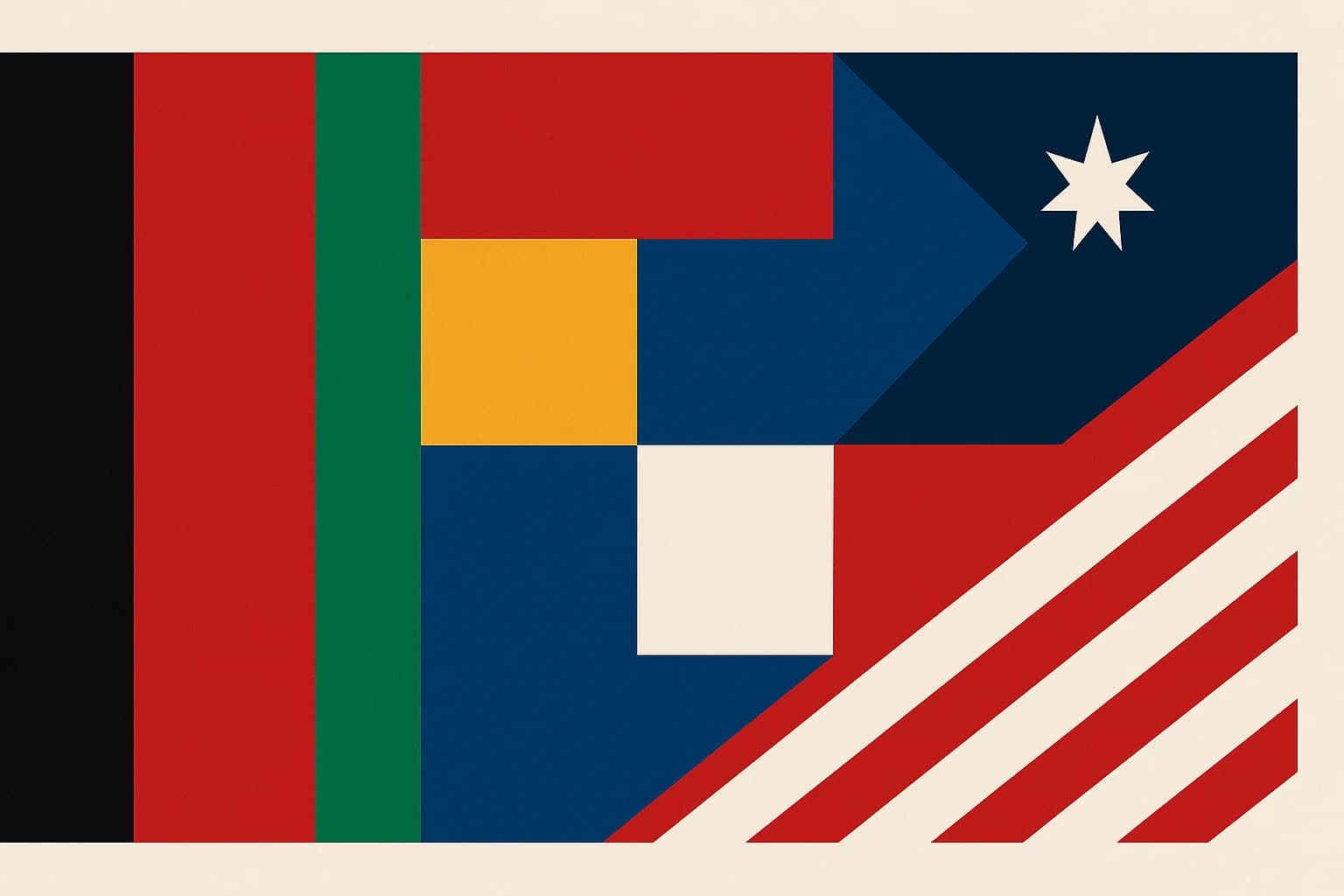
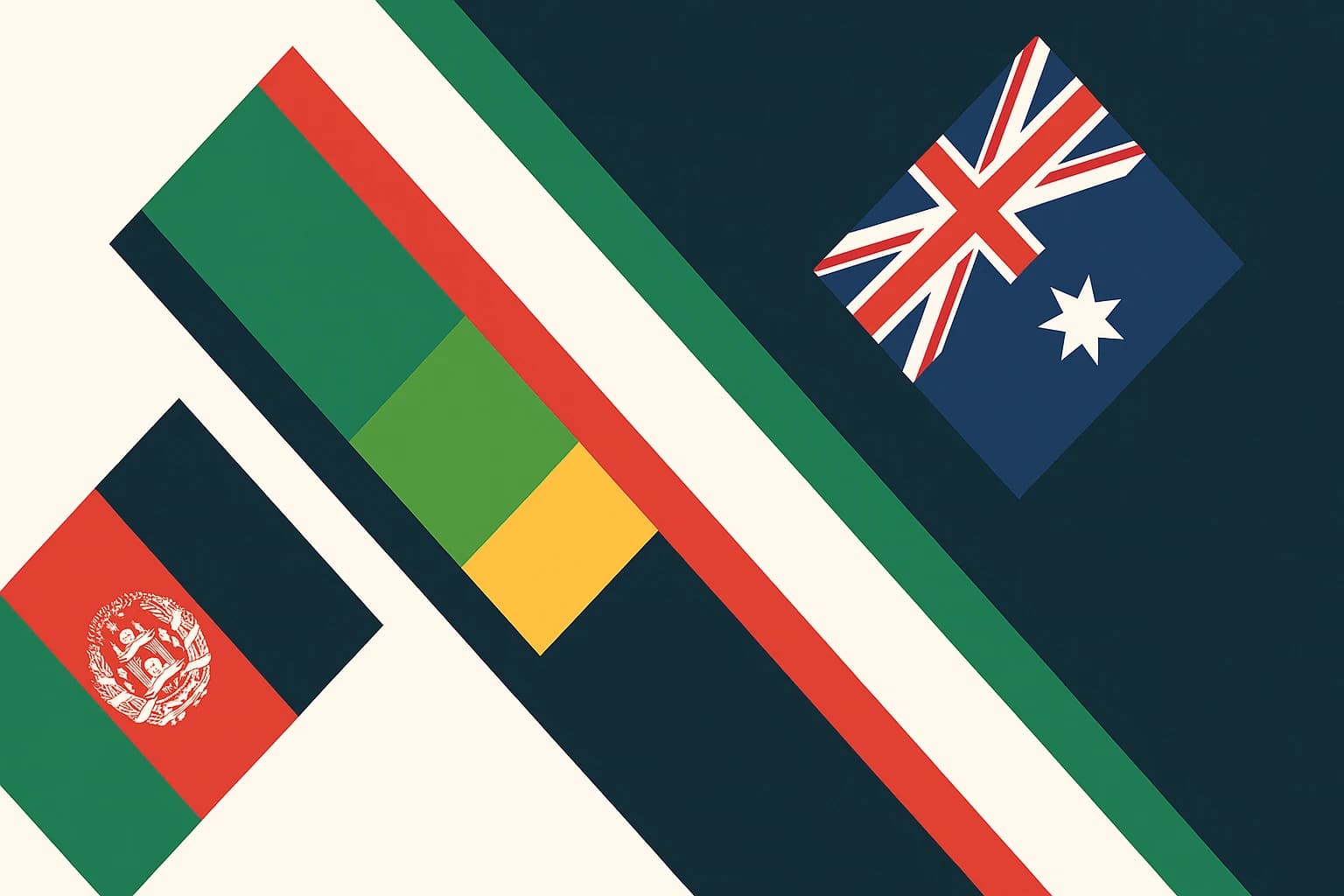
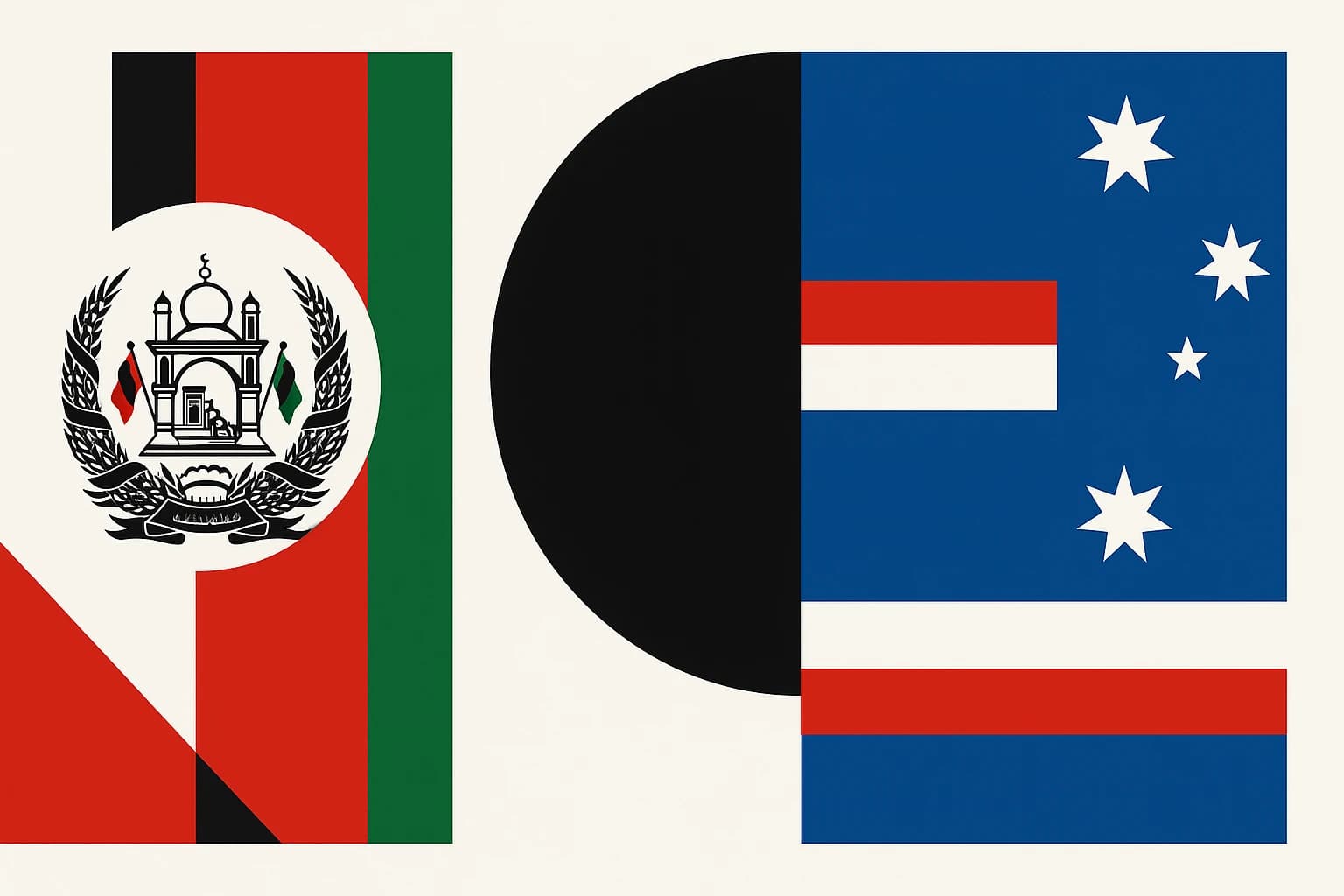
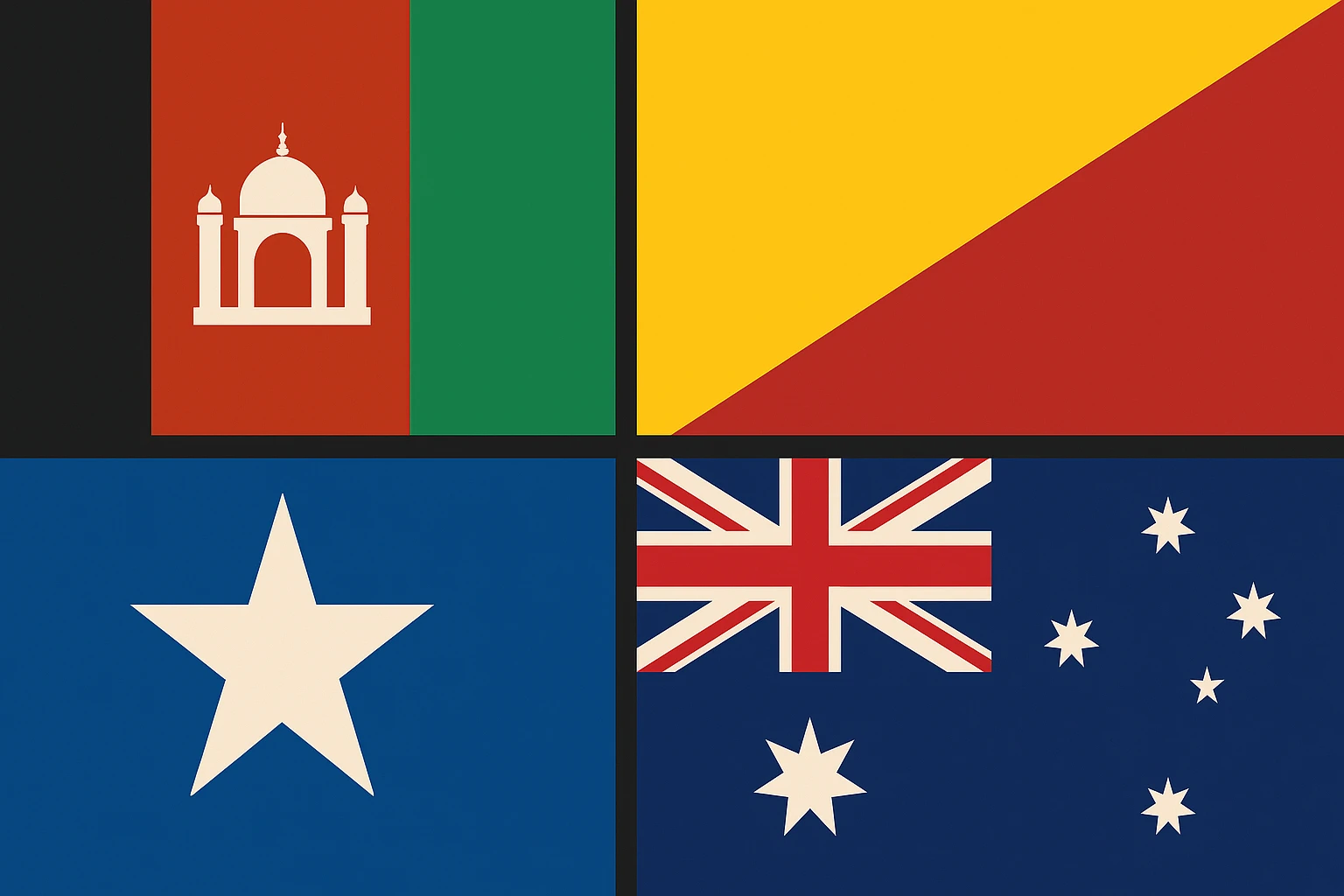
Look at Afghanistan and Australia side by side and you get two different uses of the same tool. The Afghan flag's elements tell a story of struggle and resilience. The Australian flag communicates heritage and aspiration. Both compress a country's past and present into something an outsider can read at a glance.
The recurring lesson is inclusivity. As nations grow and diversify, the question of whether everyone can see themselves in the national symbol stops being decorative and starts being political.
Where flag design is heading
Recent global movements have pushed flag design toward inclusivity and representation. New Zealand has already explored alternative designs for a broader society, and it is worth wondering whether future flags might work in themes like environmental consciousness or the symbolism of a digital age.