Cultural Stories Woven into Flags: The Case of Armenia and Algeria
Julio Song · · 2 min read
Two flags, two survivals
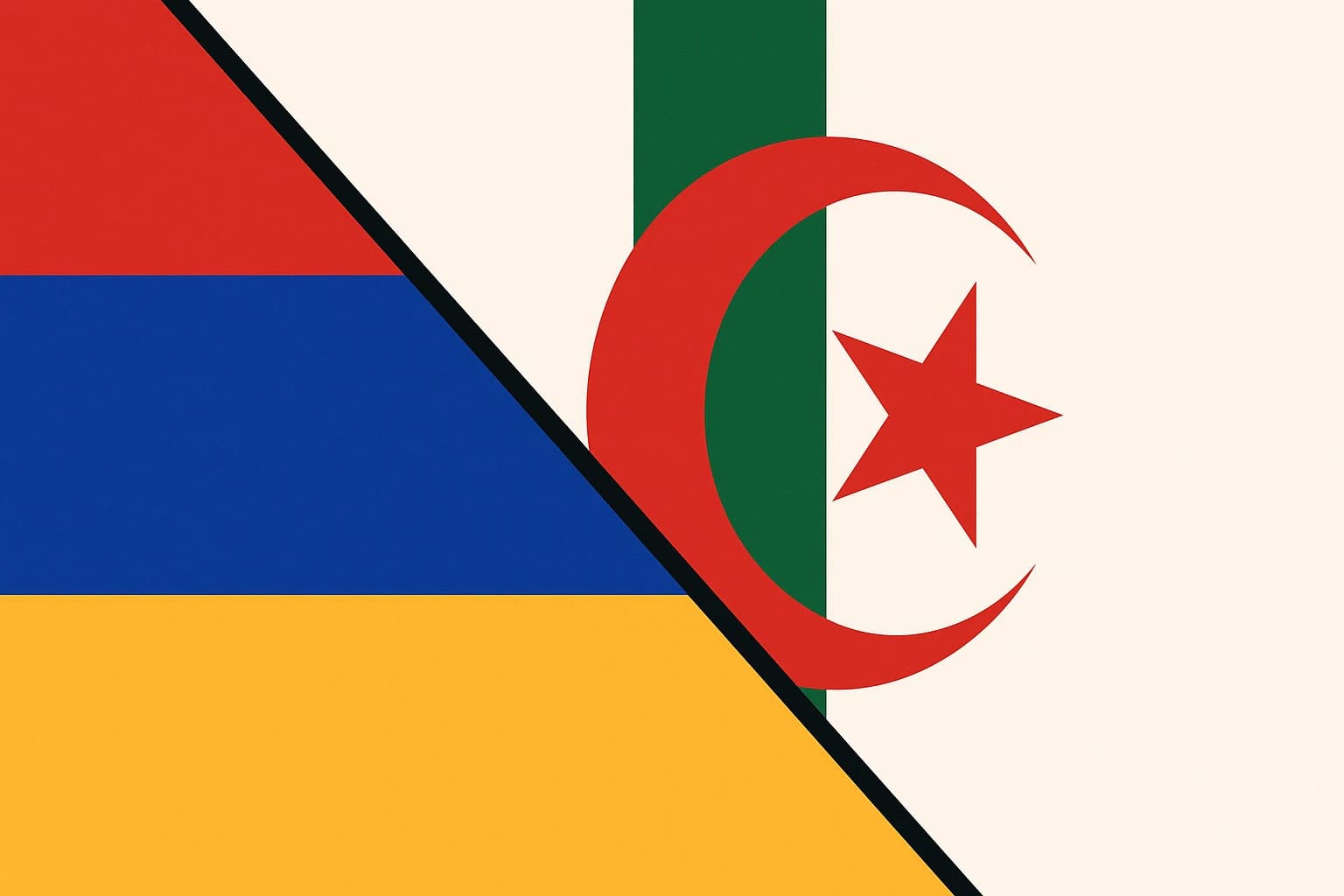
Vexillology is the study of flags, and it is mostly the study of what countries decide to remember. Armenia and Algeria make a useful pair. Both adopted their flags at the end of a period that nearly ended them, and both wrote that period into the colors.
Armenia
The Armenian flag has three colors, each with a specific reading:
- Red for the blood shed in Armenia's struggles for survival.
- Blue for the sky above the land.
- Orange for the fields, and for the country's hardworking character.
Armenia adopted the flag in 1918, after the founding of the First Republic of Armenia. The Armenian Genocide sits behind that red, and the color has never come loose from it.
Algeria
Algeria's flag also uses three colors:
- Green for Islam, the predominant faith in the country.
- White for peace and purity.
- Red for the blood sacrificed in the fight for independence.
The flag was established in 1962, at the close of the Algerian War of Independence, and the crescent and star place Islamic tradition at the center of the design. It is a revolutionary flag that is also a religious one, which is a harder combination to pull off than it looks.
What the two have in common
Both flags encode a specific catastrophe and a specific recovery, and both keep that encoding legible to citizens now rather than only to historians. Neither is a static object. The meaning attached to each has kept moving alongside the country's victories and setbacks.
Armenia and Algeria are not unusual in this. Japan and Mexico also carry historical and cultural references in their national flags, and part of what flags do across borders is make those references legible to outsiders. Under globalization that job has become more visible, not less.
Julio Song
Writer
Julio is a staff writer at FlagDB. He studied Mathematics at the University of Madrid and has a passion for vexillology.
More from Julio Song →Related articles
Guilty by Association: How Libya, Saudi Arabia, and Algeria Put Sacred Text on Their Flags, and Why Almost No One Else Dared
The Saltire That Crossed the Atlantic: How Jamaica's X-Shaped Flag Broke Every Rule of Post-Colonial Design