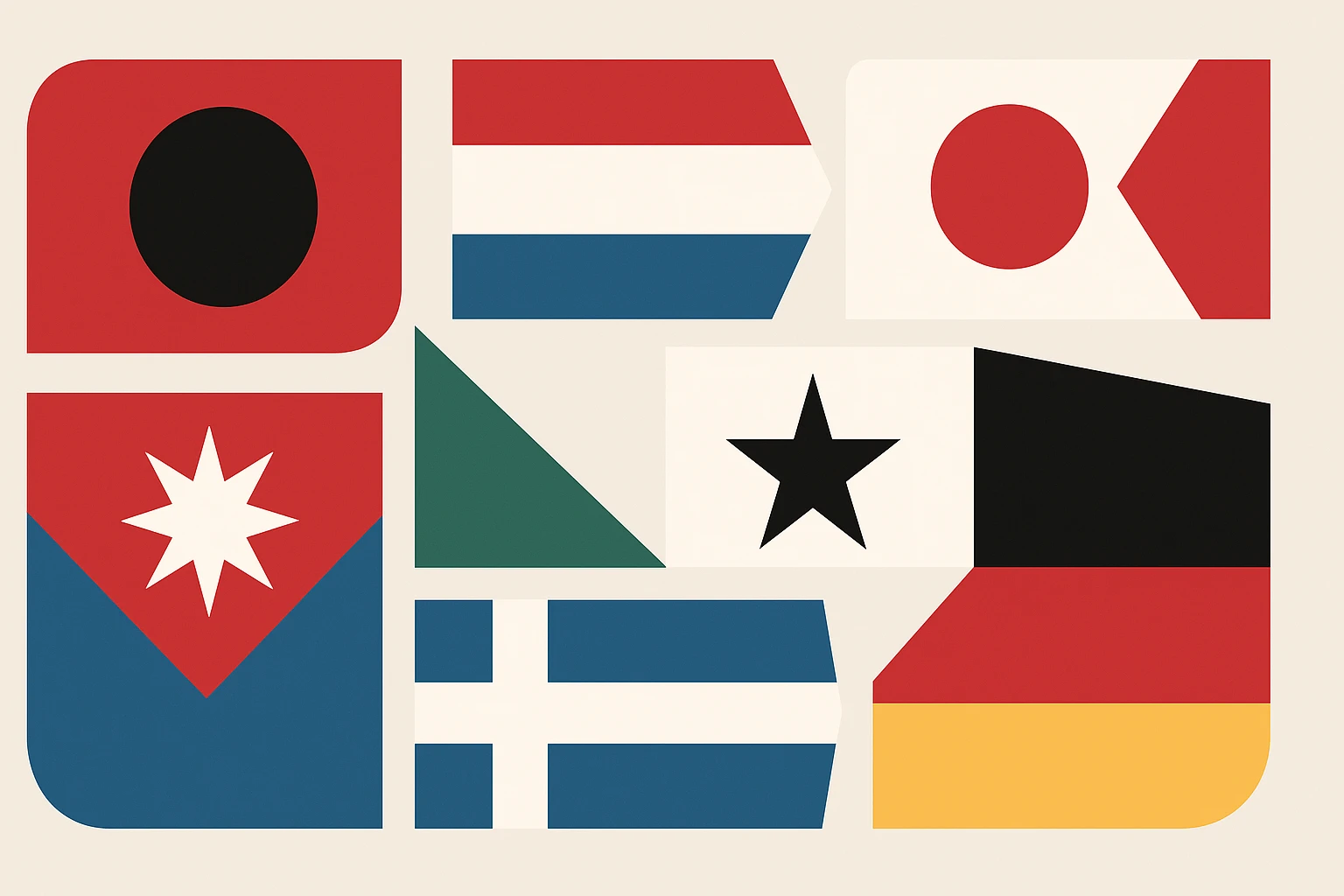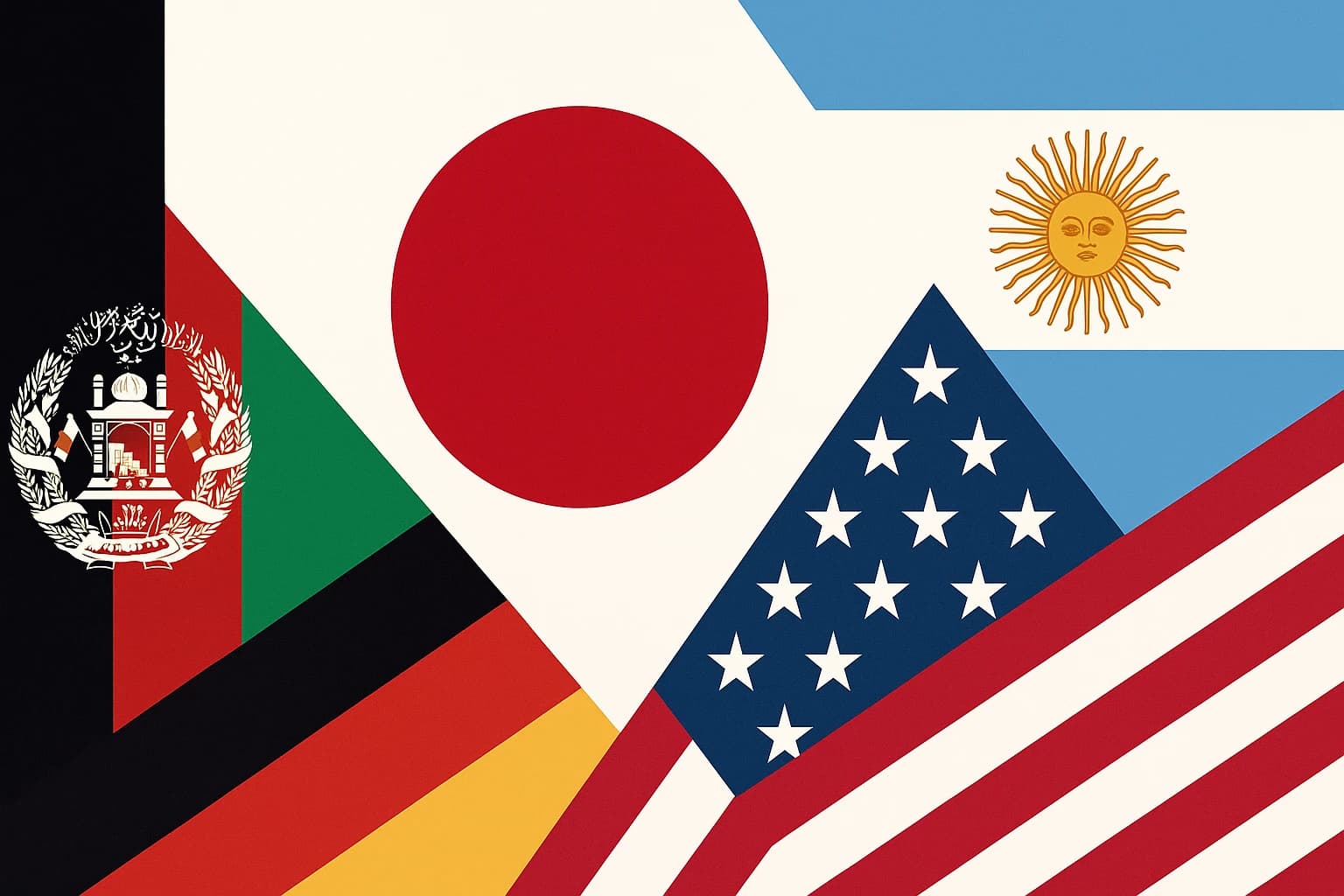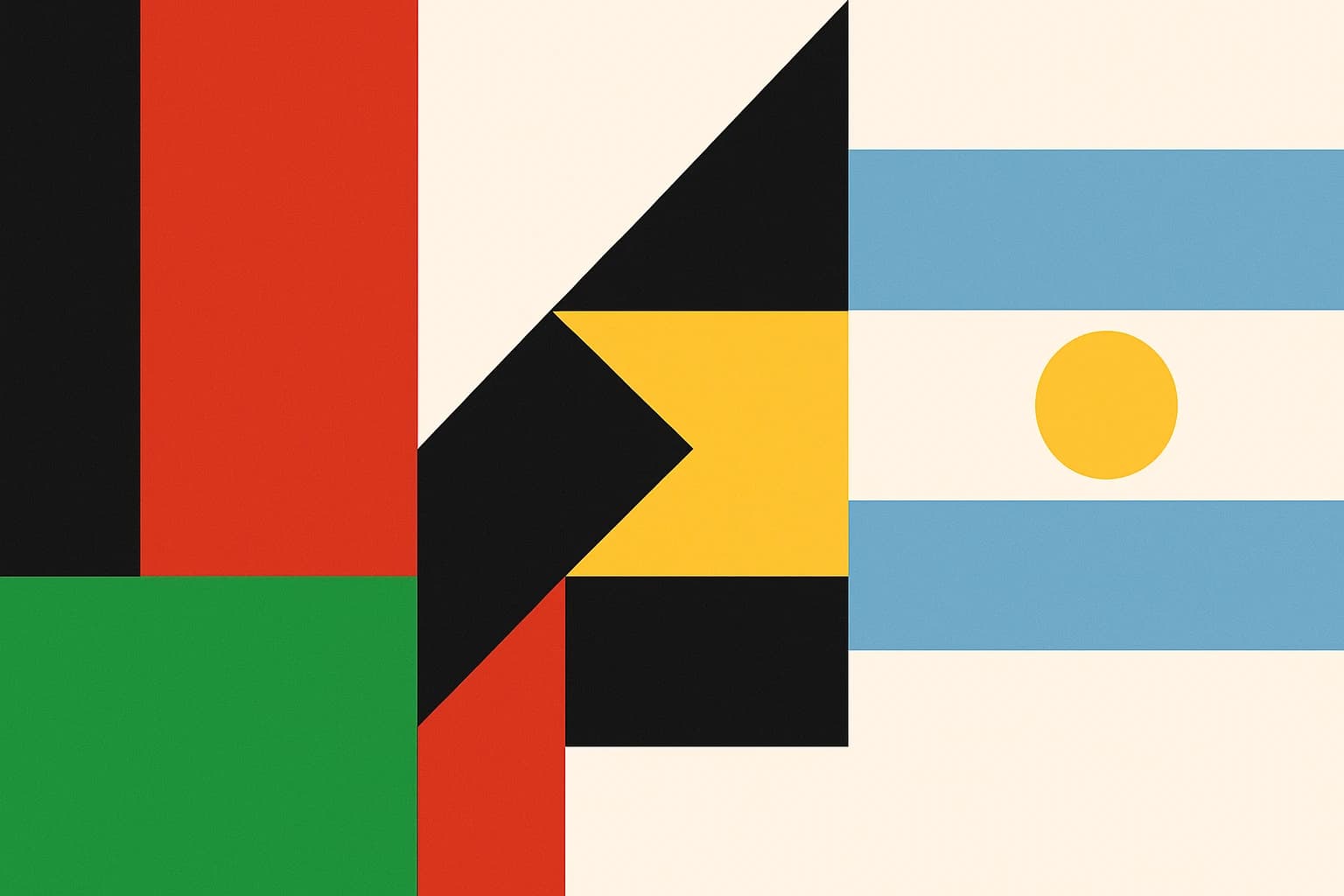
A national flag is the loudest thing most countries say about themselves in a single image. Identity, culture, and values get compressed into a rectangle of cloth, and most of that meaning sits in the colors.
Vexillology, briefly
Vexillology is the study of flags. Flags started as battlefield markers, a way to tell one army from another at a distance. Over time they came to stand for nations and ideologies instead. Designing one is not casual work; every color choice arrives with history attached.
What colors mean, and where
Red, white, and blue turn up everywhere, but they do not mean the same thing everywhere. Red reads as bravery in one country and revolution in another.
Historical events set those readings. The American Revolutionary War shaped how red, white, and blue are understood in the United States. Walk into a Chinese festival and red means luck and joy instead.
Afghanistan's flag
Black, red, and green. Black recalls a troubled past, red is the blood shed for independence, green is hope and the country's Islamic faith. Struggle and recovery sit in the same frame.
Argentina's flag
The sky-blue and white stripes mirror Argentina's clear skies and the snow on the Andes. The gold sun at the center stands for freedom and glory. The result points at nature and independence at once, which is unusual: most flags pick one register and stay in it.
Color theory in flag design
Colors are not picked on a whim. Warm colors like red and yellow read as energetic, while cool colors like blue and green read as calm. Japan's flag and France's flag both work on stark contrast and very few elements.
Continents and habits
Asian flags lean on red for boldness and celebration. South American flags reach for green more often, usually for landscape. Those habits shape how outsiders read a flag, though the inference from palette to national character is shakier than it feels. A bright flag is not evidence of a lively culture.
Where flag design goes next
Globalization and digital media have changed how flags are seen, and probably how new ones will be drawn. Whether that produces more abstract designs or new palettes is an open question.