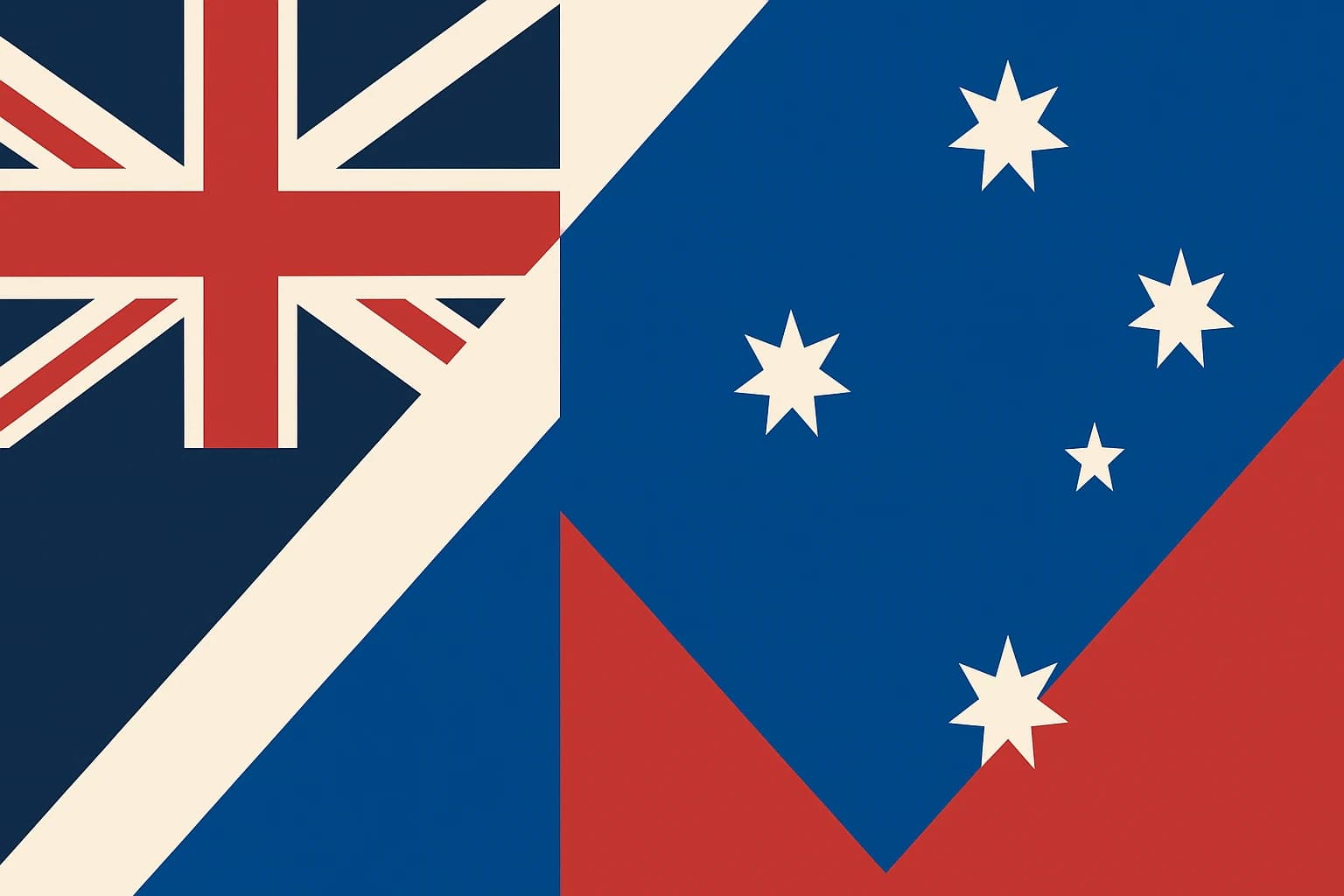
The Australian flag carries its history openly. A Union Jack in the corner, a constellation on the fly, and an argument about both that has been running for decades. What the design meant in 1901 and what it means now are not the same thing, and the gap between them is most of the story.
Where the design came from
The flag adopted in 1901 kept strong ties to the colonial past. The Union Jack sat in the prominent position, acknowledging British sovereignty, which was less a design preference than a statement of fact about where the new federation had come from. Beside it went the Southern Cross, a constellation visible only from the southern hemisphere and therefore useless to anyone flying a flag in London.
That combination, loyalty to Britain alongside something distinctly local, set up the argument that followed.
What the colours are meant to say
Blue, white and red repeat Britain's palette, though the standard readings attach their own meanings: blue for vigilance, truth and loyalty, white for peace, red for courage and sacrifice. The Southern Cross tends to be read as a guide, a marker of the path Australians have made for themselves.
The Union Jack is the part people actually argue about. It is a reference to historical ties, but it is also an anchor to a formative and difficult past, which is why it keeps coming up.
The argument over what it should represent
Australians remain divided on whether the flag should hold its colonial symbolism or change to reflect a wider set of cultures and histories. One of the strongest objections is that the current design underrepresents Indigenous Australians, and some proposals would incorporate elements of the Australian Aboriginal Flag.
Alternative designs have circulated for years. Some reach for boomerangs, some for the blue of the sea, most of them trying to hold onto the historical roots while widening who is included. None of this is a proposal to discard the flag so much as a question about who it currently speaks for, and the answer keeps shifting as the country does.
The flag in use
Cultural celebrations and sport are where the flag gets the most airtime. It is draped around shoulders and waved at arenas, on Australia Day and at swimming championships, working as a rallying point regardless of what anyone thinks of the design.
That everyday use is part of why change is hard. A flag that shows up at every medal ceremony accumulates associations that have nothing to do with 1901, and those associations are worth something to people on both sides of the argument.