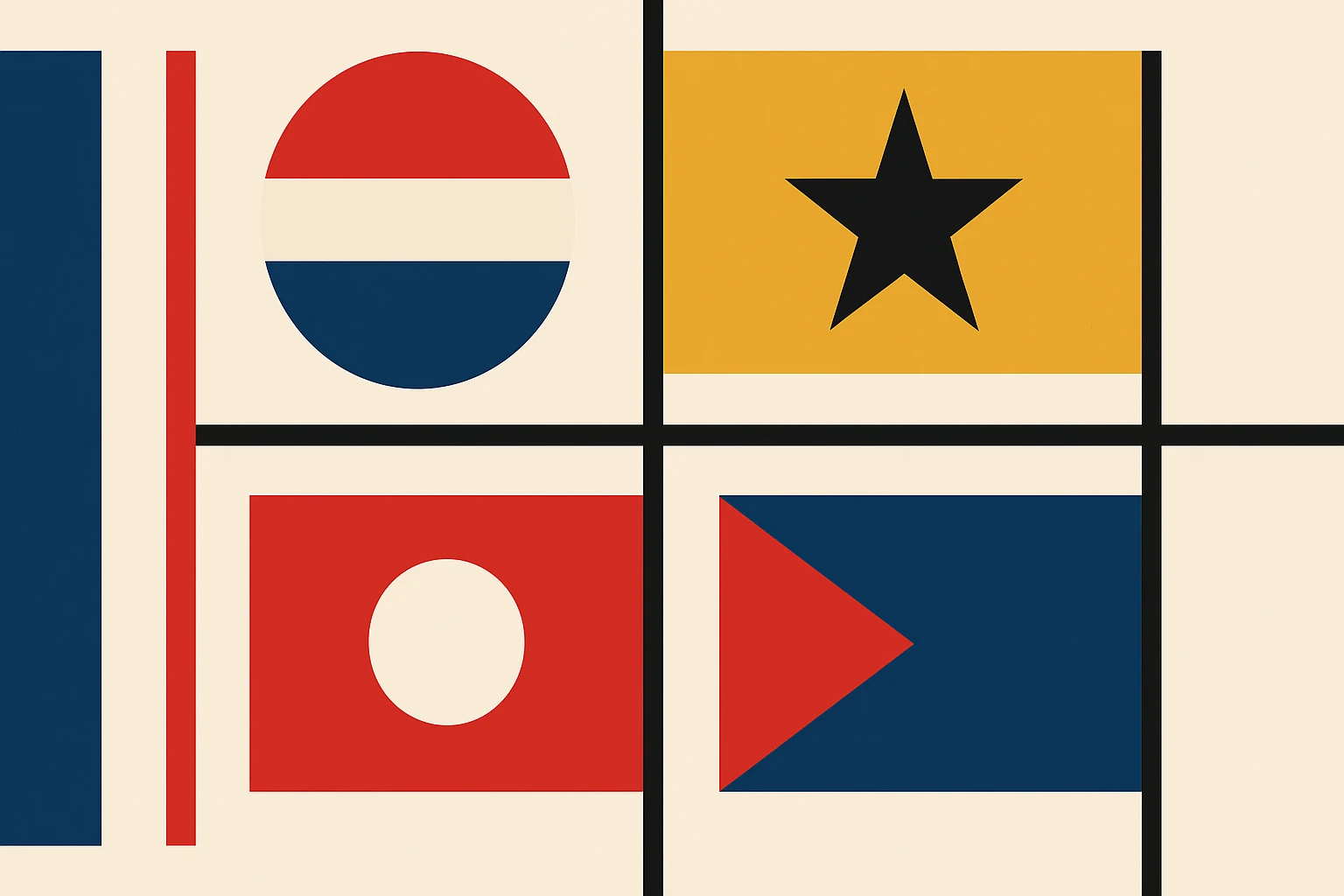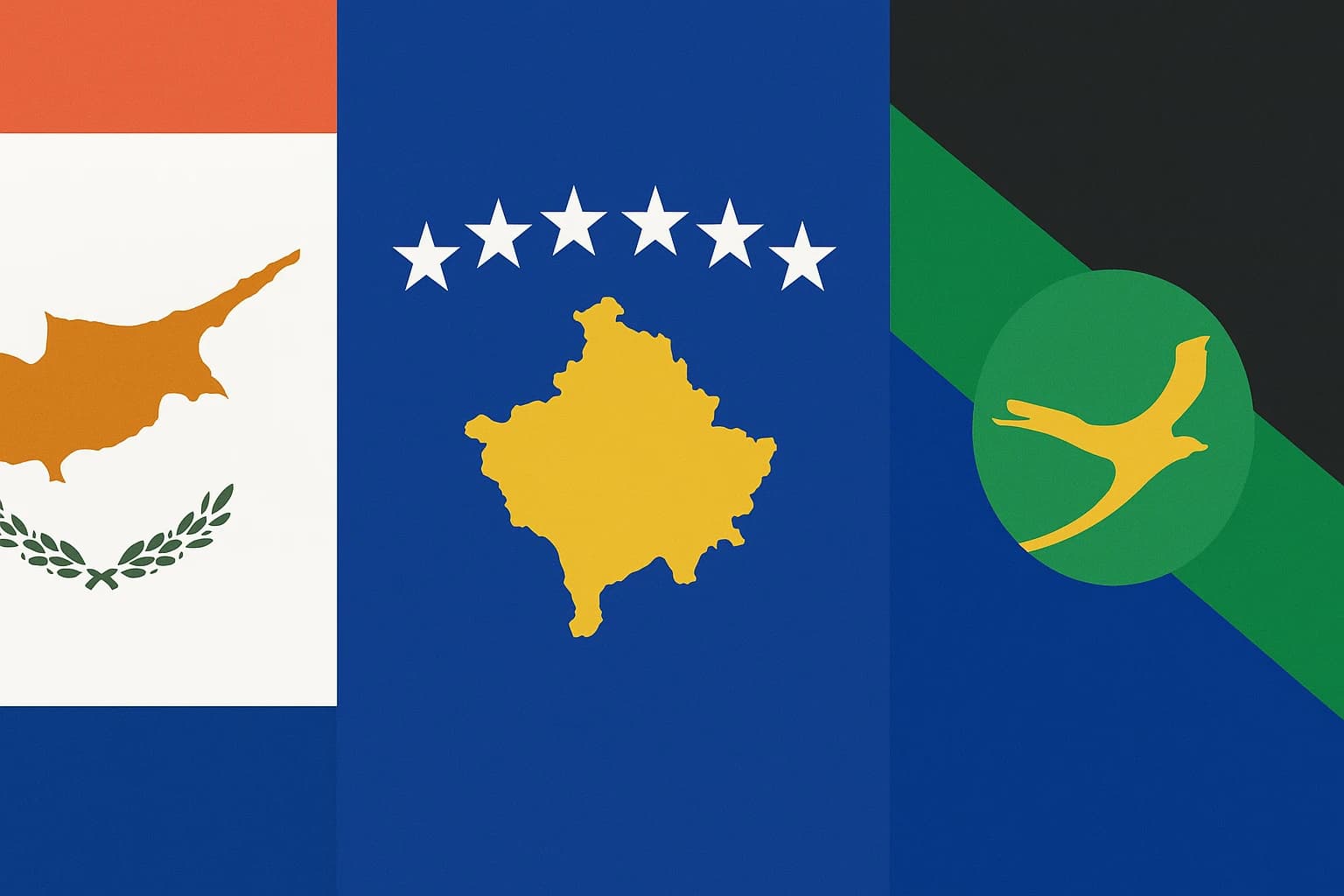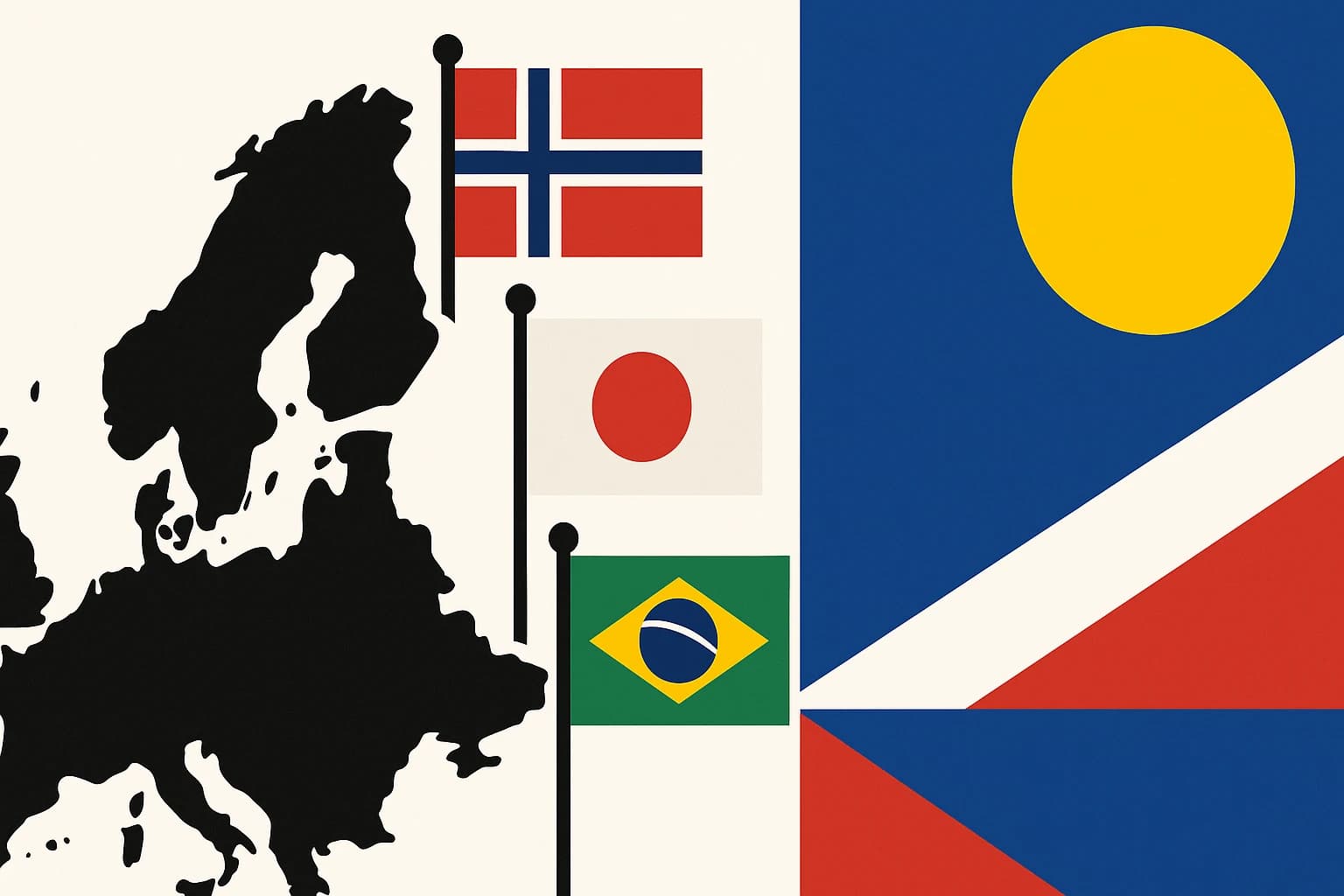
Vexillology is the study of flags, and a fair share of it comes down to shapes. Squares tend to read as stable, circles as whole and self-contained, and designers have leaned on those associations for a long time without ever quite writing them down. The shapes are not incidental to the meaning. In several flags they carry most of it.
Bhutan's dragon
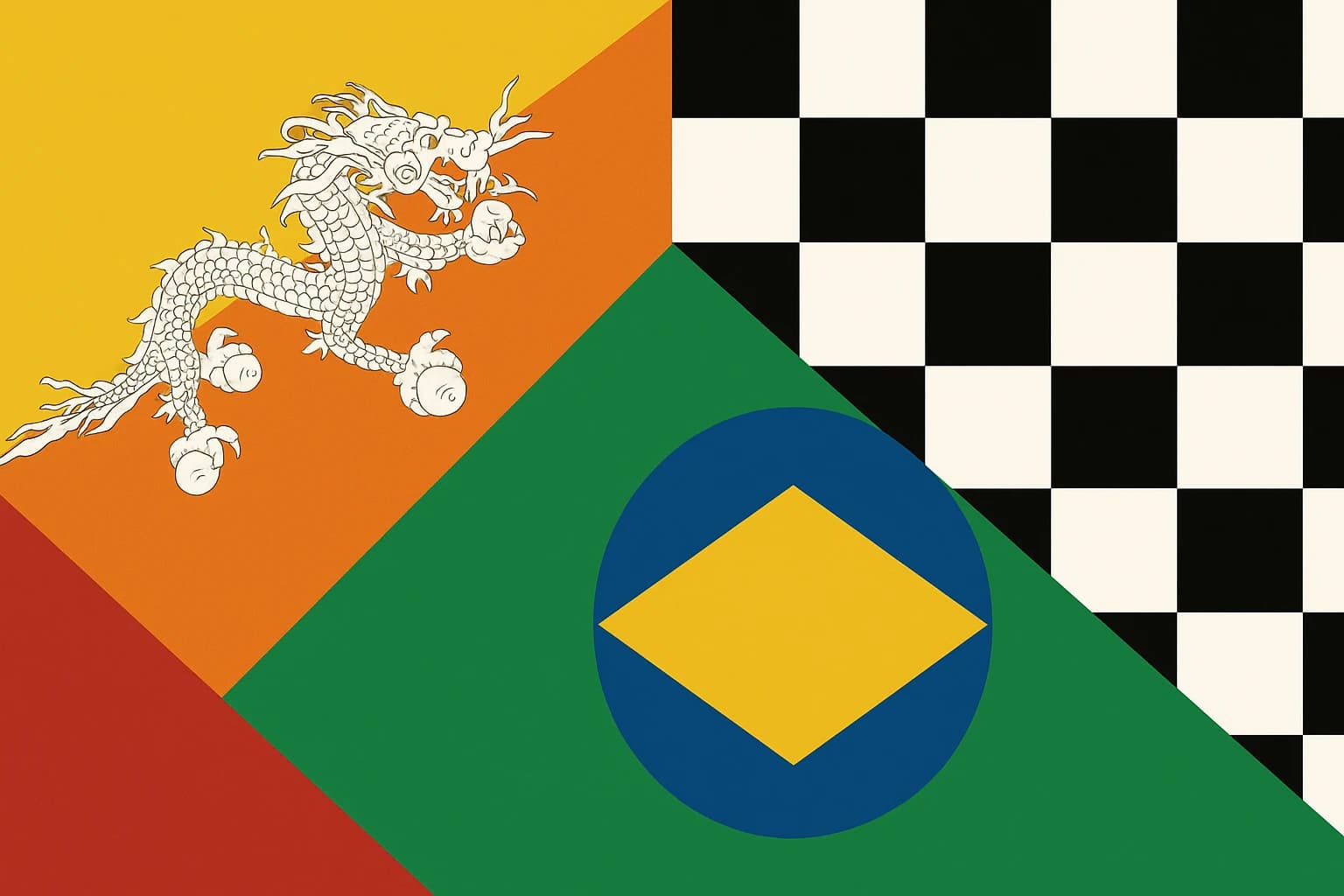
Druk, the white dragon, runs diagonally across Bhutan's flag rather than sitting inside a shield or a canton. That diagonal is the design: it splits the field in two and gives the dragon the whole length of the flag to move through.
The two halves are not decorative either. Saffron is the civil tradition, orange the spiritual one, and the dragon crosses both. The balance Bhutan says it aims for is drawn into the geometry instead of being written underneath it.
Brazil's diamond and globe
Green, blue and yellow, arranged as a diamond on a rectangle with a globe inside the diamond. Three shapes nested one inside the other, each doing separate work.
The globe is where the flag gets specific. Its stars follow the night sky over Rio de Janeiro on a night in 1889, so the design is fixed to a date rather than to an idea. Most flags gesture at history. This one records a particular evening.
Circle, pennant, stripe
Japan takes the opposite approach to Brazil. One red circle, one white field, and nothing else competing for attention.
Nepal breaks the rule that a flag has to be a rectangle at all, and it remains the only country that does.
The Netherlands sits at the plain end of the range, three horizontal bands and no emblem.
None of these are default choices. A circle, a pennant and a stripe each commit a country to a different kind of statement, and once the shape is fixed it is very hard to change without changing what the flag means.
Why flags got simple
Early flags were simple for a practical reason: they had to be identified across a battlefield, in smoke, by people with an urgent interest in getting it right. That constraint disappeared, but the aesthetic it produced never did. Minimalism is still the dominant instinct in flag design, and digital reproduction has reinforced it, since a design that survives being rendered at the size of a favicon is a design that works.
When a country redraws its flag
Flag changes are rarely quiet. A new design is a statement about what the country now believes itself to be, and the reaction tends to divide along the same lines as every other argument in national politics. That is worth remembering the next time a redesign is proposed and the response looks disproportionate. It usually is not about the geometry.