The Flags of the Caribbean: Colonial Inheritance and Cultural Identity
Julio Song · · 2 min read
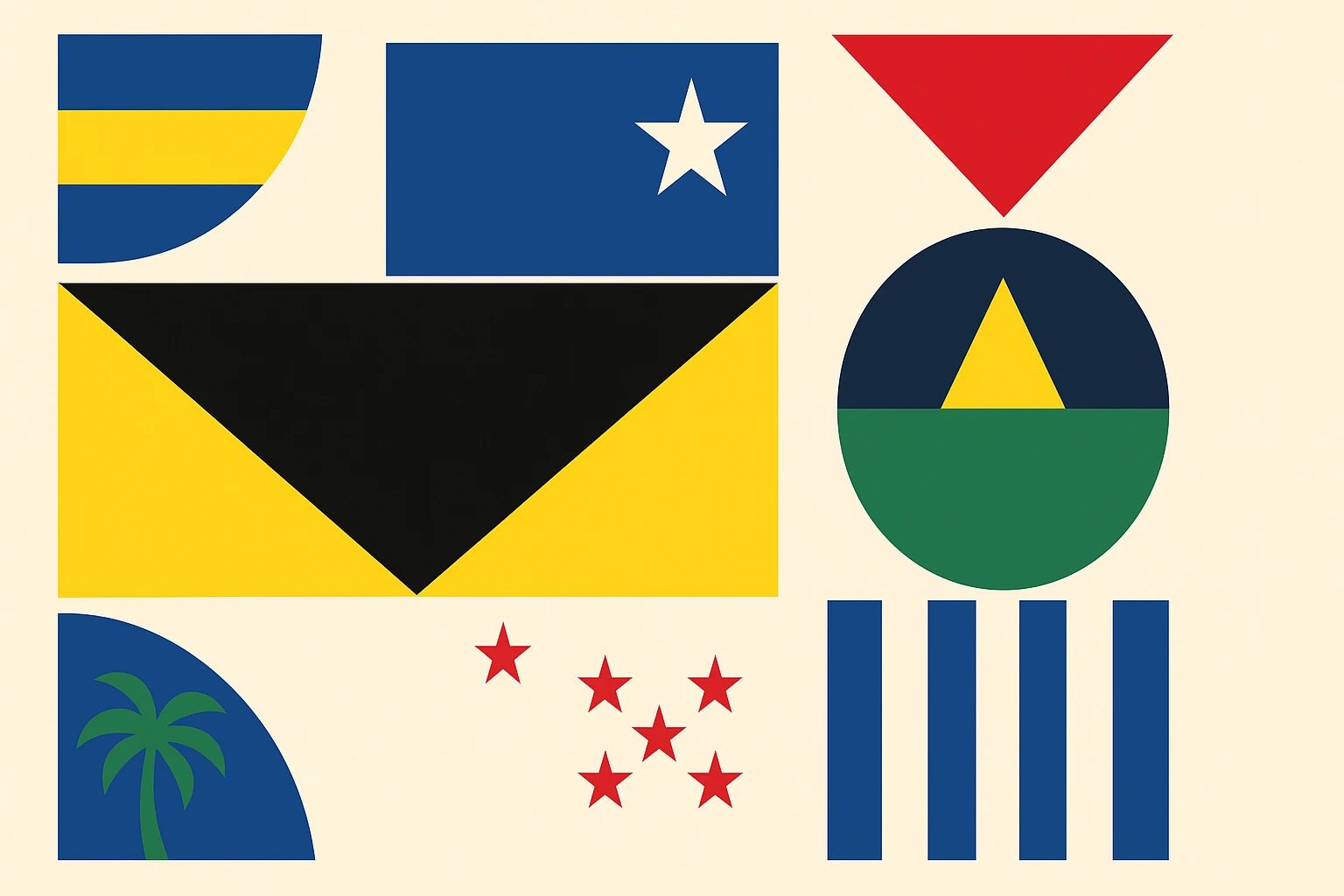
Most Caribbean flags began as adaptations of imperial insignia. As independence arrived through the region, countries replaced them with designs of their own, and the choices they made record what each place wanted to say about itself at the moment it got to choose. Some of those moments were revolutions and some were quiet handovers, and you can usually tell which from the flag.
Antigua and Barbuda
Red for the resilience and unity of the people, a rising sun for hope, and blue and white for the sea and for the tourism the sea supports. Few flags are that direct about the local economy.
Aruba
Soft blues, and a star that stands for hope and for the shape of the island itself.
Jamaica
Green, black and gold, read as the land, the people and the sun, with the hardships behind that reading left in rather than smoothed over.
Haiti
Haiti was the first black-led republic in the world, and its flag is a direct reference to the revolution that made it one.
The colors and what they carry
Certain readings recur across the region. Red usually points to the blood of those who came before; green to the land. Beyond the colors, the designs mix indigenous, African and European elements, which is a fair description of the societies themselves.
These flags still do real work. They appear at carnivals and national ceremonies, and they hold their ground against a global visual culture that flattens most things it touches.
Reading them wrongly
Misreadings are common, partly because the symbols are compressed and partly because social media strips them of context before passing them on. The same platforms carry the corrections, which is some consolation.
Julio Song
Writer
Julio is a staff writer at FlagDB. He studied Mathematics at the University of Madrid and has a passion for vexillology.
More from Julio Song →