The Flag of Afghanistan: Symbolism and Resilience
Julio Song · · 2 min read
Where the Afghan flag comes from
The flag's story starts in the 19th century, and it has been redrawn repeatedly since, usually in step with a change of government. The black banner of the Barakzai dynasty sits at one end of that sequence and the current tricolor at the other.
Each regime adjusted the design to fit its own idea of the country, so the colors and emblems tended to carry whatever that government wanted Afghanistan to become.
What the colors stand for
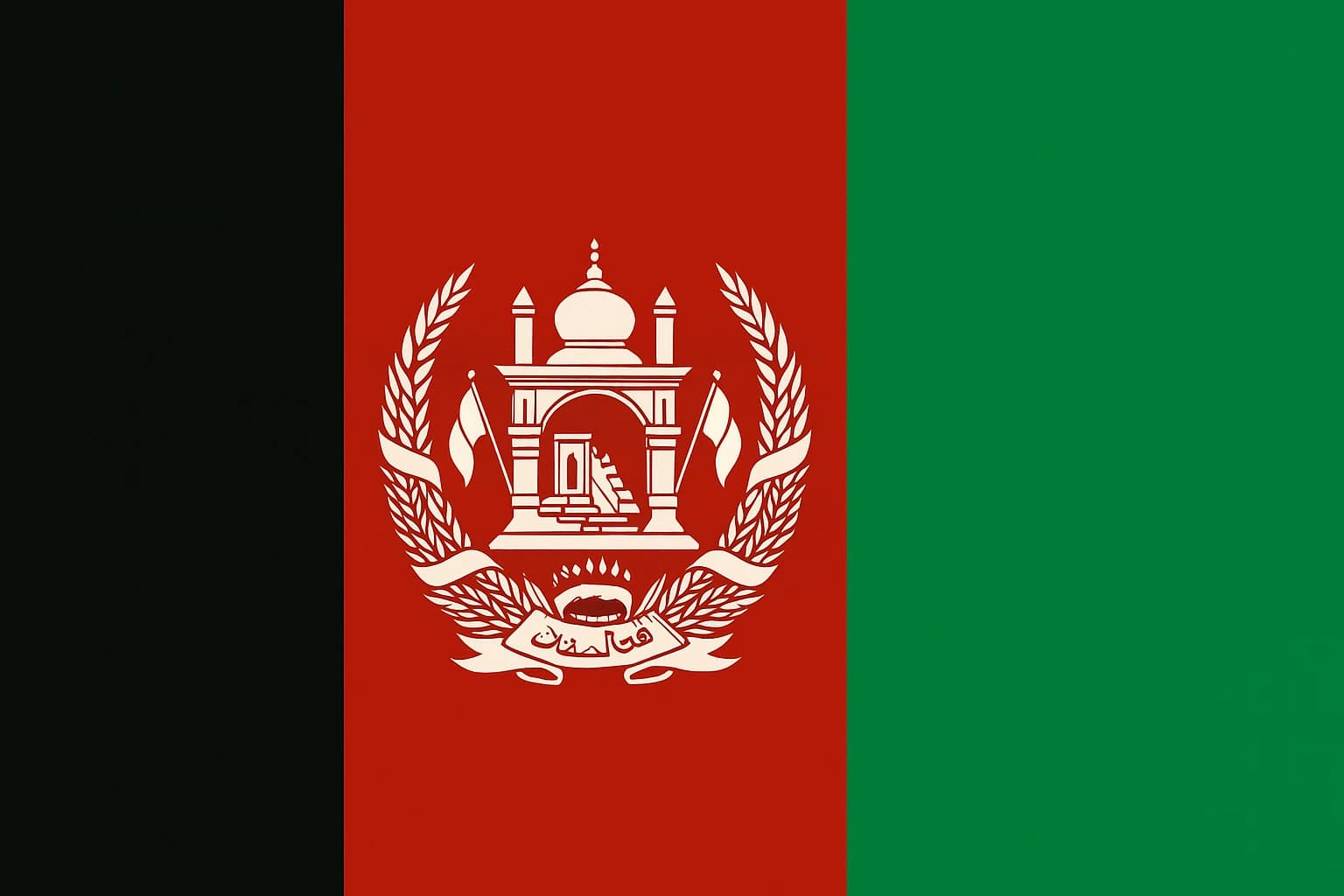
The flag has black, red and green stripes. Black is for Afghanistan's troubled past, red for the bloodshed and sacrifice that freedom cost, and green for hope and prosperity. Those readings have been glossed in different ways over the years, but the basic assignment has held.
The emblem
At the center is a mosque with its mihrab facing Mecca, which is the element that marks faith.
Around it sit two flags, sheaves of wheat and a rising sun. The wheat is for abundance and the sun for a new beginning.
The flag through occupation and Taliban rule
Afghanistan's flag changed with every major conflict, and during the Soviet invasion and Taliban rule its symbolism picked up new meanings. Groups that opposed those governments used it as a resistance symbol, which is a different job from the one a national flag usually does.
Beyond politics
The flag also shows up well away from government business, in art, at festivals, and in local crafts. Artists and craftspeople have put it into everyday objects as a way of expressing attachment to the country.
Abroad
The flag represents Afghanistan in diplomacy and international relations, and for the diaspora it carries a mix of pride and homesickness.
Whether the flag changes again
As Afghan politics shifts, the flag may shift with it, either in what people read into the existing design or in the design itself. On the evidence of the last two centuries, that would be the normal outcome rather than a break with anything.
Julio Song
Writer
Julio is a staff writer at FlagDB. He studied Mathematics at the University of Madrid and has a passion for vexillology.
More from Julio Song →Related articles

The Other National Symbol: What Emblems Say That Flags Can't, from Oman's Dagger to North Korea's Dam
Guilty by Association: How Libya, Saudi Arabia, and Algeria Put Sacred Text on Their Flags, and Why Almost No One Else Dared