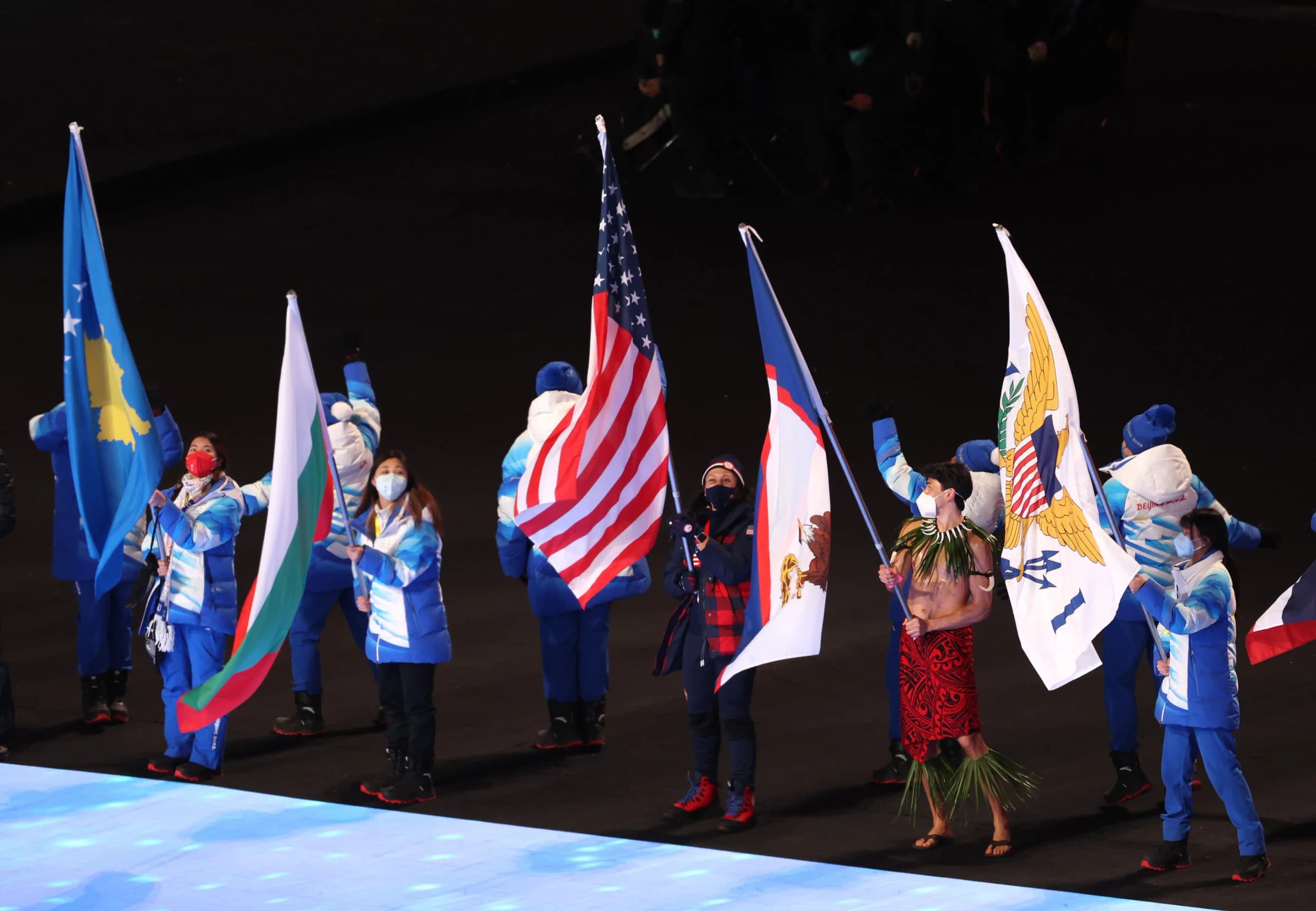
Carrying a flag is a job with rules. The person holding it stands in for whatever the flag stands for, which is why armies, schools, Olympic delegations and political movements all care a great deal about who does it. The role has a long history behind it and a set of duties that go well past holding a pole.
Where the role comes from
Bearing flags goes back to ancient civilizations. On the battlefield they were tools for communication and identification: they showed where the leaders were, marked strategic positions, and held troop morale together. Carrying one was an honor and a serious risk, since losing or surrendering a flag could demoralize an army and read as defeat.
In ancient Rome, the standard-bearer, or "signifer," carried the legion's emblem into battle and protected it with his life. In medieval Europe, knights and soldiers fought under banners representing their lords and kingdoms, with the bearer keeping the order and morale of the troops intact.
The role turns up outside war too. During the American Revolution the flag bearer stood for the struggle for independence and the birth of a new nation, an association fixed in the popular image of George Washington crossing the Delaware with the American flag unfurled behind him.
What flag bearers do
In the military
Modern flag bearers usually belong to a color guard, presenting and protecting the flag at official ceremonies, parades and events. The drills are intricate and the training is rigorous, because the entire point is that the flag is displayed exactly right.
In wartime the job gets harder. Flag bearers have historically been targets, since the flag both inspires troops and marks where command is. Losing the bearer hurts psychologically and tactically at the same time.
At ceremonies
Away from the battlefield, flag bearers appear at national celebrations, state funerals and international events. The Olympic flag bearer leads a national team into the opening and closing ceremonies, an honor given to athletes seen to best represent the spirit of the Games.
At school events, community organizations and civic occasions the job is smaller and the etiquette no less strict. Raising and lowering the flag, folding it correctly and displaying it properly all have rules, and someone has to know them.
The metaphorical kind
The term travels well beyond cloth. People who champion a cause, lead a movement or embody an ideal get called flag bearers without ever carrying one: Martin Luther King Jr. for social justice, Mahatma Gandhi for non-violence, Malala Yousafzai for education.
What "flag bearer" means in politics
In political usage, a flag bearer is a party's chosen candidate for a major election, usually the presidency: the person who carries the party's "flag" into the contest. The term is standard vocabulary in several democracies. In Ghana and Nigeria, parties formally elect a flag bearer at a primary or national congress; the word is everywhere in party discourse and election coverage, even though the constitutions of the parties themselves tend to use the drier formal term "Presidential Candidate." In the Philippines and the United States, the near-synonym "standard-bearer" does the same work.
The metaphor is doing something precise. A political flag bearer does not just represent a platform; they embody the party to the electorate the way a color guard embodies a nation at a parade. That is why the selection fights are so fierce, and why a flag bearer who loses badly or defects is described in the same terms as a dropped flag: an embarrassment that reflects on everyone marching behind it.
The political sense loops back to the literal one. Both jobs come down to being the visible carrier of something larger than yourself, chosen by others, judged by how well you hold it up.
How bearers are chosen
Selection is itself the recognition. In the military, being picked signals trust and respect for a person's service, and bearers are chosen for their conduct, their bravery and their service to unit and country. In scouting, the role tends to go to members who have shown leadership and a real grasp of the organization's values. In schools, the students who raise or lower the flag are usually picked for their grades, their leadership and the work they have put into the school.
Carrying a national flag at an international sporting event, on a diplomatic mission or at a state ceremony is among the highest honors an individual can be given. For Olympic athletes, leading a delegation into the stadium is often the highlight of a career.
What the role demands
The protocols are unforgiving. Bearers have to know the right way to raise, lower, fold and carry the flag, and any deviation reads as disrespect. In military contexts the precision is the message: complex drills executed exactly reflect the discipline of the armed forces, and the same standard applies at state functions and international events.
Conduct off duty counts too. A flag bearer is expected to hold to the values the flag represents, which puts their personal life under scrutiny alongside their official capacity. For people leading social or political movements the weight is heavier still. They have to balance advocacy with ethical leadership, and what they say shapes both public perception and the direction of the movement.
The last part of the job is the hardest to train for. A flag carried well can move a crowd. It lifts troop morale, it gives a team something to rally behind, and it gives a movement a focal point. Bearers are expected to convey what the flag means to everyone watching, which is a lot to ask of someone who is, technically, walking in a straight line.