Flags have never been only markers of nations, but in this century they have taken on a second job as banners for socio-political movements. Changing ideas about inclusivity and diversity are reshaping how flags get designed and read, and the arguments over the flags of Bhutan and Australia show what that looks like in practice.
Where flags came from
Flags go back to ancient times, when armies used them as battlefield banners: rallying points, markers, a way to signal across noise and distance. They became national symbols later. Traditionally a flag borrows its colors and symbols from a country's heritage, its struggles, or particular historical events.
The shift from detailed coats of arms to the simpler, more abstract designs of modern flags tracks the societies that adopted them, and the leaders who commissioned them.
Movements and their flags
Flags now work as visual voices for marginalized groups as much as for states. As those groups push for representation, the flags follow.
The Pride flag is the obvious case. It has been through several versions, each adding colors to represent a broader range of gender identities and sexual orientations, and those changes are not cosmetic. Plenty of national and regional flags have been updated or redesigned for similar reasons.
Bhutan's flag
Bhutan's flag carries the Druk, the Thunder Dragon, a long-standing emblem of Bhutanese culture and a symbol of harmony and identity.
In recent years there has been discussion of redesigning it to take in contemporary values while keeping that cultural core intact. The difficulty is the usual one: how much modern design language a country can absorb before the symbol stops reading as its own.
Australia's flag debate
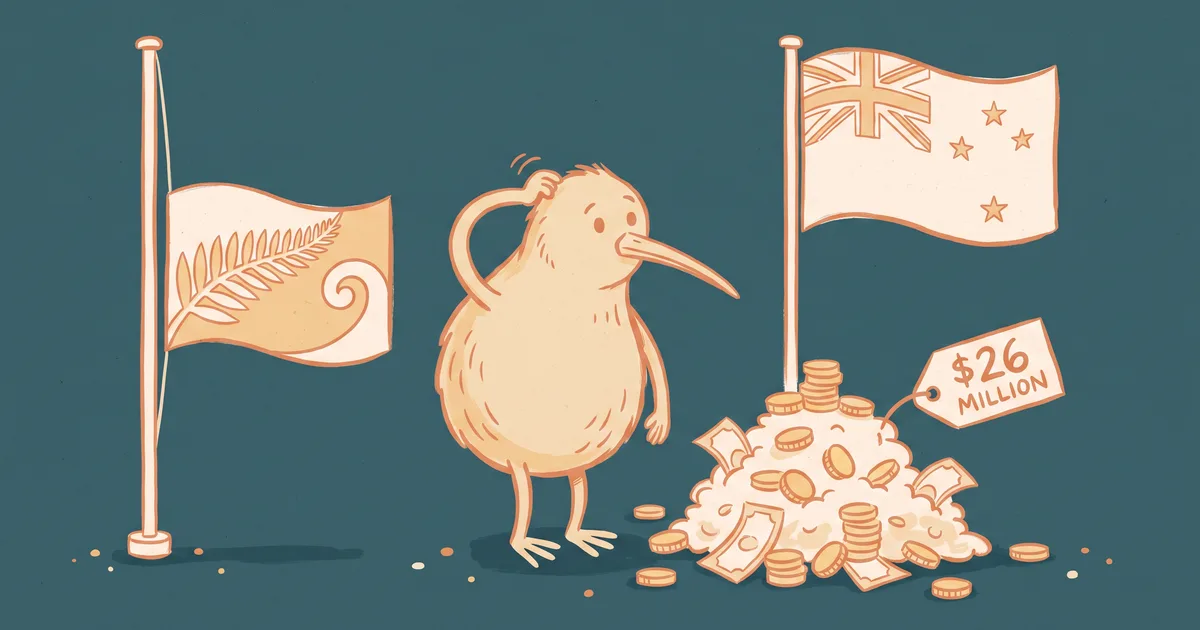
Australia's flag includes the Union Jack, a legacy of its colonial history. Momentum has been building for a design that matches contemporary Australia instead.
Campaigners for change stress inclusion and justice for Indigenous populations. Public sentiment increasingly favors a symbol tied to Australia's present and future rather than its colonial past.
Colors and symbols in modern flags
Newer designs lean on colors and symbols meant to read as inclusive. White and blue still stand for peace and stability, but the palettes around them have widened considerably. Motifs that carry across cultures turn up often: a circle for unity, stripes for equality.
How technology changed the process
Digital media has changed how flags are designed and judged. A proposal can be shared and picked apart within hours. Crowdsourcing platforms let communities take part in the design itself, and online campaigns and petitions give ordinary people a route into decisions that used to be made behind committee doors. The same channels changed how flags are distributed and publicized.
What comes next
Future designs may reflect values like sustainability and universal human rights, which would leave nations balancing preservation of tradition against modernity. Flags will probably keep doing the work of national pride and inclusion, but in ways that also acknowledge how connected countries have become.