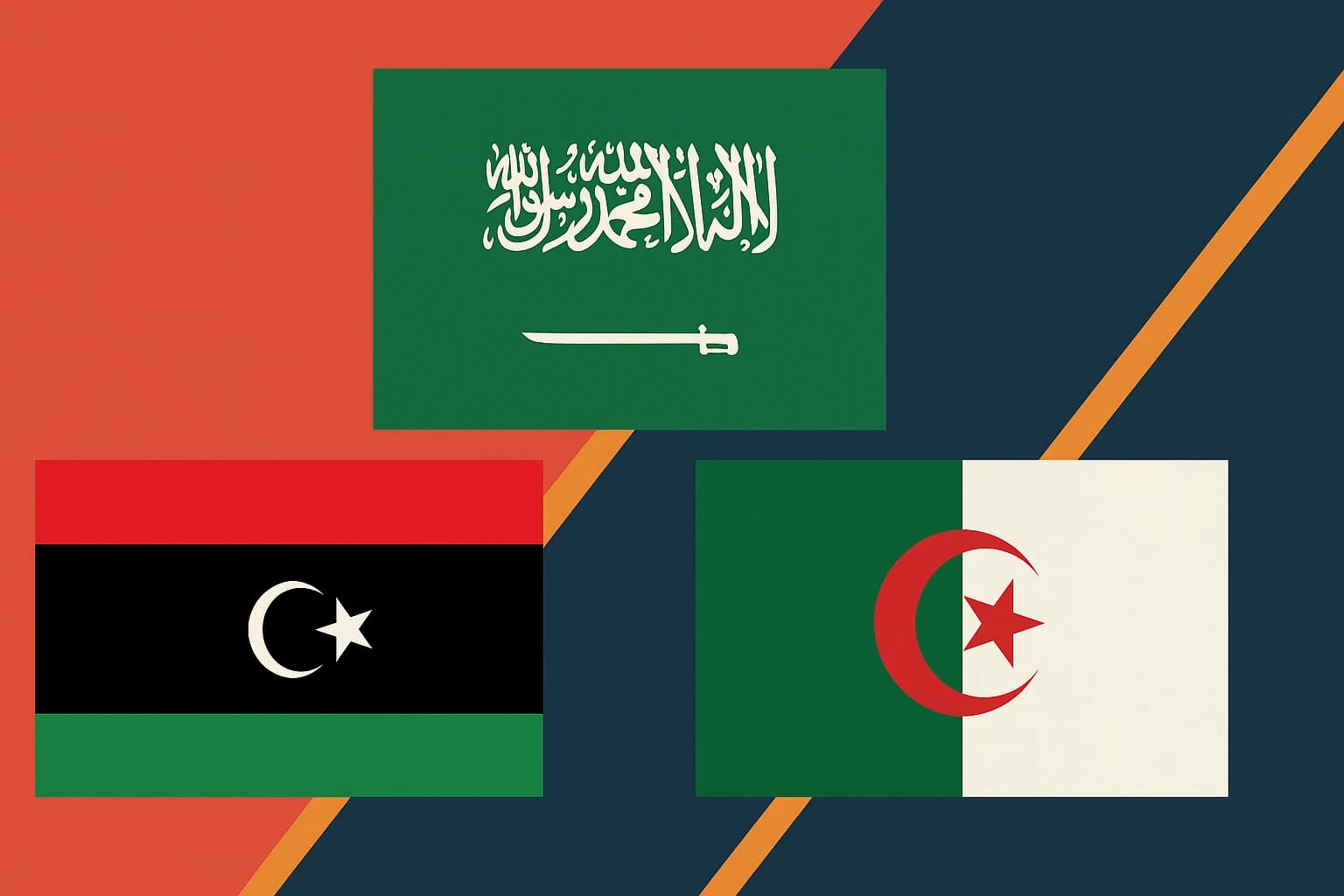
In a conflict, most institutions become unreliable and most communication becomes suspect. A flag keeps working. It costs almost nothing to make, it can be recognized instantly, and it does not need anyone's permission to be raised. Afghanistan and Algeria both have flag histories shaped by that fact.
Two histories written in flag designs
In Afghanistan, a long series of flags has flown over a long series of regimes. The changes are a record of political upheaval: each new government redrew the flag to assert its own version of the country, which is why the flag's history reads as a summary of the country's.
Algeria's case is different. There the evolution of the flag runs alongside the road to independence, so the design changes track the movement's development rather than a sequence of rulers.
The flag of Afghanistan
Each version of the Afghan flag belongs to a distinct period of upheaval, and each was adopted by a government that wanted stability on its own terms.
The flag of Algeria
Algeria's flag is tied to independence from colonial rule, and it has stayed a marker of national pride since.
What the two have in common
Neither flag is decorative, and neither belongs cleanly to a government. Both have been carried by people through periods when the state was contested, which is how a flag accumulates the kind of meaning that outlasts whoever is currently in power.
Flags at protests
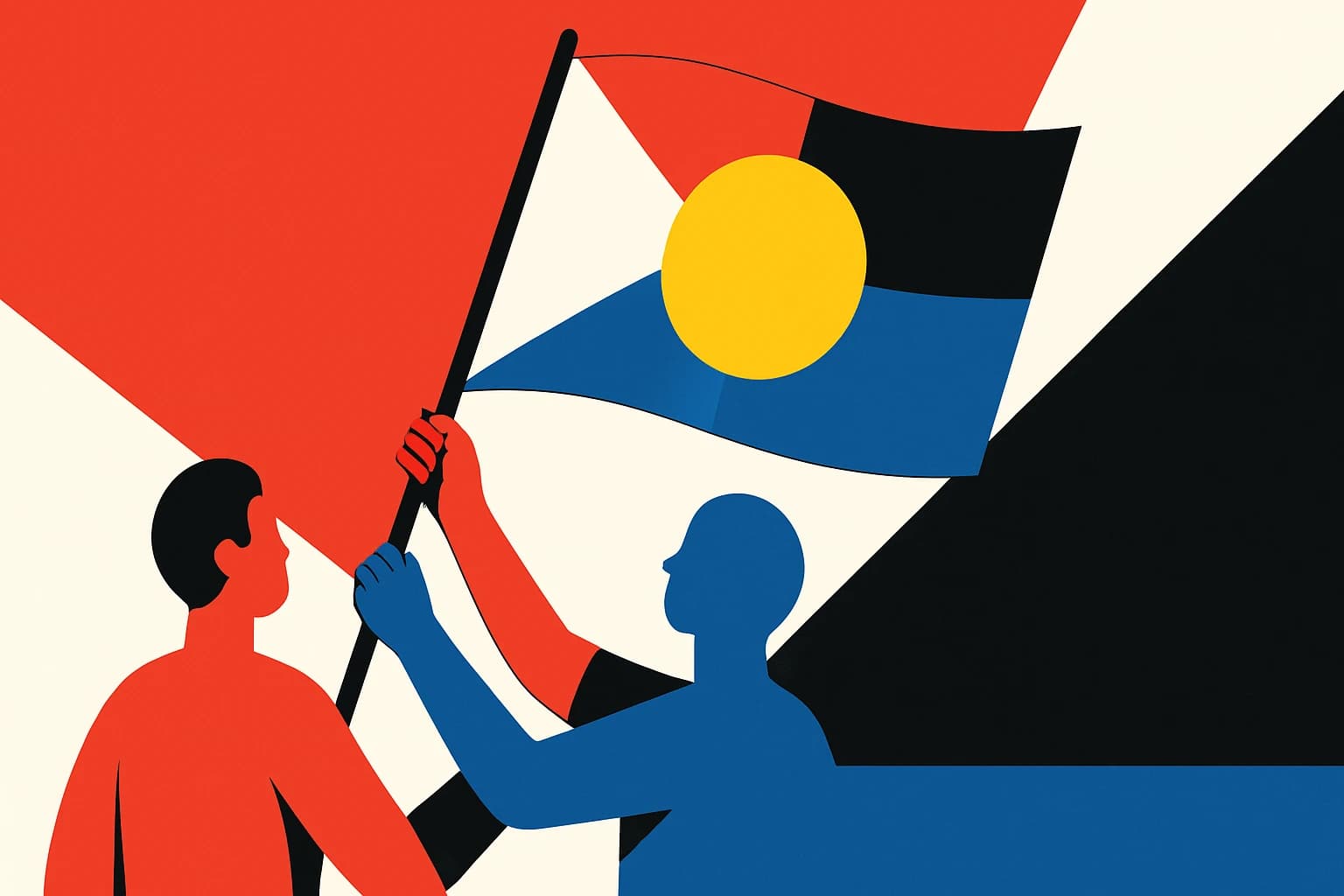
The reason flags appear at demonstrations is practical before it is emotional. A flag makes a crowd legible: it tells participants who is with them and tells observers what the gathering is about. A march with a common flag reads as one thing rather than as a collection of individuals, and that is the effect organizers are after.
New readings of old designs
Contemporary artists take these designs and reuse them, putting old symbols to work on current arguments and circulating the results online. Younger audiences often meet a national flag first as an image on a screen rather than on a pole, which changes what it feels like to them.
The arguments that follow
None of this is uncontested. Flags get used for propaganda, and the same design can be claimed by groups that want incompatible things from it. The meaning drifts, communities argue about who has the right to carry it, and the argument itself becomes part of what the flag stands for.