How flags say things
Vexillology is the study of flags, and much of it comes down to a small vocabulary. Color, shape, and icon are all a flag has to work with, and each carries conventional readings: red for bravery, green for fertility, stars for aspiration or achievement. The skill is in getting those pieces to add up to one coherent statement.
Afghanistan
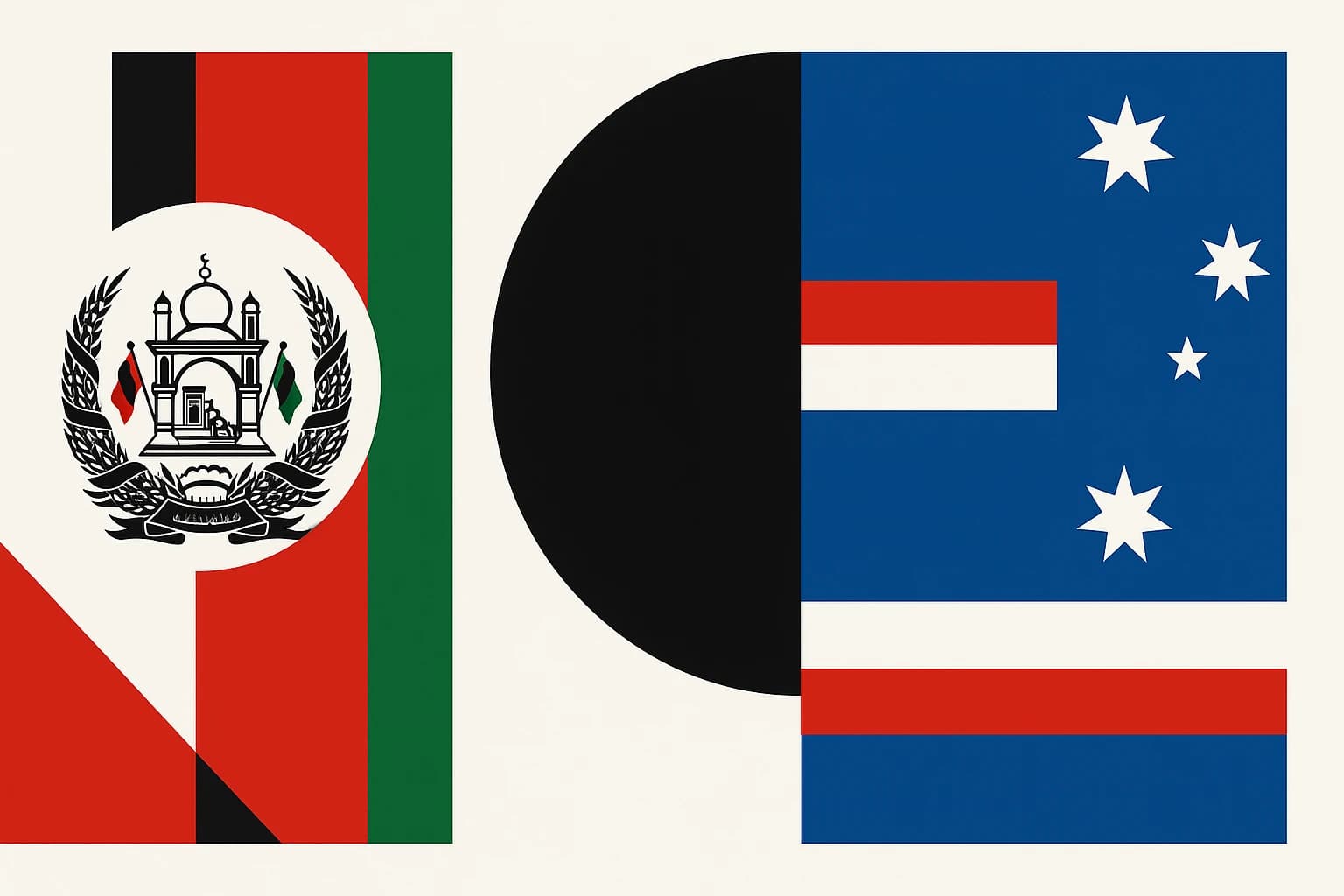
Afghanistan's flag has changed many times, tracking a turbulent history and a diverse population. The current flag, adopted in 2013, has three vertical stripes. Black represents the dark period of the past, red the bloodshed for independence, and green hope and prosperity. The emblem in the center features a mosque, matching the country's religious heritage.
The design also carries elements meant to honor different ethnic groups, which is a lot of work to ask of one flag in a country that diverse.
Australia
Australia's flag was introduced in 1901 and holds three separate ideas at once: the Union Jack, the Southern Cross, and the Commonwealth Star.
The Union Jack in the corner records the country's historical ties to the UK. The Southern Cross, a constellation visible from the southern hemisphere, places Australia geographically. The Commonwealth Star stands for federation and the unity of the states and territories.
The result keeps the European inheritance visible while pointing at a country that has since become something else.
Elsewhere
Every region has its own set of conventions. The red circle on Japan's flag is the sun, and it connects to a long-standing relationship with the natural world.
Colonization and the independence struggles that followed it left the deepest marks of all. Many African flags use green, yellow, and red, the colors associated with Pan-Africanism and the fight for freedom.
Newer designs
Modern flags tend to weave traditional elements together with contemporary values. South Africa's flag is the obvious example, built to celebrate diversity while committing to a set of progressive ideals.
Social movements make their own flags. The pride flag is the best known, a symbol of LGBTQ+ rights and community that has spread far beyond the movement that created it.
What both cases show is that flag design tracks what a society currently values, and that those values do not sit still.